
By
Oliver Wood
February 19, 2026
Updated
February 19, 2026
As a recruitment specialist with Airswift, I’ve helped hundreds of professionals navigate career transitions - from exciting new roles to the bittersweet moment of retirement. One of the most overlooked yet important steps in retiring gracefully is writing a proper resignation letter.
If you’re approaching this milestone, I want to help you do it right. Here’s my guide to writing a retirement resignation letter that’s respectful, clear, and leaves a lasting positive impression.
Why your retirement resignation letter matters
Retirement is a major life event, and your resignation letter is more than just a formality. It’s your opportunity to:
- Formally notify your employer of your decision
- Express gratitude for your time with the company
- Support a smooth transition for your team and successor
In my experience, the way you leave a role can be just as impactful as how you performed in it. A well-written letter helps preserve relationships and your professional legacy.
What to include in your retirement resignation letter
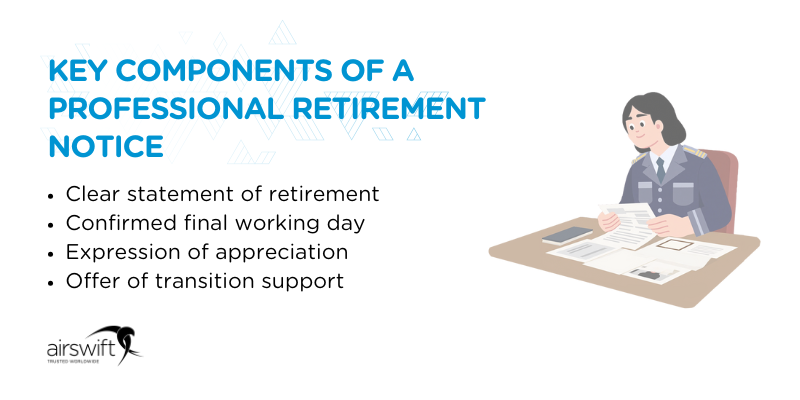
Here’s what I recommend including in every retirement resignation letter:
A clear statement of retirement and resignation
Start with a direct sentence that states your intention to retire and resign from your position. Be specific about your role and your last working day.
“I am writing to formally announce my retirement and resignation from my role as [Job title], effective [Last working day].”
Gratitude
Take a moment to thank your employer and team. Reflect on what you’ve appreciated most - whether it’s the opportunities, mentorship, or camaraderie.
Offer to help with the transition
This is a professional courtesy that goes a long way. Offer to assist in training your replacement or wrapping up key projects.
Optional: Personal contact info
If you’d like to stay in touch, include your personal email or phone number.
Tone and style tips
Over the years, I’ve seen letters that were too formal, too casual, or even unintentionally negative. Here’s what works best:
- Keep it professional but warm - this ensures that your message feels respectful without being stiff.
- Be sincere and appreciative - a genuine expression of gratitude reinforces positive relationships and acknowledges the support you’ve received.
- Avoid complaints or grievances - this isn’t the place for that. Your resignation letter becomes part of your record, so keeping it constructive protects your professional reputation.
Sample retirement resignation letter
Here’s a sample I often share with candidates preparing to retire:
Subject: Retirement Resignation
Dear [Manager’s Name],
After much thought and reflection, I have decided to retire and will be resigning from my position as [Job Title], effective [Last Working Day].
It has been a privilege to be part of [Company Name]. I’m incredibly grateful for the opportunities I’ve had to grow, collaborate with talented colleagues, and contribute to meaningful projects over the years.
I am committed to ensuring a smooth transition and am happy to assist in training my successor or wrapping up ongoing responsibilities.
Please don’t hesitate to reach out to me at [Personal Email] if needed. Thank you once again for your support and leadership.
Warm regards,
[your name here]
Variations for different retirement scenarios
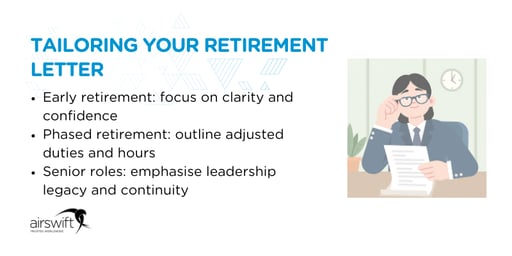
Early retirement
If you’re retiring earlier than the typical age, briefly note this without sharing personal details. Keep the focus on gratitude, confidence in your decision, and professionalism, while offering support to ensure a smooth transition.
Partial or phased retirement
For phased retirement, clearly state your intention to shift to reduced hours or responsibilities while reaffirming your commitment to current duties. Highlight your willingness to work with your manager on timelines or adjustments to support a well-planned transition.
Senior leadership resignation
For senior roles, use a more elevated tone that acknowledges the privilege of leading teams and contributing to the organisation. A brief mention of succession or transition support reassures continuity, while a warm close reflects dignity and strong leadership.
Mistakes to avoid when writing your retirement resignation letter
Even seasoned professionals can overlook the basics. Here are a few common pitfalls I advise against:
- Being vague about your last day - this can create confusion for your manager and HR, making it harder for them to plan your transition smoothly.
- Forgetting to say thank you - a simple expression of gratitude helps end your working relationship on a positive and professional note.
- Not offering transition support - Offering help demonstrates professionalism and reassures your employer that you’re committed to a seamless handover.
What happens after you submit it
Once your letter is submitted, here’s what typically follows:
- HR will guide you through retirement paperwork and benefits
- You may be invited to an exit interview
- Final pay and entitlements (like unused leave) will be processed
If you’re unsure about any of these steps, don’t hesitate to ask your HR team. They’re there to support you.
Final thoughts
Retirement is a huge milestone, so congratulations if you’re approaching it! Writing a thoughtful resignation letter is a small but meaningful way to close this chapter with grace and professionalism.
Retirement looks different for everyone. At Airswift, we’re here to support your next move, whether that means full retirement, consulting, or exploring new opportunities. Let us help guide your transition with the experience and care it deserves.