
By
Nathalia Duarte
November 27, 2025
Updated
November 27, 2025
Job vacancies are rising with the growth of green energy, power infrastructure projects, and digital technologies. Yet, companies are struggling to fill STEM roles driving up costs through competitive salaries, recruitment agency fees, and compliance with local regulations.
Below are some key factors influencing STEM recruitment costs and practical strategies to help you manage and reduce these costs.

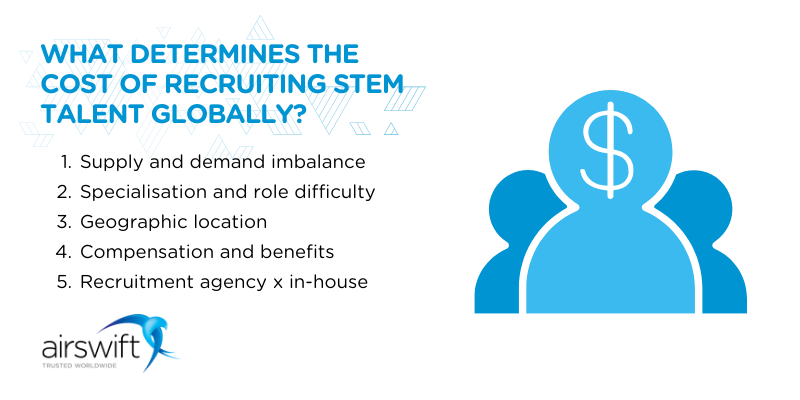
Supply and demand imbalance
The global shortage of STEM professionals is a major driver of recruitment costs. The rapid growth of the digital economy, along with advances in AI, data science, green energy and other technologies, creates jobs much faster than universities can produce qualified graduates.
• In Europe, 46% of companies struggle to hire STEM talent.
• In the U.S., 45% of STEM employees with a PhD are foreign-born, underscoring reliance on global talent.
In this competitive market, companies must offer higher salaries and better benefits to attract skilled professionals, further increasing recruitment costs.
Job specialisation and role difficulty
The more specialised or complex the role, the greater the cost and effort required to recruit. Positions demanding niche skills, extensive experience, or advanced degrees (such as a master’s or doctorate) face even higher talent shortages.
In STEM, these roles often include AI and machine learning, cybersecurity, cloud architecture, and data science. For example, demand for AI and machine learning engineers is expected to grow by 40% by 2027.
Other costly roles include doctors, researchers, and engineers in sectors such as petrochemicals, renewable energy, and aerospace.
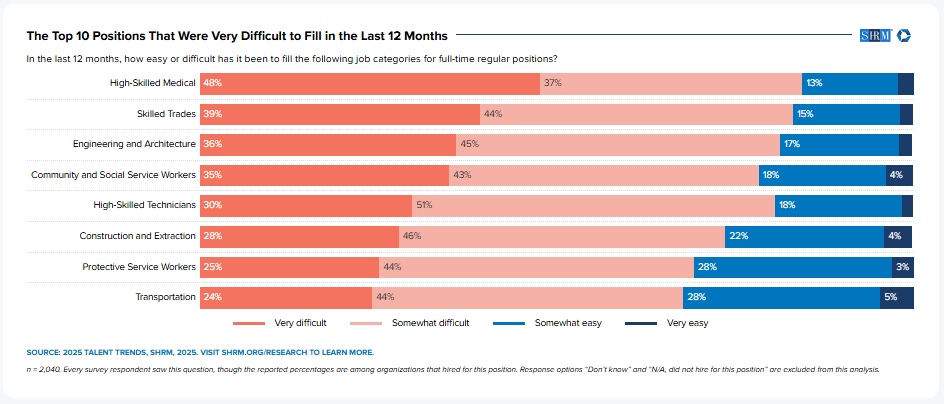
Below are the top 10 hardest-to-fill job categories in the U.S., according to SHRM’s 2025 Talent Trends report:
- High-skilled medical
- Skilled trades
- Engineering and architecture
- Community and social service workers
- High-skilled technicians
- Construction and extraction
- Protective service workers
- Transportation
Geographic location
Where a role is based, where candidates live, and which labour laws apply are key factors influencing recruitment costs. Salaries and benefits vary significantly across regions, and compliance with local regulations can add complexity and expense.
Remote hiring allows companies to access a wider talent pool and reduce costs, but many specialised STEM roles still require on-site work, particularly in sectors such as energy, manufacturing, and research.
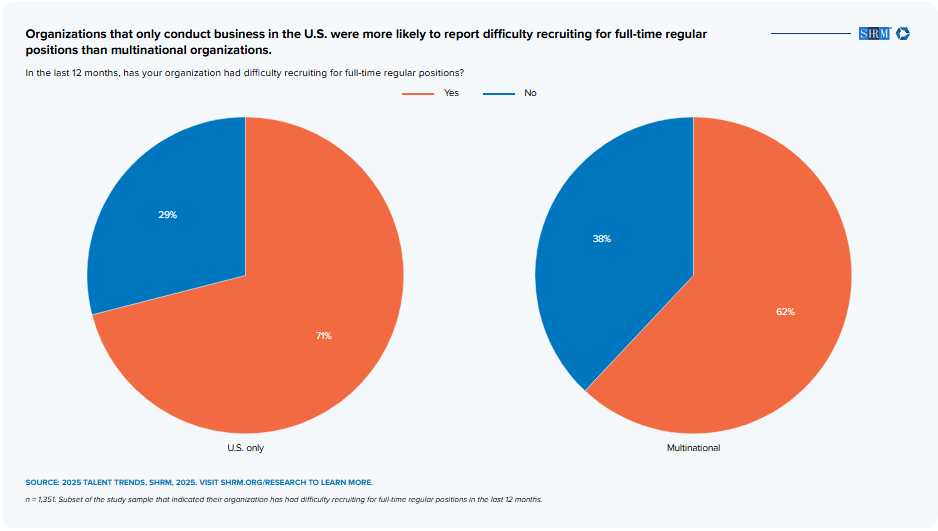
Company structure also matters. Multinational corporations often have greater resources and global networks, making recruitment easier compared to local businesses. According to SHRM, 71% of U.S. local companies struggle to fill full-time roles, compared with 62% of multinationals.
Compensation and benefits
High demand for STEM professionals makes competitive compensation a key driver of recruitment costs.
Beyond top-tier salaries, companies are enhancing benefits with health insurance, private pension schemes, profit-sharing plans, annual bonuses, equity, and paid leave. Combined with flexible working arrangements, these incentives aim to attract talent and reduce turnover.
Remote hiring is another strategy, both to appeal to candidates and to cut costs, often by sourcing talent from emerging markets. For instance, the table below shows the average salary of data scientists across different regions:
| Location | Salary range (USD) |
|---|---|
| United States | $130,550 - $189,320 |
| Canada | $59,539–$92,986 |
| United Kingdom | $50,885 - $92,986 |
| South Africa | $23,788 - $65,084 |
| Japan | $40,579 to $67,632 |
| India | $9,604 - $24,070 |
Working with a recruitment agency vs in-house recruitment
Both in-house HR teams and recruitment agencies have advantages, but costs depend on hiring volume and role complexity.
An internal team requires ongoing expenses, salaries, benefits, job board subscriptions, software, and training, making it ideal for businesses with a steady flow of positions throughout the year.
Preferred for hard-to-fill roles, recruitment agencies typically charge a percentage of the hired candidate’s salary. Although the upfront cost may seem higher, it includes industry expertise, access to talent networks, faster hiring, and reduced risk of a bad hire.
Invisible costs that impact recruitment fees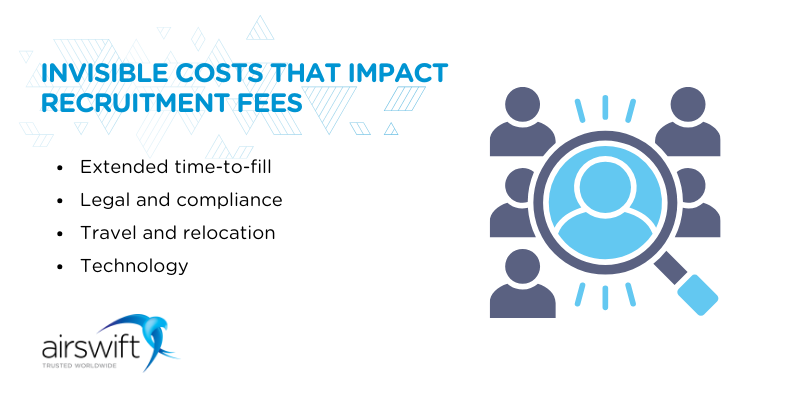
- Extended time-to-fill: Delays in hiring the right candidate can stall projects, overburden teams, and create the need for temporary staff.
- Legal and compliance: Costs include ensuring contracts meet local regulations, visa and work permit processing, background checks, and document translation.
- Travel and relocation: Covers transportation, short-term housing, and other expenses to support international hires.
- Technology: Includes software such as Applicant Tracking Systems (ATS), AI recruitment tools, LinkedIn Recruiter, and job board subscriptions.
Five tips to reduce your recruitment cost
.png?width=800&height=400&name=5%20tips%20to%20improve%20your%20interview%20process%20(1).png)
- Reskill existing employees: Investing in training workshops and mentorship programs can be more cost-effective than hiring new talent.
- Partner with customised recruitment services: Tailored solutions help streamline processes and cut unnecessary costs, especially for companies with fluctuating hiring demands.
- Work with experienced STEM recruiters: While the upfront cost may seem high, an expert who understands industry challenges can make hiring faster and more efficient.
- Leverage technology: Use AI-driven tools and Applicant Tracking Systems (ATS) to streamline sourcing and screening.
- Strengthen employer branding: A strong reputation attracts candidates organically, reducing reliance on paid advertising and agencies.
Struggling to recruit STEM professionals?
Partnering with a recruitment agency can help minimise the impact of STEM talent shortages on your business. Airswift’s Talent Acquisition services support companies in finding, relocating, and onboarding top-tier professionals across engineering, technology, and science.
Contact us today to discover how Airswift can deliver tailored solutions to help you build a strong, qualified STEM workforce.