
By
Diyaa Mani
December 4, 2025
Updated
December 4, 2025
Job candidates are more selective than ever. Beyond the paycheck, they’re looking for purpose, flexibility, and clearly defined career pathways. And if your offer doesn’t check these boxes, there's a high chance they’ll walk away.
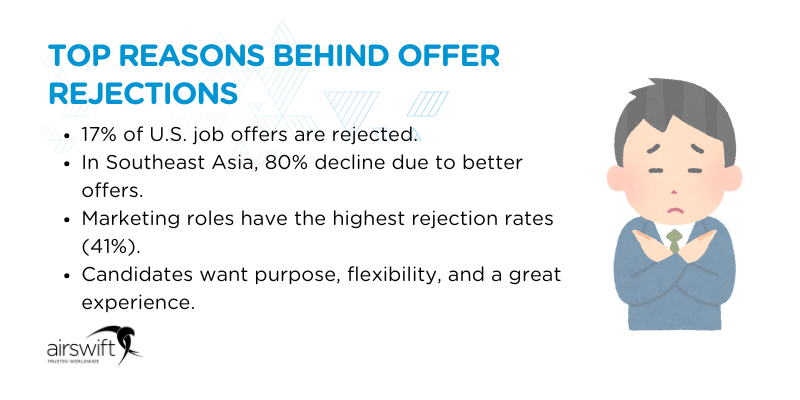
Glassdoor found that over 17% of job offers in the U.S. are now rejected. In Southeast Asia, four out of five candidates decline offers because they’ve already accepted a better one. That’s 80% of rejections happening not because of a bad fit, but because someone else moved faster or provided a more compelling offer.
So, what’s going wrong, and more importantly, how can you fix it?
Salary and benefits don’t match expectations
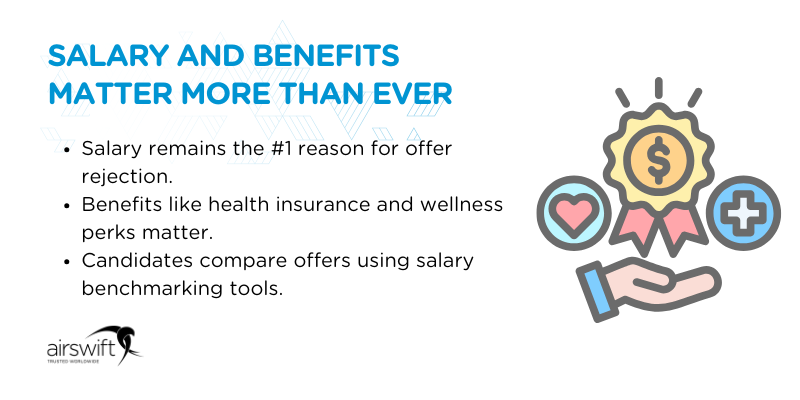
Money matters. Salary is still the number one reason candidates reject job offers. Today’s candidates are informed and empowered - they know market rates. If your offer falls below the benchmark, they’ll notice and walk away.
In Malaysia, 63% of candidates turned down offers because the compensation package wasn’t good enough while 24% wanted better benefits.
What you can do:
- Use salary benchmarking tools to compare your offer with industry standards.
- Be transparent about compensation early. Don’t wait until the final round to talk numbers.
- Highlight the full value of your offer, including non-cash benefits like flexible hours, remote work, or wellness programs.
- If you can’t offer the highest salary, emphasise other available perks like career development and mentorship programs.
Slow or frustrating hiring processes
You might think your hiring process is fine. But from the candidate’s perspective, it might feel like a never-ending maze.
Today’s job seekers expect a smooth, respectful, and efficient hiring experience. If your process is slow, disorganised, or lacks communication, it sends the wrong message.
Keeping interviews to two, maximum three rounds is ideal. According to a report by Evidenced, poor communication and delayed feedback are major reasons candidates lose interest.
If your interview process takes weeks, involves multiple rounds of interviews and includes long gaps with no updates, candidates will lose patience.
How to improve your hiring process:
- Set a clear timeline for your hiring process and stick to it.
- Keep candidates informed at every stage. Even a quick email update on next steps helps.
- Train interviewers to be prepared, respectful, and engaging.
- Avoid unnecessary interview rounds. Respect the candidate’s time.
A good hiring experience doesn’t just help you close offers; it also boosts your employer brand. Candidates talk, and a positive experience can lead to referrals, even if someone doesn’t accept your offer.
No flexibility or remote work options
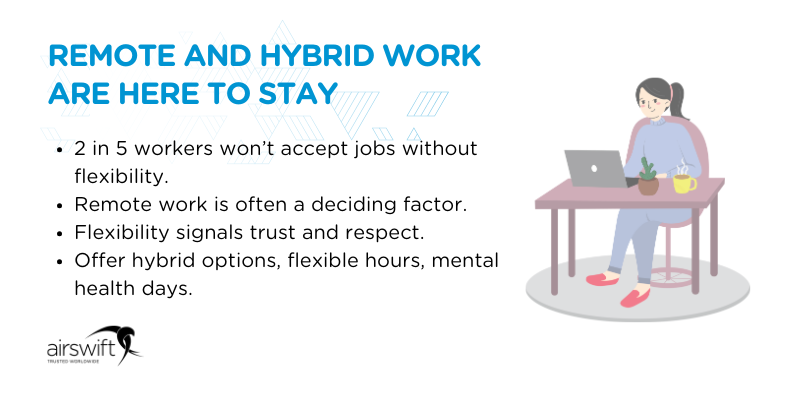
The pandemic permanently altered the way we view work, and flexibility is now non-negotiable for many. A survey by CNA found that two in five workers won’t accept a job without remote work or flexible hours.
This especially matters to younger workers and parents, who value control over their time and personal commitments. Ultimately, candidates want to feel trusted and empowered to do their best work in the way that works best for them.
What you can do:
- Offer hybrid or remote work options where possible.
- Allow flexible hours or compressed workweeks.
- Promote your work-life balance policies, like mental health days, generous leave, or family support.
Your culture or reputation isn’t a fit
You can’t fake culture, but you can be clear about what your company stands for and how you support your people. Remeber that candidates are doing their homework; Reading reviews, checking social media, and asking around. If they spot red flags like high turnover, poor leadership, or lack of diversity, they’ll move on.
Ultimately, people want to work for companies that make them feel safe, so if your mission is unclear or your reputation is shaky, expect hesitation.
Do this to highlight your company culture to potential employees:
-
- Be clear and transparent about your mission, values, and culture in job postings and interviews.
- Use social media to tell authentic stories - team highlights, behind-the-scenes content, and employee testimonials.
- Let candidates meet the team or tour the office virtually or in person.
- Address negative reviews professionally and encourage happy employees to share their experiences.
They got a better offer (or a counteroffer)
You can’t control what other companies offer, but you can control how you present yours. Make your offer stand out, not just with salary, but with what it means for the candidate’s future.
In a hot job market, speed and value matter. If another company moves faster, offers more money, or makes the candidate feel more valued, they’ll win.
This is especially true in high-demand fields like marketing, tech, and finance, where candidates often juggle multiple offers. They’ll choose the one that delivers the best mix of pay, flexibility, and growth.
What you can do:
- Move quickly. Don’t wait too long to make an offer.
- Put your best offer forward; don’t lowball and hope to negotiate later.
- Show genuine interest in the candidate. Make them feel wanted.
- If they’re considering a counteroffer, highlight what makes your opportunity better, like growth, culture, or flexibility.
How to turn “no” into “yes”
To attract and keep top talent, you need to meet them where they are; with competitive offers, a strong employer brand, and a clear vision for their future.
At Airswift, we help companies navigate the complexities of modern recruitment. From filling niche roles and expanding into new markets, to strengthening your employer brand, our global talent solutions are designed to help you attract, engage, and retain the best candidates faster and more effectively.
Talk to our experts today and discover how Airswift can help you build your workforce.