
By
Leanna Seah
July 8, 2025
Updated
January 21, 2026
Hiring managers often dust off an old job description, tweak a few lines, and hope the right candidates appear. In today’s market, that rarely works. Salaries have moved, skills have evolved, and candidates enjoy more choice than ever. Sticking with yesterday’s document can leave vacancies open for months, drain team morale, and delay key projects.
This article explains how to qualify a role so you spend less time interviewing and more time onboarding the person who will move your business forward.
Below are five steps to writing more effective job descriptions and improving your hiring process.
Start with today's market, not yesterday's assumptions
Three years ago, cybersecurity expertise in an engineering team was a bonus. Today, it is mandatory. Pay has followed suit. Yet many employers still set budgets and expectations with figures pulled from pre-pandemic spreadsheets. The result is a shortlist filled with candidates who either decline the offer or accept while planning a quick move to a better-paying competitor.
Before you write a single line of the job description, check live market data. Focus on:
- Current salary or day-rate bands for the location and seniority you need
- Prevalence of hybrid or fully remote working within your industry
- Availability of hard-to-find skills such as cloud security or data analytics
Having fresh numbers in hand means your offer will look competitive rather than nostalgic.
Be clear on the essentials vs. the nice-to-haves
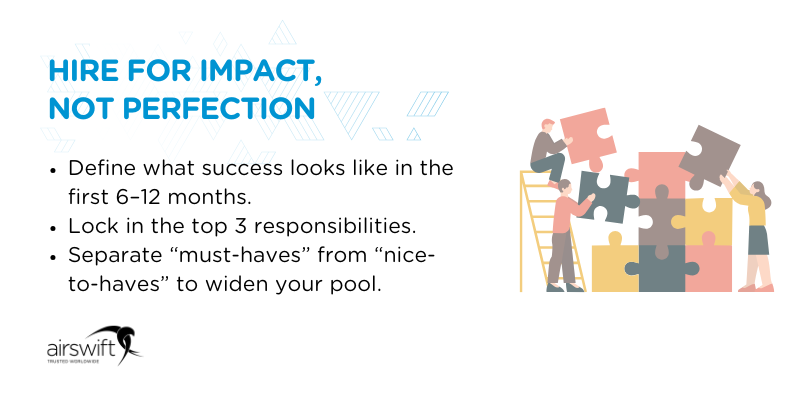
When roles are vacant, it's tempting to list every skill and experience that once seemed useful. A wishlist that tries to cover every scenario is tempting, but it shrinks the talent pool and leads to search fatigue. The fix is ruthless prioritisation.
When building your job brief, ask:
- What must this person deliver within the first six to 12 months?
- What are the top three responsibilities this person will focus on?
- Where is there room for flexibility if the perfect candidate doesn't exist?
Example: You need an electrical project manager to commission a new solar field. Essential items might be grid connection experience, knowledge of local regulations, and stakeholder communication. A background in battery storage would be great, but is not critical. Making that distinction up-front prevents your team from chasing a mythical perfect profile and opens doors to talented applicants who can grow into wider responsibilities.
Align the hiring budget with your expectations
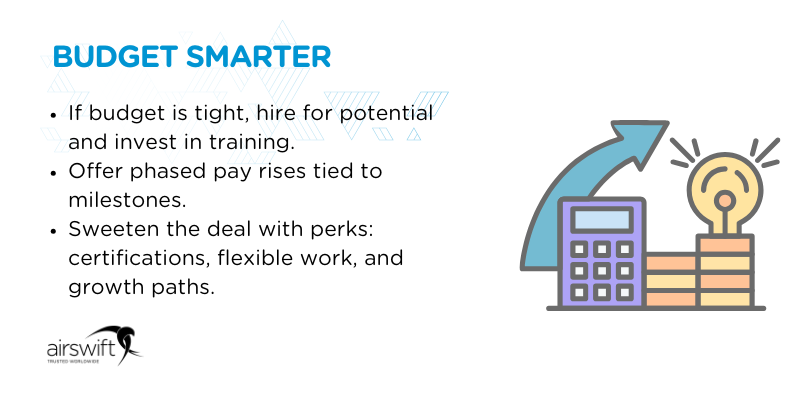
After prioritising skills, revisit the financial package. If the budget is fixed, consider:
- Hiring someone with potential and run a structured training or upskilling plan
- Offering phased pay rises linked to milestone achievements
- Adjusting seniority and bringing in external consultants for niche tasks
Being open to adjusting profiles often uncovers candidates who are highly engaged, loyal and eager to learn. Remember that compensation is broader than salary, so be sure to share clear information on incentives, professional development, and flexibility in your job brief.
Many specialist engineers value certification pathways and the chance to work on cutting-edge projects as much as an extra few per cent in pay.
Understand the cost of job vacancies
When roles stay open for too long, projects slow, overtime rises, customer satisfaction dwindles and stressed staff begin to look elsewhere.
Avoid this by asking:
- How critical is this role to business operations?
- At what point does not hiring start to cost the business more than paying market rate?
- What’s the contingency plan if you can’t fill the role at current parameters?
Having these conversations early helps prioritise what’s most important and allows your recruitment partner to focus the search accordingly.
Ultimately, when the monthly cost of vacancy is ten thousand pounds and the candidate you want costs two thousand pounds more than the budget, the math becomes simple. Paying the market rate saves money and momentum.
Work with a partner who challenges you
The most effective recruitment partnerships aren’t built on simply taking orders. Great recruiters act as consultants who question assumptions, bring evidence, and tell you when a brief will not land candidates. Choose a partner with the confidence to flag issues early and the network to solve them fast.
This can look like:
- Sharing live salary data rather than dated surveys
- Presenting multiple search strategies with likely timelines
- Advising on hiring models such as contract-to-hire when permanent budget is tight
- Offering honest feedback from candidate interviews so you can refine the brief in real time
Ready to find and attract top talent?
If you are about to hire and need a clear view of what the market will demand for the skills you need, talk to us. Airswift is happy to share real-time insights, refine your brief, and map out a search strategy that delivers talent quickly and sustainably.
Ready to write job descriptions that work? Get in touch and let’s start the conversation.