
By
Leanna Seah
August 13, 2025
Updated
July 3, 2026
Hiring new staff can greatly affect your team’s success. However, recruitment managers often overlook old or poor hiring mistakes when trying to fill roles quickly.
These hidden problems waste time and money. They also hurt your company’s reputation and can drive away top talent before you have a chance to impress them.
Ready to turn things around? Use these proven strategies to improve your hiring process and consistently attract top candidates.
What hiring mistakes can cost your company
Bad hiring practices may seem minor, but their impact is far greater than most leaders realise. Industry research shows that a single poor hire can cost organisations nearly $17.000 per employee.
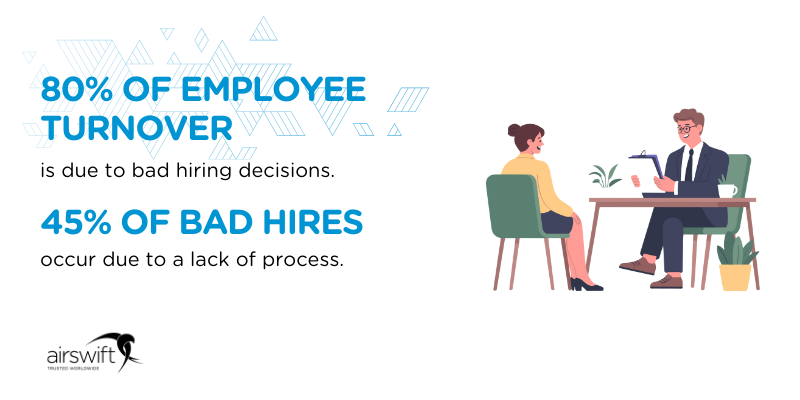
In fact, a study from Harvard Business Review also found that 80% of employee turnover stems from bad hiring decisions and 45% of bad hires occur due to a lack of process. These mistakes don’t just drain budgets. They harm team morale, reduce productivity, and create performance issues that are hard to measure but easy to feel.
#1: Failing to reassess a role
Use every vacancy as a reset moment
-
Review what the role actually looks like today
What tasks have changed or disappeared?
What new responsibilities now exist? -
Identify what no longer belongs in the role
Remove legacy duties that aren’t relevant.
Reassign low‑value or misplaced tasks to the right owners. - Clarify the non‑negotiables
What skills and outcomes are essential for the next 12–18 months?
What traits made previous hires in this role successful (or unsuccessful)? - Document the updates before you start sourcing
A 15 to 20 minute recalibration with the team prevents months of misalignment later.
#2: Badly written job ads with irrelevant requirements
A confusing or bloated jo ad can hinder your hiring efforts before they even begin. Overly complex descriptions attract the wrong candidates and cause qualified people to self‑select out. That leaves you sorting through irrelevant applications while missing the talent you actually want.
Create job ads that are clear, specific and purposeful
-
Start fresh, not from an old template
Update responsibilities and expectations so the ad reflects the role today, not three versions ago. -
Separate must‑haves from nice‑to‑haves
Candidates make decisions fast. Prioritise the skills that truly matter for success in the first 6–12 months. -
Focus on the essentials
Skip laundry lists of tasks. Highlight the outcomes the hire will own and what “good” looks like. -
Use plain, human language
Avoid jargon, internal acronyms, and filler. Make the job easy to understand at a glance.
Want to improve your job postings? Here’s what to include.
#3: Forgetting to look for diverse candidates
In the long term, these blind spots limit innovation and reduce team performance.
Build inclusivity into your hiring process from the start
-
Audit your language for bias
Avoid gendered terms, coded words (“aggressive,” “ninja,” “young and energetic”), or unrealistic criteria that disproportionately exclude certain groups. -
Use tools that flag problematic phrasing
Platforms like Textio or other language-optimisation tools help make job descriptions more gender‑neutral and inclusive. -
Standardise your criteria
Define what “qualified” means before reviewing applicants. Clear, consistent scoring reduces the impact of unconscious bias. -
Check for unnecessary barriers
Only include degree requirements, years of experience, or niche tools if they’re genuinely essential.
Watch our video for more tips on how to hire and build diverse teams:
#4: Not including a salary range
Leaving salary details out of job ads can create frustration and mistrust among potential candidates. Without clear pay information, qualified applicants may think twice about applying. They might also waste time on jobs that don’t meet their needs.
This lack of transparency often results in more unsuitable applications, making the hiring process longer and increasing costs.
Be transparent and strategic
-
List a clear salary range in the job ad
It sets expectations upfront and filters out candidates who aren’t aligned, saving both sides hours of back‑and‑forth. -
Benchmark the role before posting
Know the market rate and ensure internal parity to avoid pay compression issues and resentment within the team. -
Reinforce the range during early conversations
A quick confirmation in the first call prevents misalignment later in the process.
Pay transparency not only speeds up hiring, but also signals fairness and strengthens your employer brand.
#5: Ignoring internal candidates
When internal talent is overlooked, you risk losing people who already understand your culture, systems, and customers. It sends an unintended message that growth opportunities are limited, which can hurt morale and retention. Meanwhile, external hires often take longer to ramp and require more support.
Make internal mobility part of your hiring strategy
-
Review internal talent before posting externally
Identify employees who have the skills -or are close enough to skill‑adjacent- to grow into the role -
Treat internal applicants with the same structure and fairness
Clear criteria and interview consistency help avoid bias toward external candidates -
Promote from within when it makes sense
Backfilling a junior or mid‑level role is usually faster and less risky than filling a senior position externally. -
Communicate openly about growth pathways
Even if an internal applicant isn’t selected, clarity about next steps helps maintain engagement.
#6: Your interview practices are outdated
.png?width=800&height=400&name=Blog%20graphics%20with%20stock%20images%20-%20SAF%20copy%20(2).png)
Make your interviews structured but human
- Create specific questions
Go beyond basic questions. Focus on candidates' problem-solving skills, how they fit with your culture, and their career goals. This shows you value and recognise their unique strengths. - Create a welcoming environment
Whether virtual or in-person, ensure the setting is comfortable and free from distractions. Greet candidates warmly, provide clear instructions, and allow time for them to ask questions. - Streamline the process
Avoid unnecessary rounds or delays. Communicate timelines clearly and provide feedback promptly to keep candidates engaged and respectful of their time. - Involve multiple perspectives
Include team members who will work directly with the new hire. This not only gives candidates a broader view of the team but also helps assess fit from different angles.
Check out our video on how to avoid the most common onboarding mistakes
#7: Neglecting to check if leaders know how to interview
Prepare your interviewers
-
Provide interview training
Hold formal training sessions to cover best practices and legal issues. Teach techniques for asking open-ended, behavioral questions. This will help reveal candidates’ true potential. -
Share clear evaluation criteria
Provide interviewers with scorecards or rubrics that highlight the key skills and traits for the role. This helps reduce bias and ensures fair assessments. -
Encourage active listening
Teach interviewers to listen closely and take notes. This helps them respond thoughtfully and ask deeper questions about candidates’ answers. -
Encourage candidate engagement
Train interviewers to have a two-way conversation. They should answer candidate questions and share insights about the company culture and the role.
Unsure where to start with implementing training in the workplace? Check out our video!
#8: Not sending feedback to candidates after interviews
Build a respectful, transparent candidate experiece
-
Set expectations before the interview ends
Share the timeline, next steps, and when candidates can expect to hear from you. -
Communicate delays proactively
If a decision takes longer than planned, send a quick update explaining the hold‑up and the new timeline. -
Close the loop with every candidate
Thank them for their time and let them know once a decision is made. It takes minutes and does more for your reputation than any employer‑branding campaign.
#9: Not checking references after making a job offer
Skipping reference checks during the hiring process can leave you vulnerable to costly mistakes.
Make reference checks a non‑negotiable step before extending an offer
-
Treat them as part of the evaluation, not a formality
Use structured questions that probe for strengths, development areas, and real examples of performance. -
Check for consistency
Compare references with interview notes to validate what you’ve learned. -
Never issue an offer before references are complete
Withdrawing an offer after a negative reference is unprofessional, avoidable, and damaging to your brand.
#10. Rushing the hiring process
A slow hiring process can be challenging, but rushing it can be just as bad. When there's pressure to fill a role quickly, it’s easy to skip critical steps - reference checks, full evaluations, culture assessments. But rushed hiring almost always leads to mismatches, performance issues, and early turnover. What feels like “saving time” upfront usually results in more time (and cost) spent replacing the wrong hire.
Protect decision-making while moving with urgency.
-
Identify what can be streamlined, not skipped
Automate admin tasks, simplify scheduling, or tighten communication—but keep core assessments intact. -
Hold the line on essential criteria
If the candidate doesn’t meet the non‑negotiables, don’t compromise just to fill the seat. -
Use panel interviews strategically
Combine conversations where possible so you gather multiple perspectives without extending the timeline.
#11. Creating a complex interview process
A drawn-out, multi-layered process can be just as damaging as rushing an interview. Endless interview rounds, excessive tests, or too many decision‑makers cause strong candidates to lose interest - or accept another offer before you even decide.
Simplify, streamline, and set expectations from the start
-
Design the process before reviewing CVs
Define interview stages, who’s involved, and what each step evaluates. -
Set clear timelines for the team
Ensure hiring managers and interviewers understand deadlines and decision points. -
Flag delays early
If the process stalls, raise risks to the hiring leader so you don’t lose top candidates to faster‑moving employers.
#12. Focusing on formal education over experience
Evaluate for real impact and performance
-
Prioritise skills and practical experience
Look at what the candidate has done, not the institution on their CV. -
Assess problem‑solving and learning ability
These are stronger indicators of long‑term success than academic background. -
Value character and collaboration
Teamwork, adaptability, and attitude often predict retention and performance better than formal education.
Searching for talented professionals to join your team?
Looking to fill open roles with qualified candidates who are a good fit and will be long-term assets? Connect with our recrutment specialists today!