
By
Alicia Edwards
August 4, 2025
Updated
August 5, 2025
What is an employee referral program?
An employee referral program is a recruitment strategy that encourages existing employees to recommend potential candidates for job openings within their organisation. These programmes are designed to leverage the networks of current employees to find new talent, making use of personal connections and professional relationships. It is an effective way to tap into a talent pool and often leads to faster and more reliable hires.
When someone asks, “What is an employee referral program?” the answer is simple: it is a structured referral system where employees suggest people from their network, and in return, they may be rewarded with a referral bonus or other incentives.
Why are employee referral programs important?
Employee referral programs are crucial to organisations aiming to streamline their recruitment efforts. They offer multiple benefits for both employers and employees. Here’s why they matter:
- Faster hiring process: Referred candidates often bypass some stages of recruitment as they are pre-vetted by the referrer, speeding up the process.
- Higher quality candidates: Employees typically refer individuals who they believe are a good fit for the company’s culture, leading to more reliable hires.
- Improved retention: Employees hired through referrals tend to stay with the company longer, as they come with a personal endorsement and a good understanding of the work environment.
- Cost-effective: Referral programmes are generally more affordable than recruitment agencies, with companies saving on high agency fees. Referral bonuses are typically a one-time payment, making them more cost-effective.
How does an employee referral program work?
The employee referral process involves a series of steps that allow employees to recommend candidates for open positions. Here’s how it typically works:
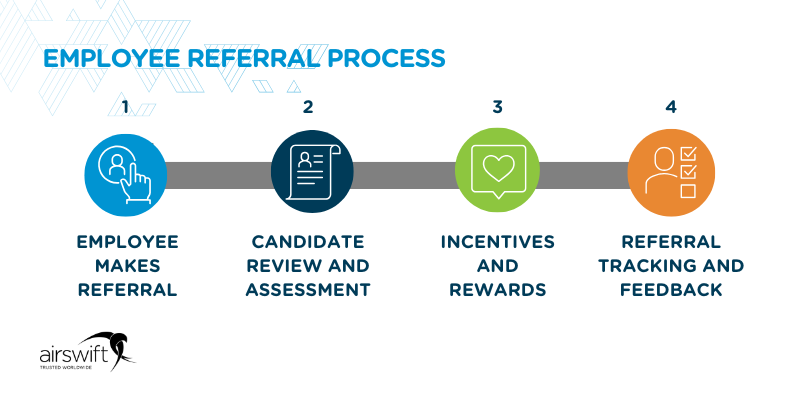
1. Employee makes a referral
Employees refer candidates from their network by submitting the candidate's details to the HR department or recruitment team. This is often done through a referral portal or via email.
2. Candidate review and assessment
HR teams or recruiters review the referral and assess the candidate's fit for the role. This includes evaluating the candidate's job description and qualifications against the job requirements.
3. Incentives and rewards
Successful referrals may result in referral rewards for the employee who made the referral. These rewards often take the form of employee referral bonuses, which can vary depending on the role and level of the hire.
4. Referral tracking and feedback
The progress of each referral is tracked through referral tracking tools or systems. Feedback is usually given to the referring employee regarding the success of their referral.
Types of employee referral programs
Organisations implement various types of referral programs based on their specific hiring needs. Some common types include:
- Open referral programs: Employees can refer candidates for any open role in the organisation. This provides flexibility and allows employees to contribute to multiple job openings.
- Targeted referral programs: These are focused on specific roles or departments that are harder to fill. Employees are encouraged to refer candidates with the particular skills or experience required.
- Internal referral programs: Employees are encouraged to refer candidates within their own teams or departments. This approach ensures that referred candidates are familiar with the team's workflow and culture.
- Referral programs via social media: In this type of program, employees use social media sites like LinkedIn or Facebook to refer candidates. This allows employees to tap into their wider network, including those outside the company.
Benefits of employee referral programs for businesses
Employee referral programs offer several key benefits that can help organisations attract top-tier talent. Here are some of the main advantages:
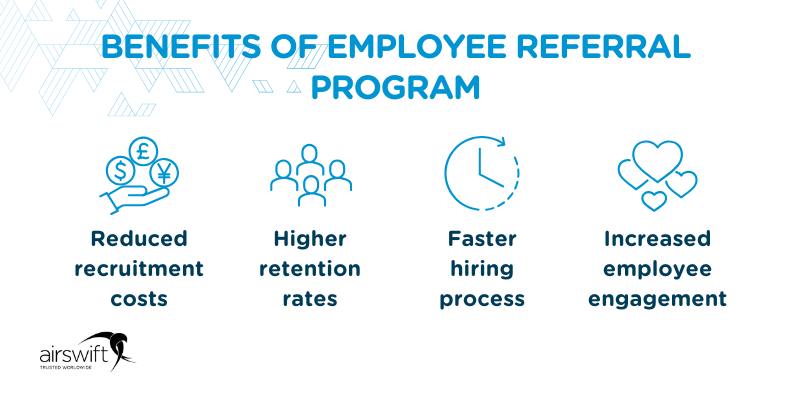
1. Reduced recruitment costs
Referral programs are a cost-effective alternative to traditional recruitment methods, such as using recruitment agencies. The cost of referral bonuses is usually lower than the fees paid to recruitment firms.
2. Higher retention rates
Candidates hired through referrals are more likely to stay with the company for a longer period. Since they come with a recommendation from a trusted colleague, they are more likely to fit well with the company culture and values.
3. Faster hiring process
The referral process tends to be quicker because employees typically recommend candidates they know and trust. This reduces the time spent on screening and interviewing candidates, allowing companies to fill positions faster.
4. Increased employee engagement
Offering referral bonuses and rewards creates an incentive for employees to participate in the hiring process, leading to increased engagement and morale.
Best practices for running an employee referral program
To make the most out of an employee referral programme, businesses should follow certain best practices:
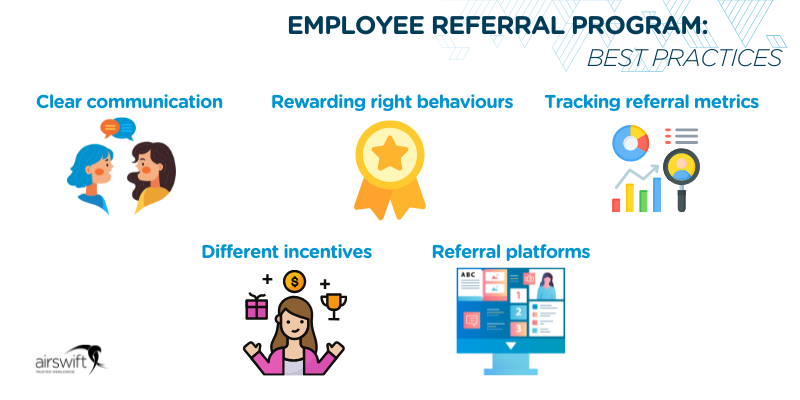
- Clear communication: Make sure employees understand how the referral process works, what roles are available, and what the rewards or referral bonus amounts are.
- Incentivise the right behaviours: Reward employees who bring in quality candidates, not just those who make the most referrals. This ensures that the candidate experience is aligned with the company's hiring goals.
- Track referral metrics: Measure the success of the programme using referral metrics, such as the number of successful referrals, time-to-hire, and employee retention rates. This will help determine the programme’s effectiveness.
- Offer different types of incentives: Tailor rewards to suit the roles being filled, ensuring that employees are incentivised appropriately. This could include offering larger referral bonuses for harder-to-fill positions.
- Utilise referral platforms: Implement referral platforms to streamline the process, making it easier for employees to submit referrals and for HR teams to track progress.
Potential drawbacks of employee referral programs
While employee referral programmes offer numerous benefits, there are a few challenges to consider:
- Lack of diversity: Since employees tend to refer people they know personally, relying too heavily on referrals can result in a lack of diversity in the workforce. To address this, companies should encourage referrals from diverse networks.
- Referral fatigue: Constantly asking employees to refer candidates can lead to referral fatigue, where employees feel overburdened or uninterested in the process. To avoid this, employers should ensure that the programme remains fresh and incentivised.
- Over-reliance on referrals: While referrals can be a great source of talent, businesses should not rely solely on them. Using a mix of recruitment methods, including job boards, social media, and recruitment agencies, will help ensure a diverse and high-quality candidate pool.
Conclusion
An employee referral program is a valuable tool for companies looking to streamline their recruitment processes and attract top talent. By leveraging the networks of existing employees, companies can access a wider talent pool while saving time and money. With the right incentives and referral system, organisations can foster stronger relationships with their employees, improve hiring outcomes, and increase retention rates.
If you’re considering implementing a referral programme, remember to balance incentives with diversity goals, track your referral metrics, and ensure that the programme aligns with your overall recruitment strategy. Looking to enhance your recruitment strategy and build a strong team? Airswift can help. Explore our services and uncover which workforce solution service best meets your needs.