
By
Alicia Edwards
December 4, 2025
Updated
December 4, 2025
If you’ve ever asked "what are key performance indicators (KPIs)?", they are measurable values that show how effectively an individual, team, or organisation is achieving specific objectives. KPIs act as a compass, guiding businesses towards their goals by tracking progress in a clear and structured way.
Why are kpis important?
KPIs matter because they turn vague ambitions into actionable targets. Instead of saying “we want to grow”, a KPI might state “increase website traffic by 20% in six months”. This clarity helps teams focus, measure success, and make informed decisions.
Types of kpis
KPIs can vary depending on the industry and objectives, but they generally fall into two categories:
- Quantitative kpis – numerical measures such as revenue growth, conversion rates, or customer acquisition cost.
- Qualitative kpis – non-numerical indicators like customer satisfaction or employee engagement scores.
Both types are essential for a balanced view of performance.
Examples of common kpis in different business areas
Here are some widely used KPIs across different areas:
Sales and marketing
- Monthly sales growth
- Lead conversion rate
- Website traffic and engagement
Finance
- Net profit margin
- Operating cash flow
- Return on investment
Human resources
- Employee turnover rate
- Training completion percentage
- Time-to-hire
How to set effective kpis
Choosing KPIs is more than selecting random figures, it’s about creating meaningful measures that drive performance. To do this effectively, KPIs should follow the SMART framework:
.png?width=800&height=400&name=key%20performance%20indicators%20%20(Smart%20approach).png)
Specific – clearly defined and linked to a goal
Avoid vague statements like “increase sales”. Instead, define what success looks like: “increase online sales by 15% in the next quarter”. Specificity ensures everyone understands the target.
Measurable – based on data, not guesswork
KPIs must be quantifiable. For example, “improve customer satisfaction” is too broad, but “achieve a customer satisfaction score of 90%” gives a clear metric to track.
Achievable – realistic given resources and constraints
Setting impossible targets demotivates teams. Consider your budget, staff, and time before committing. If your average growth is 5%, aiming for 50% in one month is unrealistic.
Relevant – aligned with business priorities
KPIs should support strategic objectives. If your company’s focus is expanding into new markets, a KPI like “launch three new regional campaigns” is more relevant than “increase social media followers”.
Time-bound – tied to a deadline for accountability
Without a timeframe, goals lose urgency. Adding deadlines such as “by the end of Q2” keeps teams focused and progress measurable.
This SMART approach ensures KPIs are actionable, motivating, and aligned with overall business strategy. When KPIs meet these criteria, they become powerful tools for decision-making rather than confusing numbers on a dashboard.
How to track and review kpis
Tracking KPIs requires consistent monitoring. Use dashboards or reporting tools to visualise progress and identify trends. Regular reviews, monthly or quarterly help teams adjust strategies if targets aren’t being met. KPIs should evolve as business goals change, so flexibility is key.
Common mistakes with kpis
While KPIs are powerful tools for measuring success, they can easily fail if they’re not designed or implemented correctly. Here are the most common pitfalls:
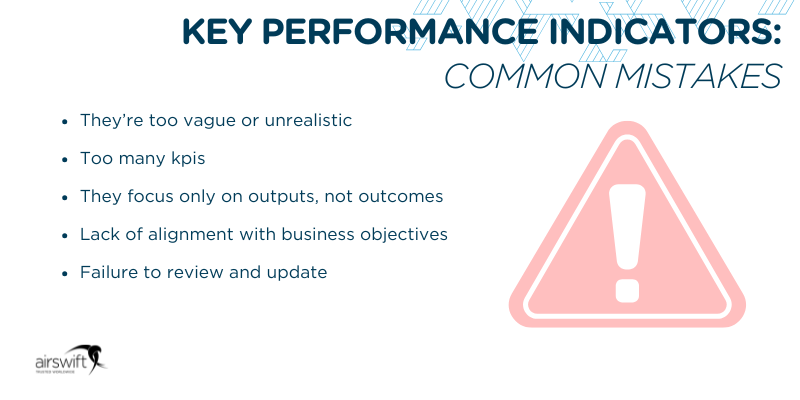
They’re too vague or unrealistic
A KPI like “increase engagement” is meaningless without specifics. Similarly, setting targets that are impossible to achieve can demotivate teams. KPIs should be clear, measurable, and grounded in reality.
There are too many kpis, causing overwhelm
Tracking dozens of indicators dilutes focus and creates confusion. Instead, prioritise the KPIs that truly matter to your strategic goals. Quality beats quantity every time.
They focus only on outputs, not outcomes
Measuring activity (like number of emails sent) without considering results (such as leads generated) gives a false sense of progress. KPIs should reflect impact, not just effort.
Lack of alignment with business objectives
KPIs that don’t connect to wider organisational goals waste time and resources. Every KPI should clearly support a strategic priority.
Failure to review and update
Business environments change, and KPIs must evolve too. Sticking with outdated indicators can lead to poor decisions and missed opportunities.
Avoid these mistakes by keeping KPIs simple, relevant, and actionable. Always ask: does this KPI help us measure what truly matters?
Why kpis drive success
KPIs provide clarity, accountability, and motivation. They help businesses stay on track, identify areas for improvement, and celebrate achievements. Without KPIs, progress becomes hard to measure, and decision-making relies on guesswork.
Ready to turn your kpis into real results?
Talk to our experts today and discover how Airswift can help you build your workforce.