
By
Alicia Edwards
September 29, 2025
Updated
October 1, 2025
What actually is imposter syndrome?
If you’ve ever felt like a fraud at work, doubting your achievements despite clear evidence of success, you’re not alone. This blog breaks down the concept, why it matters, and what you can do about it.
Who typically experiences this pattern?
It affects people across industries, roles, and experience levels. From junior staff to senior executives, imposter syndrome doesn’t discriminate. In fact, high-achievers are often more prone to it because they set high standards for themselves and fear falling short.
What some of the common triggers?
Common triggers include:
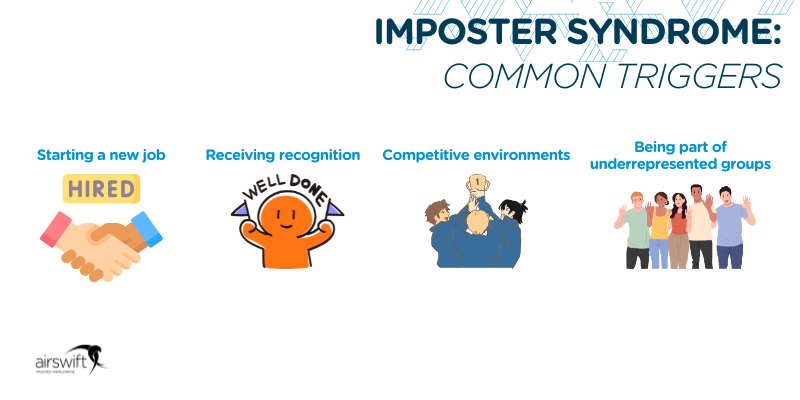
Starting a new job or role
Taking on a new position, whether it's a promotion, lateral move, or joining a new company, can spark feelings of inadequacy. You might feel like you don’t deserve the role or worry that others will “find out” you’re not as competent as they think. This is especially common when:
- The expectations are unclear or high.
- You’re surrounded by experienced colleagues.
- You’re stepping into a leadership or highly visible role.
Receiving recognition or awards
Ironically, being praised or rewarded can trigger imposter feelings. You might think:
- “I don’t deserve this.”
- “They must have made a mistake.”
- “Others are more deserving.”
This often stems from internalising success as luck or timing rather than skill or effort.
Working in competitive environments
High-performance cultures can amplify self-doubt, especially when:
- Colleagues seem more confident or accomplished.
- There’s constant comparison or pressure to outperform.
- Feedback is scarce or overly critical.
Being part of underrepresented groups in the workplace
If you’re one of the few (or only) people from your background, identity, or discipline in a team, you may feel:
- Pressure to represent your group.
- Like you need to prove your worth more than others.
- Isolated or excluded from informal networks.
Top 5 signs you might be dealing with imposter syndrome (with tips)
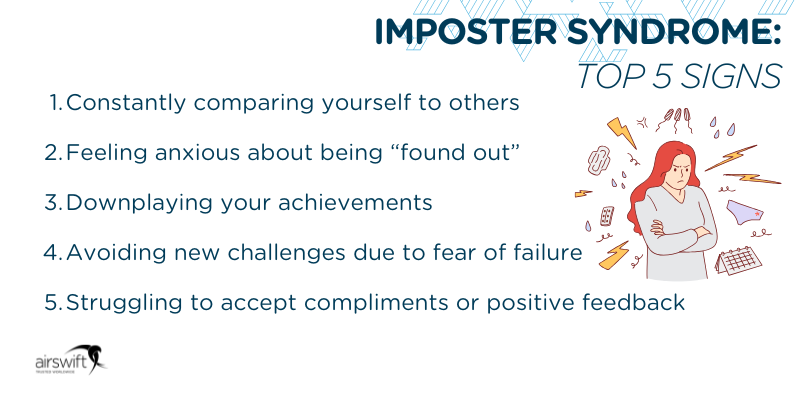
1. Constantly comparing yourself to others
You might find yourself measuring your worth against colleagues, peers, or even strangers online. This can manifest as:
- Feeling inadequate when others succeed.
- Believing others are more talented, intelligent, or deserving.
- Minimising your own progress because it doesn’t seem as impressive.
Tip: Try shifting your focus to your own growth and achievements. Everyone’s journey is different.
2. Feeling anxious about being “found out”
This is the classic imposter fear, the belief that you’ve somehow fooled others into thinking you’re competent, and it’s only a matter of time before they realise the truth.
- You may worry that a mistake will expose you.
- You might overprepare or avoid visibility to prevent scrutiny.
Tip: Remind yourself that your accomplishments are real and earned. Feedback and recognition aren’t accidents.
3. Downplaying your achievements
Even when you succeed, you might attribute it to luck, timing, or help from others, anything but your own skill.
- You deflect praise or say things like “It wasn’t a big deal.”
- You feel uncomfortable owning your success.
Tip: Practice acknowledging your role in positive outcomes. You did the work - own it.
4. Avoiding new challenges due to fear of failure
Imposter syndrome can make you hesitant to take on new responsibilities or opportunities.
- You might say no to projects or promotions.
- You fear that trying something new will expose your “incompetence.”
Tip: Growth comes from stepping outside your comfort zone. Mistakes are part of learning, not proof of inadequacy.
5. Struggling to accept compliments or positive feedback
When someone praises you, you might feel awkward, dismiss it, or assume they’re just being polite.
- You feel like you don’t deserve the recognition.
- You worry they’ll change their mind once they “see the real you.”
Tip: Try simply saying “thank you” and letting the compliment land. You’re allowed to feel proud.
Why it matters in the workplace
Imposter syndrome can lead to burnout, reduced job satisfaction, and missed opportunities. When employees doubt themselves, they may avoid speaking up, hesitate to apply for promotions, or overwork to “prove” their worth.
For organisations, this means losing out on the full potential of talented individuals. It can also affect team dynamics, as those with imposter feelings may withdraw or struggle to collaborate confidently.
How can you manage imposter syndrome?
The good news is that imposter syndrome can be managed. Here are some practical strategies:
- Talk about it: Sharing your feelings with trusted colleagues or mentors can help normalise the experience. You’ll likely find others have felt the same way.
- Track your wins: Keep a record of achievements, positive feedback, and successful projects. Reviewing these can reinforce your competence.
- Challenge negative thoughts: When you catch yourself thinking “I’m not good enough”, ask for evidence. Often, the facts tell a different story.
- Set realistic goals: Perfectionism fuels imposter syndrome. Aim for progress, not perfection.
- Seek support: Coaching, therapy, or employee support programmes can offer tools to build confidence and resilience.
What can employers can do to help tackle this?
Creating a culture that supports psychological safety is key. Employers can:
- Encourage open conversations about self-doubt
- Recognise and celebrate achievements regularly
- Provide mentorship and development opportunities
- Ensure inclusive practices that support diverse teams
Final thoughts
So, what is imposter syndrome? It’s a common, often hidden challenge that affects how people see themselves at work. By understanding it, talking about it, and using practical strategies, individuals and organisations can reduce its impact and foster a more confident, empowered workforce.
If you’ve ever asked yourself, “do I really belong here?”, remember: you’re not alone, and yes, you absolutely do.
Want to tackle your imposter syndrome right now? Sign up for our job portal and become a part of Airswift!