
By
Alicia Edwards
November 24, 2026
Updated
November 24, 2026
If you’ve ever asked what is a zero hour contract?, it’s an employment agreement where the employer does not guarantee a minimum number of working hours. Employees are offered work as and when it becomes available, and they are not obliged to accept every shift. This type of contract is common in industries that require flexibility, such as hospitality, retail, and healthcare.
How do zero hour contracts work?
What are the benefits of zero hour contracts?
Zero hour contracts can be beneficial in certain situations:
- Flexibility for workers – ideal for students, retirees, or those seeking supplementary income.
- Adaptability for employers – helps businesses manage fluctuating demand without committing to fixed hours.
- Opportunity for varied experience – workers can gain exposure to different roles and environments.
What are the drawbacks of zero hour contracts?
Despite the flexibility, there are challenges:
- Income insecurity – workers may struggle to budget without guaranteed hours.
- Limited employment rights – some benefits like sick pay or holiday entitlement may be restricted.
- Work-life balance issues – unpredictable schedules can make planning difficult.
Who uses zero hour contracts?
These contracts are common in sectors where demand varies, including:
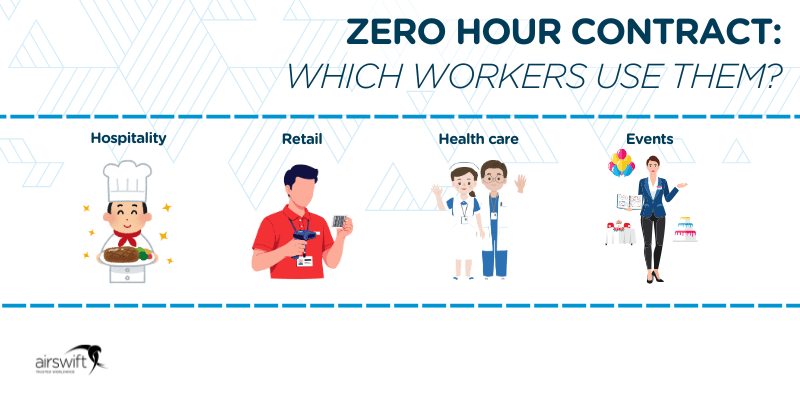
Hospitality and catering
This industry frequently use zero‑hour contracts due to varying customer numbers, seasonal peaks, and event‑driven demand. Restaurants, hotels, bars, and catering companies often need additional staff during busy periods such as weekends, holidays, or large functions, making flexible staffing arrangements practical for managing costs and service levels.
Retail and customer service
These businesses also make regular use of zero‑hour contracts, particularly during sales periods, product launches, and seasonal shopping peaks such as Christmas. Stores and call centres may require extra staff at certain times of day or year, while quieter periods require fewer workers, making flexible contracts appealing.
Healthcare and social care
These sectors use zero‑hour contracts to maintain workforce flexibility while ensuring care needs are met. Care homes, home‑care providers, and healthcare services often need staff to cover absences, fluctuating patient demand, or emergency situations, where rigid schedules are less practical.
Seasonal industries such as tourism and events
These industries rely heavily on zero‑hour contracts because work is often concentrated around specific times of the year. Hotels, attractions, festivals, and event organisers typically require additional staff during peak seasons but far fewer workers outside those periods, making flexible, short‑term staffing arrangements a common solution.
When is a zero hour contract suitable?
Zero hour contracts work best when both parties value flexibility. They are suitable for:
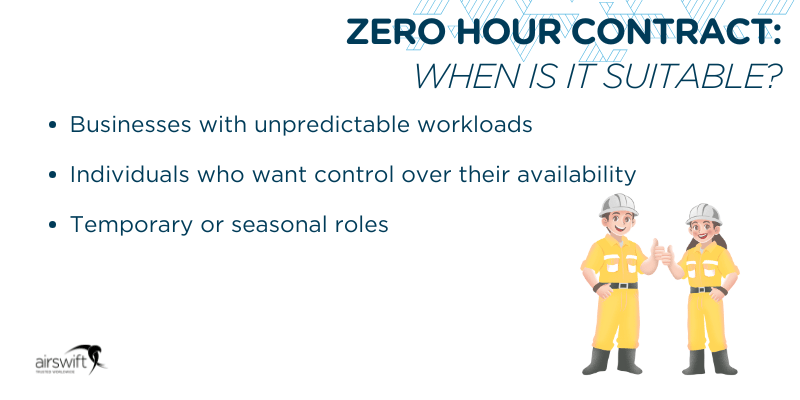
Businesses with unpredictable workloads
Zero‑hour contracts can be a good fit for organisations where demand fluctuates and staffing needs change at short notice. This includes industries affected by seasonal peaks, variable customer demand, or project‑based work. In these cases, zero‑hour arrangements allow businesses to scale their workforce up or down without committing to fixed hours that may not always be needed.
Individuals who want control over their availability
For some workers, flexibility is a key benefit. Zero‑hour contracts can suit students, carers, semi‑retired individuals, or people with multiple income streams who want the option to accept or decline work based on their availability. When used fairly, these contracts allow individuals to fit work around other commitments rather than being tied to a fixed schedule.
Temporary or seasonal roles
Zero‑hour contracts are often suitable for short‑term, casual, or seasonal positions where work is only required for limited periods. Examples include holiday cover, event‑based roles, or peak trading periods. In these situations, a zero‑hour contract can provide a straightforward way to engage workers without creating expectations of long‑term or regular hours.
Why understanding zero hour contracts matters
For employers, zero hour contracts can reduce costs and improve agility. For workers, they offer freedom but require careful financial planning. Understanding the pros and cons helps both sides make informed decisions.
Ready to build a flexible and reliable workforce?
Understanding zero hour contracts is just the start. At Airswift, we help companies across energy, infrastructure, and technology navigate complex workforce models with confidence. Whether you need support with contingent staffing, compliant employment solutions, or sourcing skilled professionals for unpredictable workloads, our global team is here to help you stay agile without compromising on quality.
Talk to Airswift today to find the right workforce solution for your business and keep your projects moving forward.