
By
Alicia Edwards
July 15, 2025
Updated
October 13, 2026

A contingent workforce is made up of professionals hired on a non-permanent basis
These may include contract workers, consultants, freelancers, or agency staff, all brought in to meet short-term or project-specific needs. Unlike traditional employees, contingent workers are not tied to your business with long-term contracts.
When we ask, “what is a contingent workforce?”, we’re really asking how today’s organisation meets demand without long-term headcount. This model offers flexibility, access to specialised skills, and the ability to adapt workforce size based on projects, markets, or seasonal needs.
Examples of contingent workers
Contingent work includes a wide range of roles, such as:
- IT consultants
- Marketing freelancers
- Manufacturing subcontractors
- Temp finance specialists
Some join through Managed Service Providers (MSPs) or Contingent Workforce Solutions firms that handle onboarding, pay, and compliance.
Others are hired directly, supported by workforce solutions platforms or talent marketplaces. Whether through an agency or direct hire, contingent talent brings specialised skills without long-term commitment.
Why is it gaining popularity?
The rise of the gig economy has made it easier than ever to access on-demand talent. Digital transformation has pushed companies to become more agile, and many are rethinking how they build teams. A traditional 9-to-5 model doesn’t always fit today’s pace.
Bringing in a mix of freelancers, agency workers, and independent contractors can lead to significant cost savings. Companies no longer need to provide full employee benefits or commit to long-term hires when the workload is temporary. This is particularly helpful during product launches, market tests, or when trying out new service lines.
When should you use a contingent workforce?
Contingent workers are ideal when:
- You need specialised skills quickly
- You’re scaling up for a time-limited project
- You want to avoid the overhead of PAYE and National Insurance Contributions
- You need to test a new market or product before hiring locally
- Your HR team needs extra help with services procurement or niche roles
They’re also useful during hiring freezes or when headcount is capped, but the work still needs to get done.
Benefits for employers
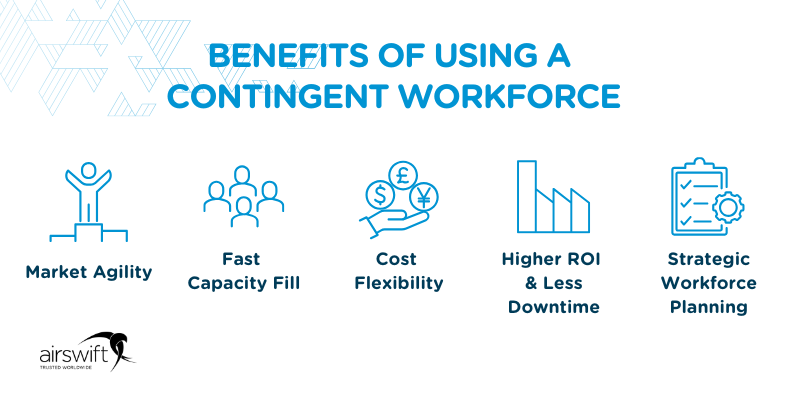
Using a contingent workforce helps businesses adapt fast and manage change. You can:
- Respond quickly to shifts in the market or customer needs
- Fill workforce capacity gaps without long hiring cycles
- Reduce overheads by scaling back staff after a project ends
This approach also supports strategic workforce planning, letting you forecast talent needs more precisely. When done well, it enhances your company’s return on investment, reduces downtime, and supports business management at every stage of the business lifecycle.
Risks to consider
However, contingent work isn’t risk-free. Misunderstanding a worker’s employment status can lead to legal issues, particularly under IR35 legislation in the UK or the Fair Labour Standards Act in the US. Businesses must track contractor engagements carefully to remain within labourbor laws and employment law requirements.
There are also risks tied to regulatory compliance, security risks, and knowledge loss. Giving external workers access to systems or customer data requires communication, clear policies, and sometimes NDAs.
Contingent workforce management: best practices
Contingent Workforce Management (CWM) is the practice of handling every aspect of the external workforce. This includes:
- Sourcing
- Vetting
- Onboarding
- Monitoring work
- Managing offboarding
It requires systems, structure, and strategic thinking.
Companies may use SOW (Statement of Work) agreements for project-based roles or partner with an MSP for larger contingent programmes. Either way, success depends on clear communication, legal oversight, and tools that integrate with your HR systems.
If you're handling dozens of temporary employees or contractors, investing in proper workforce management software or support from a contingent workforce solutions provider helps keep things compliant and efficient.
Supporting the contingent workforce
A good organisation ensures contractors are not left out. While they may not get full employee benefits, offering a smooth onboarding process, clear goals, and timely payments supports employee experience.
Efforts to include contingent workers in team meetings, briefings, or even company updates improve performance. It also fosters a positive working culture and protects your brand.
Some firms run hire train deploy models, where they work with partners to train, place, and Deploy skilled workers for client projects. This can work well for tech, healthcare, or manufacturing firms needing pre-qualified, job-ready talent.
Legal and compliance tips
Before bringing on contingent workers, always assess tax and social security obligations. You may need to complete a Right to Work Check or consult HMRC to confirm classification. In cross-border cases, review GDPR and UK GDPR rules for storing personal data.
If unsure, seek legal advice on contract wording, tax implications, and worker protections. Be clear about who handles PAYE payrolls, equipment, and training.
Conclusion
Understanding what is a contingent workforce is essential in today’s fast-moving labour market. It’s not just about plugging gaps. it’s about building a responsive, lean, and skilled team that evolves with business needs.
With good planning and clear contingent workforce management, companies can boost flexibility, manage risk, and get access to the talent they need without overloading their permanent staff. From workforce planning to compliance checks, the future belongs to those who can manage both their internal and external workforce with confidence.
Are you looking for contingent technical specialists for a specific project?