
By
Diyaa Mani
October 7, 2026
Updated
October 7, 2026
A high‑converting job description for technical and engineering roles does more than list duties; it sells the opportunity with clarity, market awareness, and a sharp focus on outcomes.
The elements below align with how experienced technical recruiters at global STEM specialists position roles to attract scarce talent, not just fill requisitions.

Key takeaways
- Align job descriptions with current market conditions, including salary expectations, work models, and in-demand technical skills.
- Use specific job titles and outcome-focused responsibilities to help candidates quickly understand the role and assess fit.
- Separate essential requirements from nice-to-have skills to attract a broader pool of qualified technical talent.
- Be transparent about salary, benefits, flexibility, team structure, and technology stacks to build trust and improve application rates.
- Treat job descriptions as talent attraction tools by showcasing career growth, employer value, and a streamlined hiring process.
1. Market‑aligned role definition
Start with the market you’re hiring into, not an old internal template. Salaries, work models, and in‑demand skills for engineers and technologists change quickly, and your brief needs to reflect that reality.
Before writing, check current salary bands, typical flexibility (onsite, hybrid, remote), and availability of niche skills like cloud security, data analytics, or HV grid expertise in the location you’re targeting. This ensures your job description feels credible to candidates who are already fielding multiple offers.
2. A clear, outcome‑driven job title
Generic titles like “Engineer” or “Developer” underperform in search and confuse candidates. A high‑converting technical job description uses a precise, outcome‑linked title that mirrors market language.
Think “Senior Electrical Project Engineer – Grid Connection (Renewables)” rather than “Project Engineer.” This helps your role surface in job boards, SEO, and internal search tools while signaling exactly what type of work the candidate will own.
3. A compelling, benefit‑led opening summary
The first three to five lines should answer: “Why this role, in this team, now?” Technical and engineering professionals want context, impact, and a sense that the work matters.
Use your opening to highlight project outcomes (for example, energy transition, large‑scale infrastructure, cutting‑edge technology), where the role sits in that mission, and what success in the first 6–12 months looks like. Keep it punchy, specific, and focused on the value a high performer can create.
4. Essential vs. “nice‑to‑have” skills separated
One of the fastest ways to lose qualified candidates is by turning your requirements section into a wish list. In tight technical markets, over‑specification shrinks the talent pool and deters strong applicants who don’t meet every single tick box.
Divide your skills into two clearly labeled sections: “Must‑have skills in the first 12 months” and “Nice‑to‑have skills you can grow into.” For example, grid connection experience, local regulatory knowledge, and stakeholder communication might be essential, while battery storage experience is desirable but not mandatory.
5. Responsibilities tied to real project deliverables
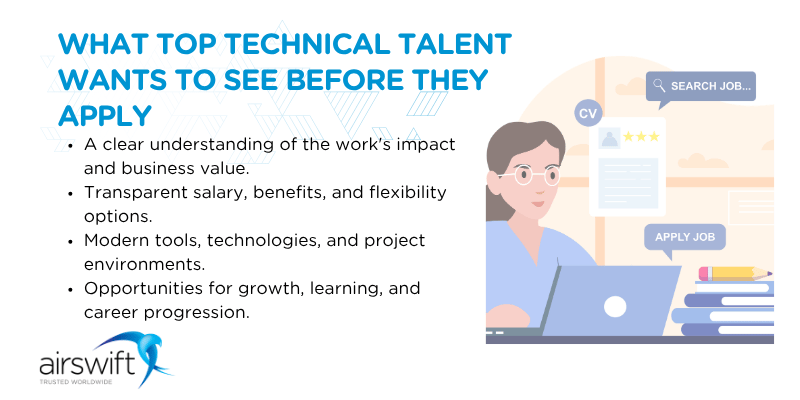
High‑converting engineering job descriptions describe what the person will deliver, not just what they will “support.” Strong candidates want to see concrete outputs and understand how their work will be measured.
Replace vague lines like “responsible for project support” with statements linked to milestones, such as “lead commissioning of a new solar field from pre‑construction through grid connection” or “own end‑to‑end design and deployment of cloud‑based data pipelines.” This helps candidates assess fit and self‑select based on real deliverables.
6. Transparent information on reward and flexibility
Technical professionals, especially in hot skill areas, are increasingly willing to move for the right mix of salary, benefits, and flexibility. If your job description is silent on these points, candidates will often assume the worst.
Include realistic salary or day‑rate ranges anchored to current market data, outline hybrid/remote options, and highlight extras that matter in STEM sectors, such as professional development budgets, certification pathways, or project rotation opportunities. This mirrors how strong talent partners position roles when they know candidates have choices.
7. Skills‑based requirements, not just qualifications
Leading tech and engineering employers are shifting from degree‑centric hiring to skills‑based assessment. Your job description should reflect that by prioritising demonstrable capabilities over rigid educational checklists.
Focus on specific technical skills (languages, tools, frameworks, standards), plus key behaviors like problem‑solving, collaboration, and safety mindset, and make degrees or years of experience flexible where possible. When you do require a formal qualification or chartership, explain why it matters in the context of the work.
8. Language tailored to technical candidates (not internal jargon)
Engineers and technical specialists look for precise, credible language that reflects their world. Overusing corporate buzzwords or internal acronyms can make your description feel generic or unclear.
Use terminology that matches current industry practice (for example, HV, SCADA, DevOps, grid code compliance, full‑stack) and avoid vague phrases like “rockstar” or “ninja.” Aligning with the way technical communities talk about their work boosts both relevance and trust.
9. A realistic view of tools, tech stack, and environment
Technical candidates care deeply about the technologies they’ll be working with and whether they are current, scalable, and well supported. Vague statements like “experience with modern tools” don’t help them decide.
Spell out the stack, tools, and frameworks where you can, whether that’s Python, JavaScript, React, Node.js, cloud providers, or specific engineering design suites. Be honest about legacy elements and modernisation plans, as transparency here is often a key differentiator in competitive markets.
10. A clear picture of team structure and collaboration
Engineers rarely work in isolation; they join teams and systems. High‑converting job descriptions give a sense of who the candidate will collaborate with and how decisions are made.
Include details such as team size, reporting lines, key cross‑functional partners (for example, HSE, project controls, data, product), and where the role sits in the wider project lifecycle. This helps candidates picture themselves in the environment and gauge whether the mix of autonomy and support suits them.
11. Signals of a strong, tech‑forward employer brand
For in‑demand technical talent, the employer brand is part of the “offer.” A job description that reads like a dry checklist misses the chance to show why your organisation is worth their time.
Use a short section to highlight your track record in engineering or technology projects, your commitment to safety and quality, and your investment in innovation and career development. Referencing large‑scale or high‑profile projects, global reach, or specialist domain expertise can reassure candidates that they are joining a serious, long‑term player.
12. A streamlined, candidate‑friendly hiring process
Strong technical and engineering candidates drop out quickly when processes feel opaque, slow, or arbitrary. A high‑converting job description sets expectations up front.
Outline the number of interview stages, whether there will be coding tasks, technical assessments, or case studies, and approximate timelines for feedback and decisions. Emphasising structured, skills‑based evaluation (rather than endless rounds of generic interviews) reassures technical professionals that their time will be respected.
13. A clear call‑to‑action that invites the right applications
Finally, your job description should end with a specific, low‑friction next step. Too many descriptions simply say “apply now” without helping candidates decide if they’re close enough to be worth considering.
Encourage candidates who meet most essentials, even if they’re missing a few “nice‑to‑haves” to apply, and invite those with questions to reach out to a recruiter or hiring manager contact. This mirrors how specialist talent partners engage passive candidates and can significantly increase relevant applications for hard‑to‑fill engineering roles.
When these 13 elements work together; market‑aligned role design, outcome‑driven content, skills‑based criteria, and a strong employer narrative, your technical and engineering job descriptions shift from static adverts to practical tools for attracting the right people, faster.
Frequently asked questions about high‑converting technical and engineering job descriptions
1. What makes a job description “high‑converting” for technical and engineering roles?
A high‑converting job description turns qualified technical readers into actual applicants by clearly matching what they care about: specific work, impact, compensation, flexibility, and growth. Instead of just listing duties, it uses market‑aligned titles, outcome‑driven responsibilities, and transparent rewards to signal that the role is serious, well‑defined, and worth their time.
2. How should I structure a job description to attract top engineering and technical talent?
An effective structure usually includes: a clear title, a short benefit‑led summary, a responsibilities section tied to real deliverables, and a requirements section that separates must‑have from nice‑to‑have skills. Many employers also add concise sections on compensation, work model (onsite/hybrid/remote), tech stack, team context, and career development so candidates can quickly judge fit.
3. How specific should the job title and responsibilities be?
The job title should mirror common market language and indicate seniority, domain, and focus (for example, “Senior Electrical Project Engineer – Grid Connection” rather than just “Engineer”). Responsibilities work best when they describe concrete outcomes and milestones (such as commissioning a solar field or scaling a data platform) rather than vague “support” or “assist” statements.
4. How do I balance technical requirements with not scaring off good candidates?
Start by asking which skills are truly essential in the first 6–12 months and list those as must‑have requirements, keeping the list as tight as possible. Then create a separate “nice‑to‑have” or “can be learned on the job” section for secondary tools, domains, or certifications so strong candidates who are 70–80% aligned still feel encouraged to apply.
5. What information about salary, benefits, and flexibility should I include?
Technical candidates increasingly expect realistic salary or day‑rate ranges, a clear statement of work location and flexibility, and a snapshot of benefits that matter in STEM (for example, training budgets, certification support, or project rotations). Being explicit on these points improves trust and response rates, because candidates can quickly see whether the role aligns with their expectations before investing in an application.
How Airswift helps companies create high-converting technical and engineering job descriptions
At Airswift, our specialist technical and engineering recruiters work closely with hiring managers and HR teams to develop job descriptions that reflect current market expectations, candidate priorities, and industry-specific skill demands.
Whether you're recruiting for engineering, renewable energy, technology, infrastructure, manufacturing, or other specialist technical disciplines, Airswift can help you build talent attraction strategies that deliver better hiring outcomes.
Explore our specialist talent acquisition solutions to discover how we can help you optimise your hiring process and secure the talent your business needs to grow.