
By
Diyaa Mani
September 9, 2026
Updated
September 9, 2026
The oil and gas industry remains one of the few sectors where individuals can build rewarding careers without a university degree or years of prior experience.
From drilling rigs and production facilities to pipelines and refineries, employers regularly hire entry-level workers and provide on-the-job training to help them develop the skills needed to succeed.
While the work can be physically demanding and often involves rotational schedules, it can also offer competitive pay, clear career progression, and opportunities to work in major energy markets around the world.
Many oil and gas entry-level positions, such as roustabout, floorhand, leasehand, and field operator, require only a high-school education, physical fitness, basic safety awareness, and a willingness to work demanding, often rotational hours. Some technical and professional roles need an engineering degree, but the industry hires across a wide range of backgrounds.
This guide explains the entry-level oil and gas jobs available, the qualifications and certifications that help, the steps to land your first role, where the jobs are, and how careers progress to get you started in the oil and gas industry without a degree or prior experience.

Key takeaways
-
No degree needed to start. Entry-level field roles such as roustabout, floorhand, and leasehand typically require only a high-school education and basic safety certifications.
-
Safety and fitness matter most. Employers want dependable, safety-conscious people who can lift heavy loads, work outdoors, and follow procedures; a valid driver's license (CDL is a plus) helps.
-
Certifications boost your odds. Credentials such as H2S Alive, OSHA 10/30, and, for offshore, BOSIET improve employability, though many companies train on the job.
-
Location drives opportunity. In the US, the Permian Basin, the Gulf of Mexico, and the Bakken are the main hiring hubs; internationally, the Middle East, the North Sea, and West Africa are major markets.
-
Entry roles lead somewhere. Many of today's drillers, supervisors, and rig managers started as roustabouts or labourers with no experience.
Can you get into oil and gas with no experience?
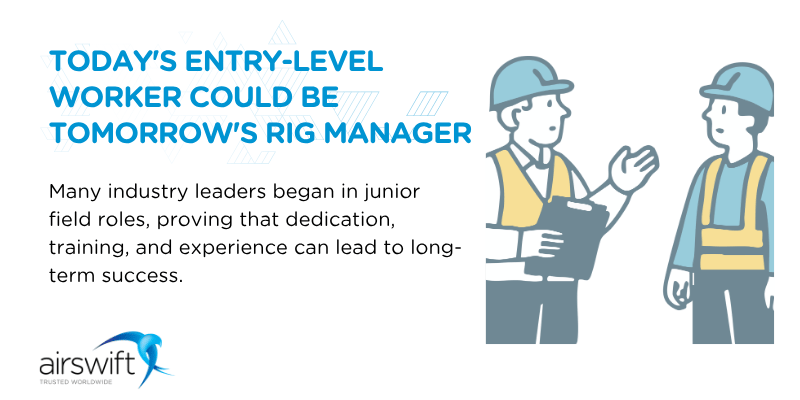
Yes. The oil and gas industry has a long tradition of hiring entry-level workers and training them on the job, particularly for field roles.
Employers care less about a polished resume than about reliability, safety awareness, and a willingness to do demanding physical work on rotational schedules. Many site supervisors, rig managers, and safety coordinators began as roustabouts or labourers with no prior experience.
A degree is only needed for engineering and professional positions, not for getting onto a rig or a field crew.
What are some entry-level oil and gas jobs?
The most accessible roles sit in the upstream part of the industry (exploration and production), where physical field work is common. Typical entry points include:
| Role | What it involves | Typical requirement |
|---|---|---|
|
Roustabout |
General labour on a rig or site |
High-school education, physical fitness |
|
Floorhand / roughneck |
Drill-floor work on a rig |
High-school education, basic safety certs |
|
Leasehand |
Site upkeep and crew support |
Little to no experience |
|
Mud logger |
Monitors drilling fluid and data |
Relatively accessible entry point |
|
Field/production operator |
Monitors equipment and gauges |
Some training; entry roles exist |
|
Welder/mechanic helper |
Supports skilled trades |
High-school education or GED |
Midstream and downstream offer further entry points, including pipeline, terminal, and refinery operator roles, which are often less physically demanding than upstream drilling.
What are some qualifications and certifications for entry-level oil and gas jobs?
Getting started does not always require formal qualifications, but a few credentials make you more employable, and most can be earned quickly. Useful certifications include:
-
H2S Alive: hydrogen sulfide safety, often essential for field roles.
-
OSHA 10 or 30: general workplace safety.
-
First aid and CPR: widely expected on-site.
-
BOSIET: required for offshore roles, covering helicopter escape and sea survival.
-
SafeLandUSA or Rigpass: recognized onshore safety orientation.
-
Driver's license: a valid license helps, and a commercial driver's license (CDL) is a strong plus.
Many employers provide training and certifications on the job, so you do not always need them before applying.
For professional and engineering roles, an accredited degree in petroleum, mechanical, chemical, or a related engineering discipline is the standard route.
How to get started, step by step
-
Meet the baseline: be 18 or older, physically fit, able to pass a drug test and medical, and willing to work rotational hours.
-
Choose a segment: upstream field work for hands-on roles, or midstream and downstream for plant, pipeline, and logistics work.
-
Get basic safety certifications such as H2S Alive and OSHA 10/30; add BOSIET for offshore work.
-
Target the main hiring regions and be open to relocation.
-
Build a focused resume that highlights physical capability, safety training, and any equipment or industrial experience.
-
Apply through energy-specific job boards and specialist recruiters, not just general sites.
-
Network on LinkedIn and at industry events, and consider starting with a contract role to build field hours.
Career growth in oil and gas
Entry-level roles are a genuine route into long-term careers. A roustabout can progress to floorhand, derrickhand, driller, and ultimately rig manager, while field operators can move into supervisory and technical positions. Picking up certifications, specializing, and gaining cross-border or offshore experience all accelerate progression.
Demand for skilled workers remains strong, which gives committed entrants room to grow. Workforce research such as the Global Energy Talent Index (GETI) consistently reports skills shortages across the sector, and many roles are filled through specialist talent acquisition partners and dedicated oil and gas jobs boards.
Frequently asked questions

Can I get into oil and gas with no experience?
Yes. Many entry-level field roles, such as roustabout, floorhand, leasehand, and mud logger, require only a high-school education, physical fitness, and basic safety certifications.
Employers often train new workers on the job and value reliability and safety awareness over prior experience. A degree is only needed for engineering and professional positions.
What are the best entry-level oil and gas jobs?
The most accessible entry points are roustabout, floorhand (roughneck), leasehand and mud logger in the upstream sector, plus field and production operator roles.
In midstream and downstream, pipeline, terminal, and refinery operator roles are also open to new entrants. Most require a high-school education, physical fitness, and basic safety training.
What qualifications do I need to work in oil and gas?
Entry-level field roles usually require a high-school education, physical fitness, and basic safety certifications such as H2S Alive and OSHA 10 or 30; offshore roles also need BOSIET.
A valid driver's license helps, and a commercial driver's license (CDL) is a plus. Engineering and technical roles require an accredited degree in a relevant field.
How do I get started in the oil and gas industry?
Start by meeting the baseline requirements: age 18 or older, physical fitness, the ability to pass a drug test and medical, and a willingness to work rotational hours.
Earn basic safety certifications, target the main hiring regions, build a focused resume, and apply through energy-specific job boards and specialist recruiters.
Starting with a contract role is a common way to build field experience.
Where are most oil and gas jobs located?
In the United States, the main hiring regions are the Permian Basin (Texas and New Mexico), the Eagle Ford and Bakken shales, and the Gulf of Mexico. Internationally, the Middle East, the North Sea, Australia, and West Africa are major markets.
Midstream and downstream roles at refineries, terminals, and pipelines are spread more widely than upstream drilling.
Is oil and gas a good industry to start a career in?
Oil and gas can be a strong place to start a career. Entry-level roles pay well for the experience required, the industry trains people on the job, and clear progression exists from field roles to supervisory and technical positions.
The trade-offs are demanding, often remote work on rotational schedules, and exposure to the industry's cyclical ups and downs.
Launch your oil and gas career with Airswift
Getting started in the oil and gas industry can feel challenging, especially if you're starting without experience. The good news is that employers across the sector continue to hire motivated entry-level candidates and provide pathways for long-term career growth.
By gaining the right certifications, remaining flexible about location, and demonstrating a strong commitment to safety, you can position yourself for success in one of the world's most important industries.
At Airswift, we specialise in connecting talented professionals with leading energy employers across the globe. Whether you're searching for your first roustabout position, an offshore opportunity, or a long-term career path in oil and gas, our specialist recruiters can help you identify the right opportunities, prepare for the hiring process, and take the next step in your energy career.
Browse our latest oil and gas jobs or speak with one of our oil and gas recruitment experts today.