
By
Alicia Edwards
July 18, 2025
Updated
July 18, 2025
What is global immigration?
Global immigration refers to the process by which individuals move from one country to another for various reasons, including employment, education, family reunification, and political asylum. This movement of people is governed by both national and international laws, and it is subject to visa requirements, compliance with local regulations, and often involves various legal issues.
It refers to the migration of people across borders, with the intention of either temporarily or permanently residing in a foreign country. Immigration is driven by a range of factors, from business visas for work-related purposes to family sponsorship for reunification.
Why do people immigrate globally?
People immigrate for a range of personal and professional reasons. Here are the most common motivations for migration:
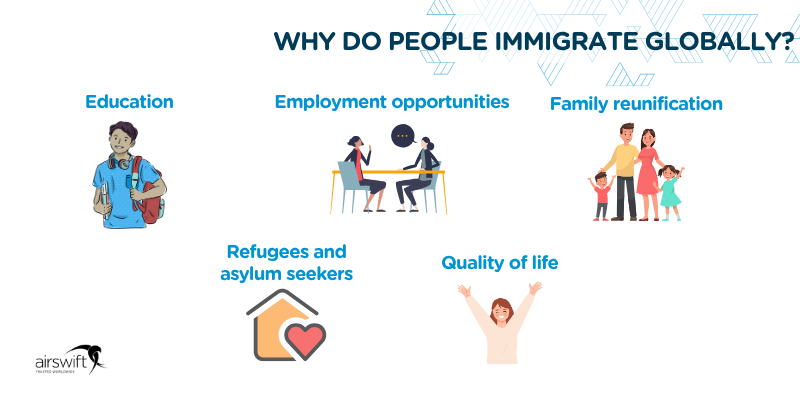
- Employment opportunities: Many individuals move to other countries to work in roles that offer better salaries, career advancement, and access to global mobility programs. Countries such as the United States and China are often destinations for workers seeking employment in specific industries.
- Education: Students frequently migrate for access to world-class educational institutions. Countries such as the United Kingdom and Australia offer higher education opportunities that attract international students each year.
- Family reunification: Many people immigrate to join family members already residing in another country. Family-based immigration, such as through spouse visas or family sponsorship, is a key driver.
- Refugees and asylum seekers: Some individuals are displaced due to political persecution, conflict, or human rights abuses and seek refugee status in other countries. The United Nations plays a significant role in facilitating the movement of refugees.
- Quality of life: People may also migrate for better healthcare, housing, or to escape adverse living conditions in their home country.
The process of global immigration
Global immigration involves several legal and administrative steps. Depending on the country and the purpose of the move, these steps can vary:
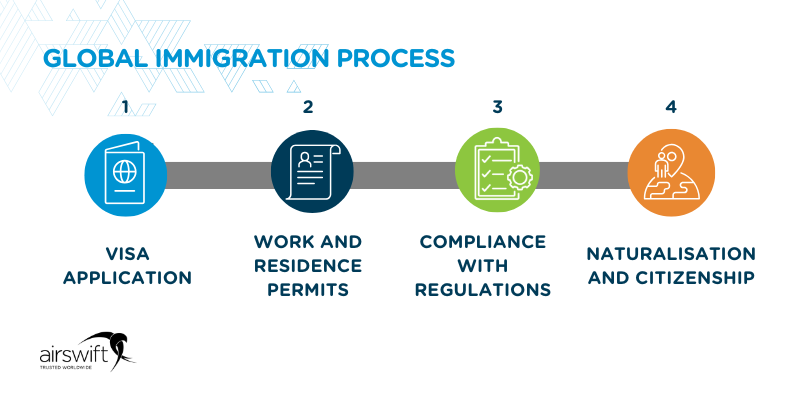
1. Visa application
Most people who wish to immigrate to another country must first apply for a visa. This visa can be for various purposes, such as a work visa, business visas, study visa, or visitor visa. The application process typically involves submitting forms, attending an interview, and waiting for approval based on the visa requirements of the host country.
2. Work permits and residence permits
For those moving for employment, obtaining a work permit is often necessary. Many countries also require individuals to apply for a residence permit or a leave to remain after a certain period. These permits are essential for long-term stays and work.
3. Compliance with regulations
Immigrants are required to comply with the legal issues and regulations of the host country. This can include meeting tax planning requirements, adhering to social security contributions, and undergoing health and security checks. The client may need assistance in ensuring that these processes are correctly handled.
4. Naturalisation and citizenship
After living in a country for a specific period, immigrants can apply for naturalisation or citizenship. This grants full legal rights, including the ability to vote, work freely, and access public services. Some countries, like Singapore, offer fast-tracked citizenship processes for those who meet specific criteria.
Challenges in global immigration
While global immigration offers opportunities, it also presents challenges. Migrants and businesses must navigate these hurdles to ensure a smooth transition:
Immigration laws and regulations
Each country has its own immigration laws, which can change frequently. It’s essential for businesses and individuals to stay up to date with these laws and ensure they are following all necessary procedures. This often requires seeking legal advice from experts in immigration law.
Cultural and language barriers
Migrants often face cultural differences and language barriers when moving to a new country. Adapting to these challenges can be difficult, but many global mobility programs offer resources to help individuals adjust, such as language courses and cultural training.
Economic factors
The economic conditions of both the home country and the host country can impact immigration. For instance, some countries with higher wages and better job opportunities attract more international migrants, while others may have more restrictive immigration policies due to economic downturns or political factors.
The role of immigration in business
For businesses, global immigration is a key tool in expanding their operations and tapping into new talent pools worldwide. Here are some of the benefits for businesses that facilitate immigration:
Access to diverse talent
Global mobility assignments allow companies to tap into a talent pool from around the world. By hiring individuals with diverse skills, backgrounds, and experiences, companies can create a more innovative workforce and improve their competitive advantage.
Workforce expansion
Companies with international offices benefit from the ability to move employees travelling across borders to meet global demands. This expansion helps businesses adapt to changing markets and navigate regional mobility challenges effectively.
Compliance with labour laws
Organisations hiring international staff must adhere to local labour law and immigration regulations. It’s important for businesses to ensure they are compliant with these laws to avoid legal issues and data privacy concerns. Professional immigration support services can help businesses navigate these complexities and manage the secondment process.
The future of global immigration
As the world becomes more interconnected, global immigration will continue to play a key role in the movement of people, ideas, and innovation. In the future, global mobility may be further facilitated by advancements in technology, such as web-based systems and automation, that streamline visa applications and improve efficiency.
With the rise of remote work, companies can now access a wider range of talent without needing to relocate employees. However, relocation will still be crucial for organisations seeking to expand into new regions or require physical presence in certain markets. As businesses continue to grow internationally, immigration policies will need to be agile to accommodate these changes.
Final thoughts
Global immigration plays a vital role in shaping the workforce and business landscape. It allows individuals to explore new career opportunities and contributes to the economic development of countries and regions. For businesses, immigration helps ensure access to the best talent from around the world and fosters innovation in competitive markets. However, navigating the complexities of visa regulations, work permits, and compliance with labour laws remains a challenge. With proper planning, legal advice, and support services, global immigration can open up significant opportunities for both individuals and businesses.
Airswift can help with global immigration and staff relocation. Click here for more information on Airswift's global immigration solutions.