By
Alicia Edwards
July 16, 2025
Updated
July 16, 2025
What is a multi-hire campaign?
A multi-hire campaign is a recruitment strategy aimed at filling multiple roles within a short period. Often driven by a high-volume hiring need, these campaigns allow businesses to recruit for similar positions across various functions at once, streamlining the recruitment process. Companies often use multi-hire solutions when scaling their workforce rapidly, whether due to a new product launch, expansion, or seasonal demands.
When someone asks, “What are multi-hire campaigns?” the answer is simple: a concentrated effort to hire for multiple positions simultaneously, designed to fill talent pools quickly and efficiently.
Why run multi-hire campaigns?
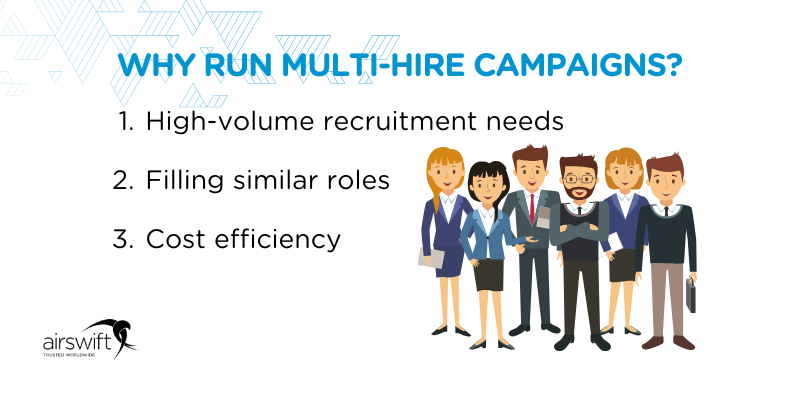
Multi-hire campaigns can be highly beneficial for several reasons:
- High-volume recruitment needs: Large organisations or businesses undergoing rapid growth often need to fill many positions at once.
- Filling similar roles: These campaigns are typically used for recruiting people into similar roles (e.g., sales representatives, customer service agents, or tech talent) with similar qualifications and responsibilities.
- Cost efficiency: Running one recruitment campaign for multiple roles can reduce costs compared to conducting individual hiring processes for each role.
By adopting this approach, companies not only save on recruitment costs but also gain a competitive edge in meeting the market demand.
Best practices for running a multi-hire campaign
While multi-hire campaigns offer many benefits, they require careful planning and execution. Here are some best practices to ensure a successful campaign:
Plan and set clear metrics
Before launching a multi-hire campaign, outline clear KPIs (Key Performance Indicators) to measure the effectiveness of the recruitment effort. This could include metrics like time-to-hire, cost-per-hire, and candidate conversion rates. Defining these performance metrics early will ensure that recruitment goals align with business needs.
Use a recruitment CRM system
A CRM system like HubSpot or other applicant tracking systems (ATS) helps recruiters manage candidate pipelines, track progress, and improve communication. These systems allow for easier candidate screening and shortlisting, making the recruitment process more efficient. Automation tools can also help manage candidate outreach, follow-ups, and scheduling interviews.
Leverage multiple job portals and networks
Ensure your job advert reaches the right audience by posting across multiple job portals, professional networks, and social media platforms. Depending on your industry, you may also want to use talent marketplaces or engage with executive search firms for specialised roles.
Segment your candidate pool
Segmenting your candidate pool is key to running a successful multi-hire campaign. By identifying the specific skills, qualifications, and experiences required for each role, you can tailor your outreach and job adverts accordingly, improving the quality of applicants and the chances of successful hires.
Create an engaging candidate experience
A positive candidate experience is crucial for maintaining engagement throughout a multi-hire campaign. Ensure that the recruitment process is straightforward, with clear timelines, feedback loops, and a transparent offboarding process for candidates who may not be selected. Open communication channels help keep candidates informed about their progress.
Key benefits of multi-hire campaigns
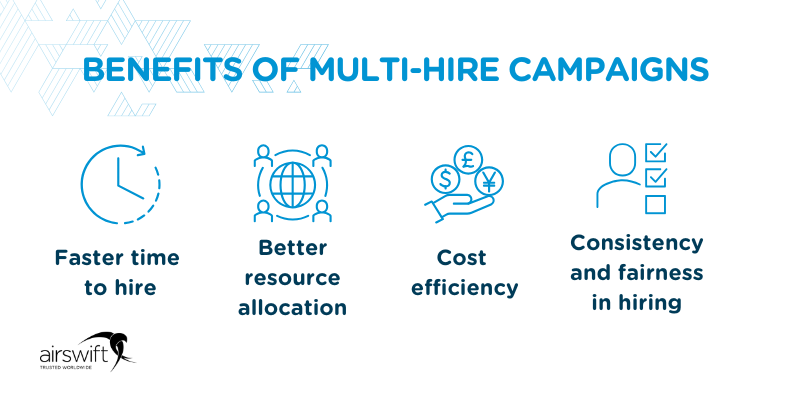
There are several advantages to running a multi-hire recruitment campaign:
Faster time-to-hire
By running a multi-channel campaign, companies can attract a larger pool of candidates and fill positions faster. Recruiters can leverage various communication channels, such as job boards, social media, and email marketing, to reach more candidates at once. This reduces time spent on sourcing, screening, and interviewing candidates.
Cost efficiency
A multi-hire recruitment strategy helps businesses avoid the need for multiple job advertisements, individual recruitment drives, or costly recruitment agencies. By leveraging talent pools and streamlining the process, organisations can significantly cut down on hiring expenses.
Better resource allocation
Instead of relying on a dedicated recruiter for each position, businesses can use resources more effectively by centralising the recruitment effort. A coordinated effort ensures that HR teams and talent acquisition teams manage their time and resources efficiently across multiple hires.
Consistency and fairness in hiring
When hiring for multiple roles, the evaluation process becomes standardised. This allows for consistent screening and interview management, ensuring that all candidates are treated fairly and equally. It also reduces unconscious bias and helps align candidate selection with the company’s Employee Value Proposition.
Challenges of multi-hire campaigns
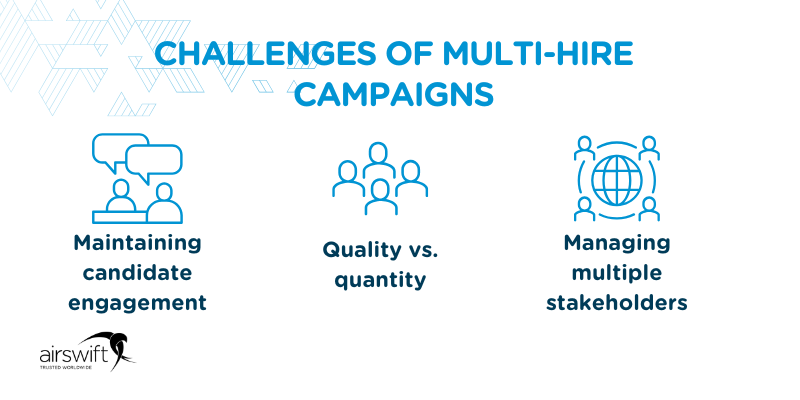
While multi-hire campaigns are efficient, they can present some challenges:
Maintaining candidate engagement
With a large pool of candidates, it can be difficult to keep everyone engaged and motivated throughout the recruitment process. Using tools like email marketing or WhatsApp for timely updates can help keep candidates in the loop and interested in the role.
Quality vs. quantity
In a rush to fill multiple positions, there is a risk that recruitment teams may focus more on volume than quality. To avoid this, it’s crucial to maintain strict recruitment standards and conduct thorough interviews and assessments to ensure that each new hire meets the company’s standards and culture.
Managing multiple stakeholders
When filling multiple positions across different departments or teams, ensuring alignment between various stakeholders (e.g., hiring managers, HR, leadership teams) can be challenging. Clear communication and project management tools like Trello or Asana can help teams stay on the same page throughout the campaign.
How technology enhances multi-hire campaigns
Technology can significantly improve the success of multi-hire recruitment efforts. Here are a few examples:
- AI-powered matchmaking: Some platforms now use artificial intelligence (AI) to match candidates with the right roles based on skills, experience, and cultural fit, improving candidate selection and reducing time-to-hire.
- Automated screening and interviews: AI tools can help screen resumes and pre-qualify candidates faster, and even conduct initial interview stages through pre-recorded video interviewing platforms.
- Analytics and reporting: With tools that provide real-time analytics and reporting, companies can quickly gauge the success of their multi-hire campaigns, allowing them to make adjustments to improve performance and recruitment outcomes.
Final Thoughts
In conclusion, multi-hire campaigns are an effective solution for businesses that need to recruit several employees at once. Whether scaling up, managing seasonal hires, or expanding into new markets, multi-hire campaigns allow companies to save time and money while ensuring they find the right talent. By following the best practices outlined above, leveraging technology, and keeping candidate engagement high, businesses can run successful campaigns that lead to high-quality hires.
If your company needs to fill multiple roles quickly, a well-executed multi-hire campaign could be the perfect strategy to attract top talent and support growth. Airswift can provide support for multi-hire campaigns, so click here to explore our services.