
By
Alicia Edwards
May 19, 2023
Updated
December 2, 2025
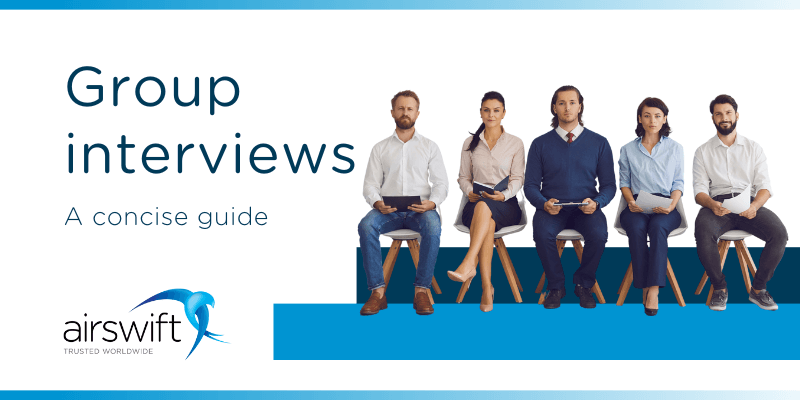 What is a group interview?
Job interviews can be stressful enough — and then comes the invite to a group interview. If you’ve never experienced one before, it might sound intimidating: multiple candidates, multiple interviewers, and all eyes on you.
But don’t worry — this format isn’t designed to trip you up. In fact, it’s an opportunity to show more than just your resume.
Group interviews (sometimes called panel or team interviews) give employers a chance to see how candidates think on their feet, work with others, and communicate in real time.
For hiring teams, it’s an efficient way to identify top talent with strong collaboration and leadership potential. For you, it’s a unique chance to stand out, not just for what you say, but how you engage with others.
In this blog, we’ll break down what to expect in a group interview, why employers use them, and most importantly, how you can prepare to make a lasting impression.
Why do employers use group interviews?
Group interviews aren’t just about saving time; they’re a powerful tool for employers to assess a wide range of soft skills and qualities that are difficult to evaluate in a traditional one-on-one setting.
When you're in a room with other candidates, hiring managers get to see how you really interact, adapt, and contribute in real time. Here’s what they’re looking for:
- Communication: Can you express your ideas clearly and confidently? Do you listen actively and respond thoughtfully? Employers pay close attention to how well you articulate your points — not just what you say, but how you say it.
- Teamwork: Are you able to collaborate with others, even if you’ve just met them? Do you dominate the conversation, or do you include others and help move the discussion forward? Team dynamics are crucial in most jobs, and group interviews are a direct window into how you operate in a team.
- Problem-solving: Group tasks or discussions often involve solving a challenge together. This helps employers see how you approach complex situations, how creative or practical your thinking is, and how you handle pressure in a competitive setting.
- Leadership skills: You don’t need to take over the room to show leadership. Employers are looking for candidates who can guide a group, offer direction, or motivate others, all without being controlling or dismissive. It’s about influence, not authority.
- Knowledge and expertise: Your answers and contributions will also reflect your understanding of the role, industry, or subject matter. Do you bring relevant insights? Are your suggestions informed and thoughtful?
- Cultural fit and suitability: Finally, hiring teams are watching for cues that suggest whether your personality, values, and working style would align well with their team. In a group setting, this becomes easier to spot through your tone, attitude, and how you interact with others.
Ultimately, group interviews give employers a well-rounded picture of who you are beyond your CV. And if you prepare well, they’re a great opportunity to show the full range of what you bring to the table.
What different types of group interviews are there?
.png?width=800&height=400&name=Example%20with%20logo%20-%20Use%20in%20body%20of%20the%20blog%20(16).png)
There are several types of group interviews, including:
- Panel interview: A panel interview involves a group of interviewers who ask questions and evaluate candidates together. This type of interview is commonly used for senior or management roles.
- Group discussion: A group discussion involves candidates discussing a topic or scenario together. This type of interview is used to assess communication skills, teamwork, and problem-solving abilities.
- Group activity: A group activity involves candidates working together on a task or project. This type of interview is used to assess teamwork, leadership, and problem-solving skills.
- Speed interview: A speed interview involves candidates rotating through a series of short interviews with different interviewers. This type of interview is used to assess a candidate's ability to think on their feet and communicate effectively.
What are the benefits of a group interview?
While group interviews are often seen as a tool for employers to streamline their hiring process, they can also offer unique advantages to you as a job seeker. Here’s how a group interview can actually work in your favour:
They are efficient:
In a group setting, you’re not just answering questions; you’re showing how you think, communicate, and collaborate in real time. This allows you to shine by demonstrating your strengths beyond what’s written on your CV. If you’re confident, proactive, or a great listener, this is your moment to make a strong impression.Less pressure, more perspective
Believe it or not, group interviews can sometimes feel less intense than one-on-one interviews. You’re sharing the spotlight, which can help ease nerves. Plus, listening to how others respond can give you valuable insights and sometimes even spark ideas or responses you might not have considered on your own.
You learn about the company culture
Watching how the interviewers interact with the group, and how they respond to different personalities, can give you a clearer sense of the company’s values, expectations, and team dynamics. It’s a chance for you to assess them, too.
You can showcase your people skills in action
Many roles require strong interpersonal skills, and a group interview lets you demonstrate those live, from teamwork and communication to adaptability and emotional intelligence. Instead of simply claiming you’re a “people person,” you get to prove it.
It levels the playing fields
Everyone in the room is given the same opportunity and asked the same questions. This format can help reduce bias and give you the same platform to impress, regardless of your background or how your CV stacks up on paper.
Activities you might experience in a group interview
.png?width=800&height=400&name=Example%20with%20logo%20-%20Use%20in%20body%20of%20the%20blog%20(17).png)
Group interview activities aren’t just there to test you; they’re a chance to show what you can really do in a hands-on, engaging way. Instead of sitting through a series of formal questions, you’ll have the opportunity to demonstrate your skills in action. Here are some common group activities you might encounter, and how they can actually work in your favour:
Role-playing scenarios
You might be asked to act out a situation related to the job, like handling a difficult customer, resolving a team conflict, or leading a short meeting. These tasks give you the chance to step into the role and show how you think on your feet, communicate under pressure, and adapt to challenges. If you’ve got strong people skills or stay calm in tricky situations, this is your time to shine.
Collaborative problem-solving exercises
You could be grouped with other candidates to tackle a challenge, such as developing a new product idea, solving a logistical issue, or planning a campaign. These exercises allow you to showcase your ability to contribute to a team, share ideas, listen actively, and help drive the group forward - all qualities employers love to see.
Brainstorming sessions
Expect to be given a creative prompt where you’ll need to generate ideas as a group. It might sound casual, but it’s a great way to highlight your innovative thinking, communication style, and how well you build on other people’s ideas. It also shows how you handle competing opinions, manage time, and maintain a positive, professional attitude under pressure.
These activities aren't just tests; they’re opportunities. The key is to be engaged, respectful, and collaborative. You don’t have to be the loudest person in the room to stand out - often, the most impressive candidates are the ones who listen well, think clearly, and help the group succeed.
What are the challenges of group interviews?
Group interviews offer a great chance to show off your skills in a dynamic environment, but they can also come with a few unique challenges. Knowing what to expect can help you prepare and perform at your best, even if the format feels unfamiliar.
It can be harder to stand out individually
In a group setting, you’re sharing time and space with other candidates. This can make it trickier to showcase your strengths, especially if you’re more introverted or prefer time to think before speaking. But don’t let that put you off - quality matters more than quantity. A thoughtful, well-structured answer or a smart contribution to a group task can be far more impactful than simply being the most vocal.
Tip: Prepare a few examples of your skills and experience in advance, so you’re ready to contribute confidently when the opportunity arises.
Dominant personalities may take over
Sometimes, certain candidates try to control the conversation or push their ideas without leaving space for others. While this can feel frustrating, it’s also a chance to show how you handle strong personalities - something that’s valuable in most work environments.
Tip: Stay calm and professional. Look for natural openings to contribute and support others’ ideas when appropriate. This shows teamwork, respect, and emotional intelligence - traits employers notice.
There's a risk of "groupthink"
In group settings, especially under pressure, candidates may fall into the habit of simply agreeing with others to fit in. But employers are looking for individuals who can think independently and offer fresh perspectives.
Tip: Don’t be afraid to politely offer a different viewpoint or suggest an alternative approach. especially if you can back it up with a real-life example. That kind of insight can set you apart as someone who brings unique value to a team.
The key takeaway? Group interviews can be challenging, but they also offer a real opportunity to stand out if you’re prepared, self-aware, and willing to engage meaningfully. Stay true to your strengths, support others, and let your personality and potential shine through.
How to prepare for a group interview
During group interviews, it is important to stand out amongst other candidates. As this is very different from the traditional interview format, you will have to assert yourself enough for the interview panel to take an interest in you. Maintaining eye contact is a great start.
Review the company website:
The company website is an excellent place to start researching the company. You should look for information about the company's:
- History
- Mission
- Values
- Products or services
- Management team
You should also pay attention to the company culture and any social responsibility initiatives. This information will help you understand the company’s priorities and values and stand out amongst the other candidates in the group interview.
Research common interview questions:
To prepare for a group interview, it is important to research common interview questions. This will help you anticipate the types of interview questions you may encounter and prepare answers in advance.
When preparing answers, it is important to keep in mind the company’s core values and align your answers with these values. For example, if the company values community and responsibility, you may want to highlight your experience volunteering in your local community and your commitment to being a responsible individual.
It is also important to prepare examples that demonstrate your skills and experience. For example, if asked about your experience working in a team, you may want to provide an example of a project you worked on with a team and how you contributed to the team's success.
Bring extra materials to help you stand out
Bringing necessary materials to a group interview can help you stand out and present yourself in the best possible light. Consider bringing:
- Extra copies of your resume and references
- A notepad and a pen
You should keep these assets organised and easily accessible during the group interview to make a great impression.
In addition to a CV, references, a notepad, and a pen, there may be other materials that are relevant to the position or company. For example, if you’re applying for a design position, you may want to bring a portfolio of your work.
Looking for tips on how to write a standout CV? Check out our video!
Conclusion
In conclusion, a group interview is a type of interview where multiple candidates are interviewed at the same time by one or more interviewers. The purpose of a group interview is to evaluate how candidates interact with each other, their communication skills, and their ability to be a team player.
Overall, group interviews can be an effective tool for both you and the employer to evaluate each other's fit and potential. By using the tips in this blog, you can improve your chances of standing out in a group interview.