By
Nathalia Duarte
May 28, 2026
Updated
May 28, 2026
Expanding into new markets offers significant growth opportunities, but it also comes with risk. Misjudging local regulations, workforce dynamics, or economic stability can delay market entry, increase costs, and limit long-term success.
If your business need help to make more informed and structured decisions, the PESTEL framework can be a useful and practical tool. It provides a clear way to analyse macro-environmental factors, external forces outside your control that can significantly impact business performance.
In this article, we’ll explore how the PESTEL framework can be used to evaluate global expansion and how each of its factors work.

What is the PESTEL framework?
PESTEL is a strategic tool used to analyse the external factors that influence business performance, by assessing each of its six dimensions: Political, Economic, Social, Technological, Environmental, and Legal.
Originally developed by Harvard professor Francis Aguilar, the framework helps organisations evaluate the macro-environmental factors outside their control that can shape outcomes in new markets.
By assessing each dimension, businesses can identify opportunities, anticipate challenges, and build strategies aligned with local conditions. It is often used alongside SWOT analysis to strengthen decision-making.
Why use PESTEL for business expansion planning?
PESTEL offers a structured approach to evaluating new markets. By analysing each factor, businesses can:
-
Identify opportunities and potential risks early
-
Make informed go/no-go decisions
-
Anticipate regulatory and economic changes
-
Align expansion strategies with local conditions
Ultimately, it acts as an early warning system helping organisations minimise risk, stay compliant, and build a sustainable global growth strategy. Let’s analyse below how each of the factors can be used in favour of businesses looking for global expansion.
Political factors relating to government influence on the economy
Political factors refer to how and to what extent governments influence economies and industries. This can include legislation, tax policies, political stability, trade relations, and regulatory processes.
Key political considerations for global expansion:
-
 To what extent does the government intervene in the economy?
 -
Are there tax policies that can impact businesses and organisations?
-
Is there political stability?
-
Are there trade tariffs that will be a barrier to doing business?
-
Are there any sanctions imposed on the country?
-
Are there upcoming elections that could change the attractiveness of the country?
-
How quickly are business applications processed? Is it liable to bureaucracy?
For example, business setup timelines can vary significantly across Asia. If you are unprepared, these delays can slow expansion and impact revenue generation.
Airswift can help businesses establish a presence in Singapore within days. In the Philippines, the process can take several weeks or even months. These differences in setup timelines can have a major impact on business growth. When speed to market matters, every extra day counts.
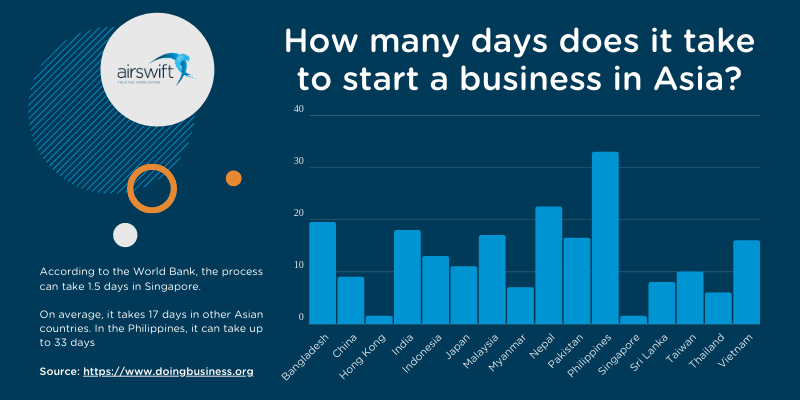
Figure 1: How many days does it take to start a business in Asia? (The World Bank Doing Business Report)
Economic factors affecting business operations when expanding internationally
Economic factors directly influence business operations and profitability. They often overlap with political considerations, particularly where government-led monetary policies are involved.
Key economic considerations for global expansion:
-
 What is the economic growth rate? Is there projected growth in GDP over the next 5, 10 and 20 years?
 -
Are there strategic industries that you can either compete in or supply to?
-
For B2C firms, is consumer spending expected to increase? A good indicator would be increasing proportions of middle-class incomes in society.
-
What is the unemployment rate?
-
Are interest/inflation/foreign exchange rates volatile? Are you capable of managing global payments in this country?
-
Are there incentives or foreign direct investment (FDI) initiatives to attract multinationals?
Overlooking hidden costs can undermine the profitability of your expansion. A sustainable growth strategy depends on stable economic conditions.
Volatility in inflation or exchange rates can quickly erode margins. Rising costs may force delays in investment or hiring decisions, slowing expansion.
Using BIS data, we analysed currency movements since 2010. The chart shows how exchange rates fluctuated quarter by quarter over a 10-year period, highlighting the range between highs and lows for each economy. Depending on your business model, this level of volatility can pose a substantial risk.
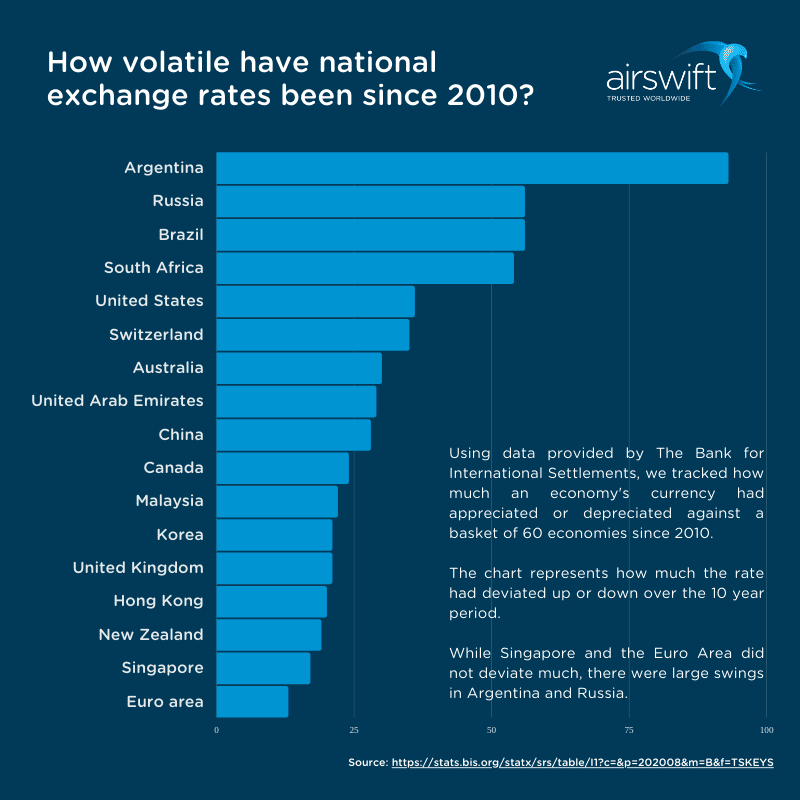
Figure 2: Exchange rate volatility (Bank for International Settlements)
Social and demographic factors impacting business and workforce planning
Also known as socio-cultural factors, these cover the demographics, beliefs, attitudes, and behaviours of a population. They help businesses understand their target audience and tailor products, services, and marketing strategies accordingly.
Key socio-cultural considerations for global expansion:
-
 Is there enough local talent to meet your needs? If not, are there restrictions on hiring ex-pats?
 -
Is the country’s population considered to be young or ageing?
-
What are high school graduation rates? How much of the population goes on to earn a degree in higher education?
-
What are the sociocultural norms we need to be aware of and how do they impact consumer preferences?
-
Is the country stable or is there a history of social unrest?
-
Are there religious or cultural factors that you need to be considerate of?
-
Is your native language the same as your target country?
-
Are there differences in working culture that would be a shock to you or your employees?
If your business relies on a skilled or large workforce, a country’s social profile is critical. Long-term access to talent is a key factor in successful expansion.
China’s rapid rise illustrates this clearly. Regions such as Sub-Saharan Africa and countries like India continue to see growth in their working-age populations. This has led to predictions that they could become major global industrial hubs in the future.
An ageing population also presents challenges. With fewer workers and lower overall consumption, economic growth may slow while pressures on healthcare and social spending increase.
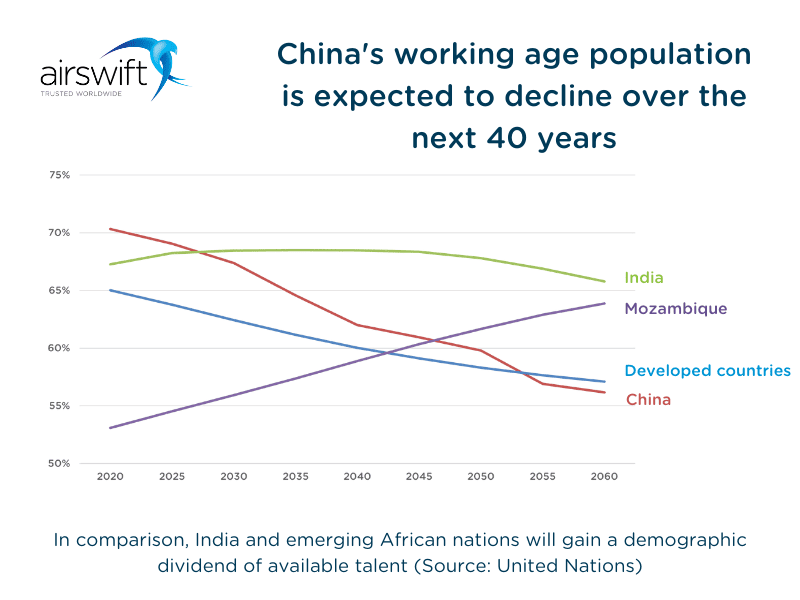
Figure 3: World Population Prospects 2019 (The United Nations)
Technological changes and their impact on international expansion strategies
Technological factors relate to how businesses use technology to produce, deliver, and improve products and services, as well as streamline operations. Staying up to date with advancements enables companies to remain competitive and drive innovation.
Key technological considerations to global expansion:
-
 Are you able to access tech talent more easily in the new market?
 -
How can disruptive technologies potentially change the market or industry your business plans to expand to?
-
Are there intellectual property considerations?
-
Do you have innovative tech that is not available in the new country?
-
Are you liable to disruption from local firms protected by domestic laws?
-
What government incentives exist to support investment in research & development (R&D)
A large population alone is not enough. Access to skilled technical talent is essential, particularly for high-tech industries. The availability of engineering graduates and national investment in R&D are strong indicators of a country’s innovation capacity.
Data from the World Bank highlights South Korea as a standout performer, with one of the highest levels of researchers per capita and strong R&D investment relative to GDP. For businesses seeking specialised talent or innovative supply chains, this focus on research can offer a clear advantage.
Patent activity is another useful benchmark of innovation. China leads in the number of patents filed, while other BRICS nations, Brazil, Russia, India, and South Africa, trail behind.
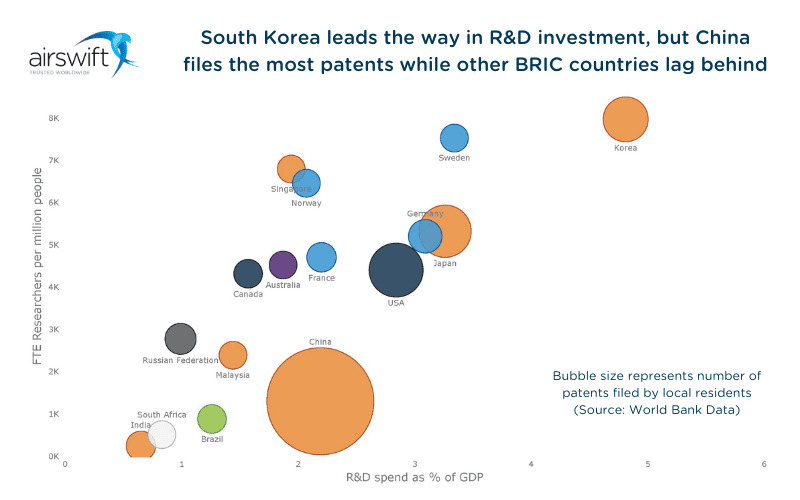
Figure 4: Spending on R&D (as % of GDP) and number of full-time equivalent researchers per million inhabitants (The World Bank)
Environmental regulations and concerns when expanding your business internationally
Environmental factors relate to how changes in the natural environment and sustainability regulations impact business operations. Understanding these requirements is essential to maintaining a license to operate in a new market.
Key environmental considerations for global expansion:
-
 Are you compliant with policies relating to power consumption or disposal of hazardous material?
 -
What impact do carbon footprint targets have on your business?
-
Are there extreme weather conditions in the country?
-
How quickly and effectively does the local government respond to natural disasters?
-
How might natural disasters disrupt local and global supply chains? Would there be alternative supply routes available?
-
What is the national policy surrounding energy? Are they investing in renewable energy or oil & gas?
Expanding into highly regulated markets requires careful planning. In Europe, for example, businesses must comply with the EU Emissions Trading System (EU ETS), which caps carbon emissions and can increase operating costs. Meeting these requirements may involve significant investment, such as hiring environmental specialists or adapting processes.
At the same time, environmental policies are creating new opportunities. Countries investing in clean energy are driving demand for innovation and specialised talent. The UK’s expansion of offshore wind to support net-zero goals is one example, with global offshore wind capacity expected to grow significantly by 2050, opening up new opportunities across the supply chain.
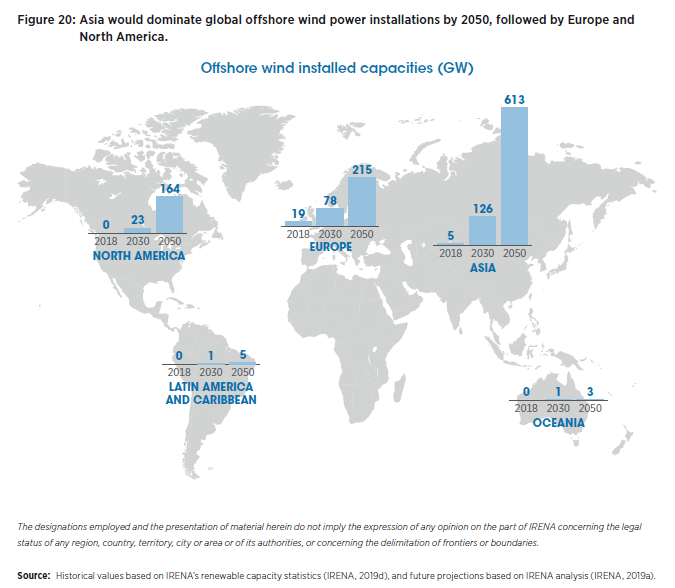
Figure 5: Offshore Wind Installed Capacities (GW) to 2050 (International Renewable Energy Agency - Future of Wind)
Legal and regulatory considerations when expanding your business
Legal factors refer to the laws and regulations that govern how businesses operate in a given country. These often overlap with political factors and can change frequently, so staying up to date is essential for compliance.
Key legal considerations for global expansion:
-
 Are there employment laws related to local hiring or immigration restrictions?
 -
Do you understand local laws on payroll, taxation, safety, and contracts?
-
Do you have a thorough understanding of the termination process for employees?
-
What is the taxation policy?
-
Are your internal teams equipped to handle regulatory variance in each country?
-
How often do employment regulations change?
-
What role does the government play in regulations? Is it an interventionist or free market economy?
-
Are there competition laws designed to protect local firms against multinationals?
-
Can you demonstrate compliance with data protection laws such as GDPR in Europe?
Regulations can vary significantly between countries. Corporate tax rates, for example, range from 0% in the United Arab Emirates to up to 40% for foreign companies in India. Dismissal and severance requirements also differ widely.
Failure to understand local labour laws can be costly. In the US, an employee dismissed after four years may not be entitled to severance or a notice period. In contrast, employees in Turkey may be entitled to up to six months’ pay and a two-month notice period.
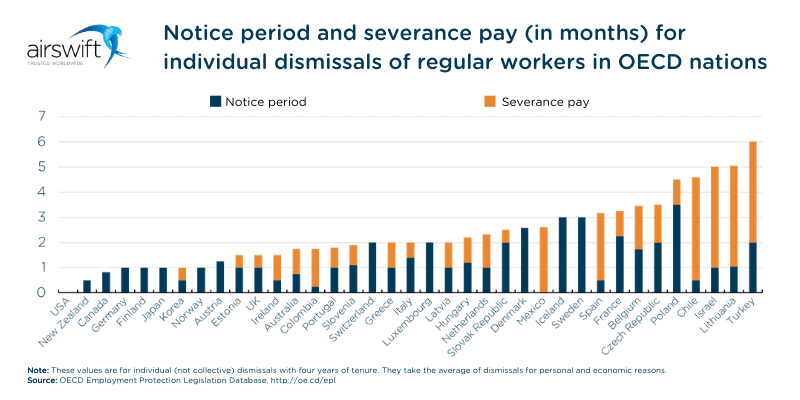
Figure 6: Notice period and severance pay for individual dismissals of regular workers in OECD nations (OECD Employment Protection Legislation Database)
Ethical factors when expanding your business internationally
You may have also seen PESTELE with three E’s, with the last E representing ethical factors. In recent years, strategists have added another important factor. Ethical factors should guide business decisions around your workforce and license to operate.
Key ethical considerations for global expansion:
-
Does the country have a reputation for poor workforce policies? Does this include child labour or human slavery violations?
-
Does the country have policies to encourage fair trade practices?
-
Can your business contribute to social improvement through corporate social responsibility initiatives? These could include philanthropic or charitable activity to support national advancement.
Labour laws and workers’ rights vary by country. And not all countries are receptive to a foreign company implementing their local employment policies. If an American company is expanding, the Occupational Safety and Health Administration’s (OSHA) standards may not apply. So, regulating and standardising working conditions between countries will be difficult. This could cause tensions between headquarters and policymakers.
Another ethical factor to consider is expectations of working hours and conditions. Our World in Data found global variance in working hours and productivity levels. An expanding company used to long/short working hours may have a culture shock elsewhere.
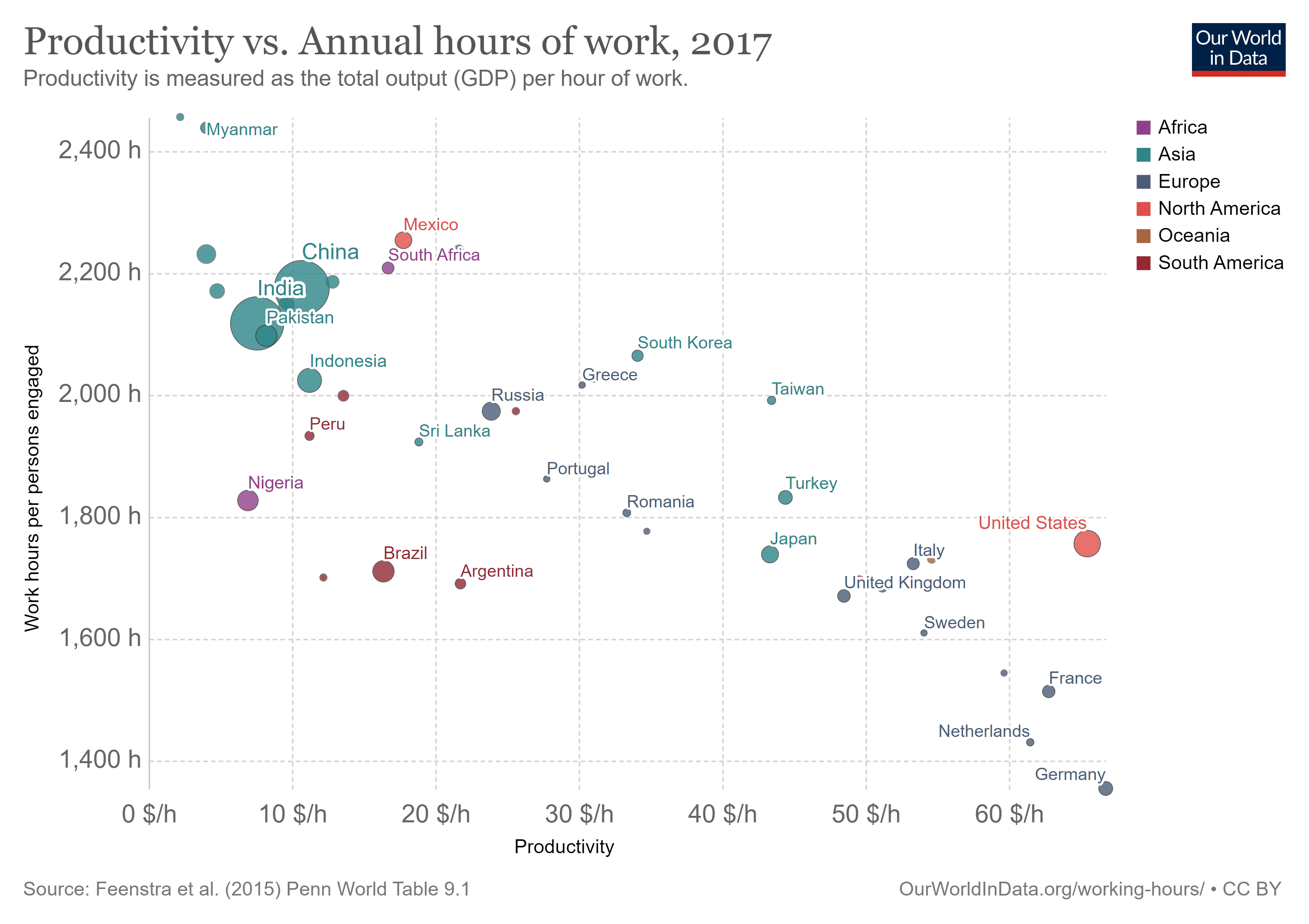
Figure 7: Productivity vs. annual hours of work (Our World in Data)
Turning insight into action
The PESTEL framework gives you a comprehensive view of the external environment, but its real value lies in how you apply it.
Use it to:
-
Compare markets side by side
-
Prioritise key risks based on your industry
-
Build a clear market entry strategy
-
Plan for long-term, sustainable growth
When combined with expert local support, PESTEL analysis becomes a powerful tool for reducing risk and accelerating global expansion.
Overcoming global expansion challenges with Airswift
Airswift helps businesses overcome barriers that come with international expansion. As a global workforce solutions provider, we enable companies to hire, onboard, and manage talent in new markets quickly and compliantly, without the need to establish a local entity.
Through our Employer of Record (EOR) model, you can deploy talent within days, reduce administrative burden, and accelerate time to market while we handle local compliance, payroll, and employment regulations.
Contact us today if you want to expand your business internationally with ease.