
By
Diyaa Mani
August 13, 2026
Updated
September 29, 2026
Let's be real for a second, when calendars get busy, our one-to-one meetings are often the first thing to be shortened, postponed or turned into a quick project update.
The problem is that these regular check-ins are often where trust is built, challenges are surfaced, and employees get the support they need to do their best work.
This guide walks through how managers can run more effective one-to-ones by creating a consistent structure, encouraging honest conversations, avoiding common pitfalls, and turning routine check-ins into meaningful discussions that support various employee work styles, accountability, and long-term success.

Key takeaways
- Focus on people, not project updates. Use one-to-ones to discuss challenges, development, engagement, and support, not routine task tracking.
- Consistency beats perfection. Regularly scheduled one-to-ones build trust and deliver more value than occasional, highly planned meetings.
- Listen more than you talk. Effective one-to-ones prioritise coaching and open dialogue, helping employees build confidence, ownership, and problem-solving skills.
- Make development a standing agenda item. Use every meeting to discuss growth opportunities, career goals, and skill development.
- Follow-through drives results. End each meeting with clear actions and revisit commitments to strengthen accountability and trust.
What is the purpose of a one-to-one?
The most valuable conversations are the ones that focus on the person behind the work, instead of just their to-do list.
One-to-ones do not exist primarily to review tasks, deadlines, and project updates. Employees can easily provide status updates through email, project management tools, team meetings, or messaging platforms.
A successful one-to-one gives managers and employees dedicated time to discuss:
- Progress and achievements
- Challenges and obstacles
- Career development goals
- Well-being and engagement
- Support needs
- Future growth opportunities
This transforms the meeting into an investment in the employee rather than an inspection of their workload. When employees feel heard, supported, and valued, they are more likely to perform well, stay engaged, and remain with the organisation long term.
Why one-to-ones matter
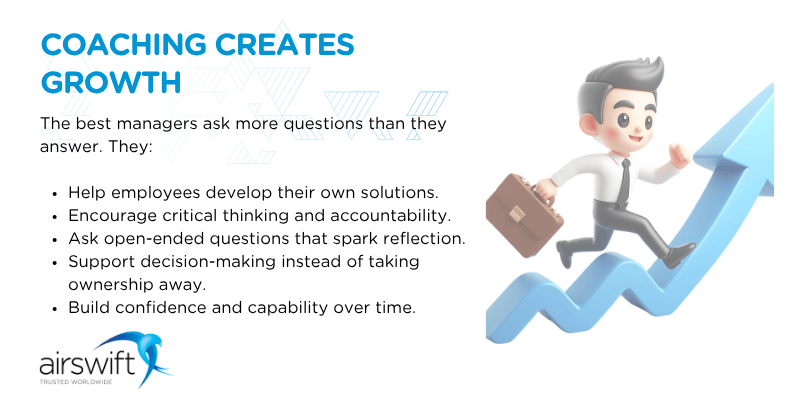
Many of the biggest management challenges don't appear overnight. Performance issues, disengagement, burnout, and turnover often develop gradually.
Regular one-to-ones help managers spot warning signs early and address them before they become serious problems.
Increased employee engagement
Employees want to know that their manager cares about their success. A regular one-to-one demonstrates that the manager is willing to invest time and attention in them.
When employees feel valued, they tend to be more motivated, committed, and engaged in their work.
Earlier identification of issues
Employees often share important concerns during private conversations that never surface in team meetings.
These concerns may include:
- Excessive workload
- Process inefficiencies
- Resource shortages
- Team conflicts
- Communication problems
- Workplace frustrations
Identifying these issues early allows managers to take action before performance suffers.
Better performance
Employees perform better when they receive ongoing coaching and feedback.
Rather than waiting for annual performance reviews, one-to-ones create opportunities for regular guidance, course correction, and recognition.
Higher retention
A popular quote states that people frequently leave managers, not companies.
Strong manager-employee relationships are one of the most important factors influencing retention. Regular, meaningful one-to-ones help strengthen those relationships and improve employee loyalty.
How often should managers conduct one-to-ones?
The ideal frequency depends on the employee's role, experience level, and current circumstances.
As a general rule:
- New hires: Weekly
- Most employees: Every two weeks
- Minimum standard: Monthly
The most important factor is consistency.
A simple monthly one-to-one that happens reliably is usually more effective than an elaborate meeting that gets cancelled repeatedly.
Employees notice when managers cancel meetings regularly. Over time, frequent cancellations send a message that their development and concerns are not a priority.
Unless necessary, treat one-to-ones as protected time in your calendar.
The five pillars of effective one-to-ones
The most successful one-to-ones are built around five core principles:
1. Consistency
Consistency creates trust. Employees feel more comfortable sharing openly when they know regular opportunities exist for meaningful conversation. When meetings constantly move or disappear, trust can erode quickly.
A predictable schedule helps establish stability and demonstrates commitment.
2. Preparation
Good one-to-ones start before the meeting begins. Managers should spend a few minutes preparing by:
- Reviewing previous action items
- Checking progress on previous commitments
- Noting recent achievements
- Identifying coaching opportunities
- Gathering relevant feedback
Employees should also come prepared. Encourage them to bring:
- Wins and accomplishments
- Questions
- Current challenges
- Development interests
- Support requests
Preparation improves focus and ensures important topics are not overlooked.
3. Psychological safety
Employees are unlikely to discuss concerns honestly unless they feel safe doing so. Psychological safety means creating an environment where employees can speak openly without fear of criticism, defensiveness, or negative consequences.
Managers can build psychological safety by:
- Asking open-ended questions
- Listening actively
- Avoiding interruptions
- Showing genuine curiosity
- Responding thoughtfully
- Following through on commitments
Helpful questions include:
- What's going well for you right now?
- What's slowing you down?
- Where do you need additional support?
- What's one thing we should start, stop, or continue doing?
- Is there anything you've been hesitant to bring up?
These questions often reveal valuable insights that managers might otherwise miss.
4. Coaching instead of directing
Many managers fall into the habit of immediately providing solutions. While this may seem efficient, it often limits employee growth and ownership.
Instead of saying:
"What you should do is..."
Try asking:
- What options have you considered?
- What outcome are you hoping for?
- What's your preferred solution?
- What obstacles do you need help overcoming?
Coaching helps employees develop:
- Problem-solving skills
- Decision-making confidence
- Accountability
- Independent thinking
Over time, coaching creates stronger and more capable team members.
5. Accountability
Every one-to-one should end with clear commitments. Without follow-through, good conversations rarely lead to meaningful results.
Before concluding the meeting, confirm:
- Action items
- Ownership
- Deadlines
- Follow-up plans
Employees judge managerial commitment through actions, not intentions. Failing to follow through on promises damages trust faster than asking no questions at all.
Why do some one-to-ones feel unproductive?
Many managers become frustrated because their one-to-ones seem repetitive or lack meaningful discussion. Most often, the problem is not the meeting itself but how it is being used.
Here are three common causes:
The meeting is just a status update
If the majority of the conversation focuses on tasks and deadlines, employees may not see additional value beyond existing project meetings.
Shift the discussion toward coaching, support, development, and problem-solving.
The manager dominates the conversation
A useful benchmark is:
- Employee speaks 60-70% of the time
- Manager speaks 30-40% of the time
If managers are doing most of the talking, they may be limiting opportunities for meaningful employee input.
There is no follow-through
Nothing destroys the value of a one-to-one faster than repeated inaction. When employees see promises consistently followed by action, trust grows. And when commitments disappear, engagement declines.
The 5 habits quietly killing your one-to-ones
Research from Question First Group, based on recordings of real one-to-one meetings between leaders and employees, identified five common habits that can undermine the effectiveness of these conversations:
- Leaders talk too much. In the sessions analysed, leaders often accounted for around 70% of the conversation, leaving limited space for employees to share their perspectives, challenges, and ideas.
- The meeting becomes a status update. Rather than focusing on coaching, development, or support, the conversation centres on project updates and task tracking that could often be covered elsewhere.
- Questions are too vague or surface-level. One of the most commonly asked questions was, "How is everything going?" While well-intentioned, broad questions like this often fail to uncover meaningful insights or concerns.
- Leaders solve the problem instead of coaching the employee. Many managers default to an "Instructor" style, providing answers rather than helping employees work through solutions themselves. This can limit opportunities for employees to build confidence, ownership, and problem-solving skills.
- Employees do not feel safe being honest. Without psychological safety, employees are less likely to raise concerns, discuss challenges openly, or provide candid feedback.
Source: Marcus Sheridan, based on client research from Question First Group.
How to handle difficult conversations?
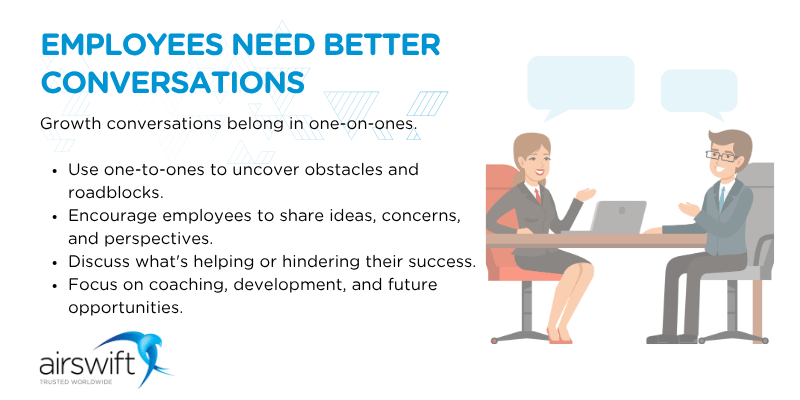
Eventually, difficult topics will arise. Performance concerns, interpersonal conflicts, missed expectations, and personal challenges are all common discussion points.
When handling difficult conversations:
- Address issues promptly
- Focus on facts rather than assumptions
- Be specific about observations
- Listen before responding
- Collaboratively identify solutions
Avoid turning difficult conversations into lectures. The goal is understanding and improvement, not blame. A calm, respectful discussion often leads to better outcomes than a highly scripted confrontation.
What are some common one-to-one mistakes to avoid?
Mistake #1: Cancelling regularly
Employees interpret repeated cancellations as a signal that the meeting is not important. Protect the time whenever possible.
Mistake #2: Doing all the talking
One-to-ones should not be manager monologues. Use questions that encourage employees to think, reflect, and participate.
Mistake #3: Focusing only on problems
If every conversation revolves around issues, employees may begin to dread the meeting. Always create space to celebrate wins and progress.
Mistake #4: Ignoring career development
Growth conversations are essential for engagement and retention. Even small discussions about future goals can have a significant impact.
Mistake #5: Forgetting previous conversations
Failing to remember commitments or recurring themes damages credibility. Maintain simple notes and review them before every meeting.
What are some common objections to one-on-ones?
Some managers remain sceptical about the value of one-to-ones. Let's address a few common concerns:
"We communicate every day already."
Daily interactions are usually transactional. One-to-ones allow for deeper conversations about development, challenges, and support.
"My team prefers informal communication."
Informal communication is valuable, but it should complement structured one-to-ones, not replace them.
"I don't have time."
Investing time in employees often reduces future performance issues, escalations, and turnover.
"Employees never bring topics."
Creating a shared agenda and providing discussion prompts typically improves participation.
"Remote teams don't need them."
In many cases, remote employees need one-to-ones even more. Regular conversations help maintain connection, alignment, visibility, and engagement.
Turning one-to-ones into results
Improving one-to-ones doesn't require complicated systems or perfect meeting agendas. The most effective managers focus on consistency, preparation, psychological safety, coaching, and accountability.
If you want better engagement, stronger performance, and healthier manager-employee relationships, start with your next one-to-one. Review the agenda, remove unnecessary status updates, and replace them with coaching, development, and support conversations.
Small changes can transform routine meetings into one of the most powerful leadership tools you have.
At Airswift, we help organisations strengthen their workforce strategies through global talent solutions, workforce planning, and recruitment services across a range of industries. Whether you're growing your team, addressing skills gaps, or building future leadership pipelines, having the right people in place is essential to long-term success.
Contact our workforce specialists for tailored workforce solutions for management success.