
By
Alicia Edwards
July 16, 2025
Updated
July 17, 2025

What is retained search?
Retained search refers to a recruitment service where a company partners with an executive search firm to help find highly qualified candidates for senior or specialised roles. Unlike contingency recruiting, where the firm only gets paid once a candidate is placed, the executive search firm is paid upfront, usually through a retainer fee.
When someone asks, “What is retained search?”, the answer is straightforward: a high-touch, professional recruitment process designed to help organisations find the right candidates for leadership or hard-to-fill roles.
The retained search process
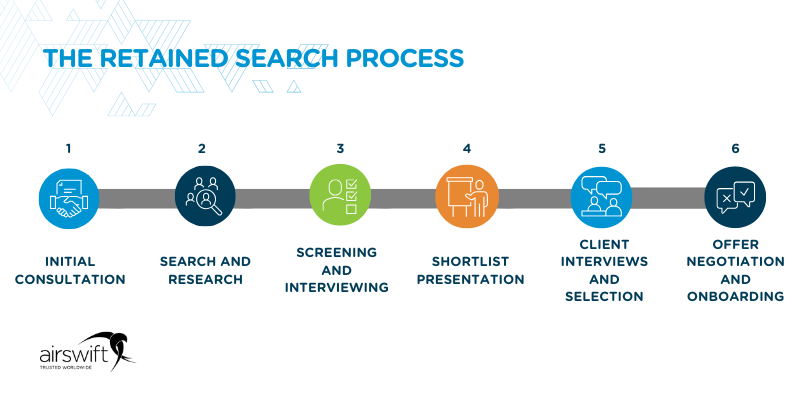
The search process is structured and highly detailed. The steps typically include:
1. Initial consultation
The first step is a client consultation where the search firm works closely with the client to fully understand the job description, role requirements, and company culture. This helps establish the candidate profile and ensures the firm knows exactly what the organisation is looking for in their next hire.
2. Search and research
The search firm begins headhunting potential candidates. The firm taps into its talent network, leveraging market intel and candidate sourcing tools, including online databases and industry connections, to create a long list of suitable candidates. The search firm also conducts market research to understand the competitive landscape and identify where the best candidates are located.
3. Screening and interviewing
Once potential candidates are identified, the retained search firm begins the candidate screening process. This includes in-depth interviews, background checks, and sometimes skills assessments, depending on the position. The firm assesses candidates based on their qualifications, cultural fit, leadership style, and performance in similar roles.
4. Shortlist presentation
After evaluating the candidates, the firm presents a shortlist to the client. This presentation includes detailed candidate assessments, highlighting each candidate’s strengths, weaknesses, and overall suitability for the role.
5. Client interviews and selection
The client then interviews the shortlisted candidates. The retained search firm may help facilitate the interview process by providing feedback on each candidate, ensuring that both the client and candidate experience is smooth. After interviews, the client makes the final selection.
6. Offer negotiation and onboarding
Once a candidate is chosen, the retained search firm helps facilitate offer negotiations and can assist with contract details, ensuring both the candidate and client are satisfied. The firm may also continue to provide support during the onboarding process, ensuring the transition is smooth.
Why do companies choose retained search?
Companies typically opt for retained search when they are hiring for senior-level roles or positions requiring highly specialised expertise. The main reasons for using this method include:
- Executive leadership hiring: Positions such as CEO, CFO, or department heads, where both experience and cultural fit are crucial.
- Hard-to-find talent: When the company needs candidates with unique skills, such as in technology, finance, or legal sectors.
- Confidentiality: The process is ideal for situations where confidentiality is critical, such as leadership transitions or sensitive internal changes.
These firms go beyond simply filling vacancies. They work to ensure a perfect match for both the company’s needs and the candidate's skills.
Benefits of retained search
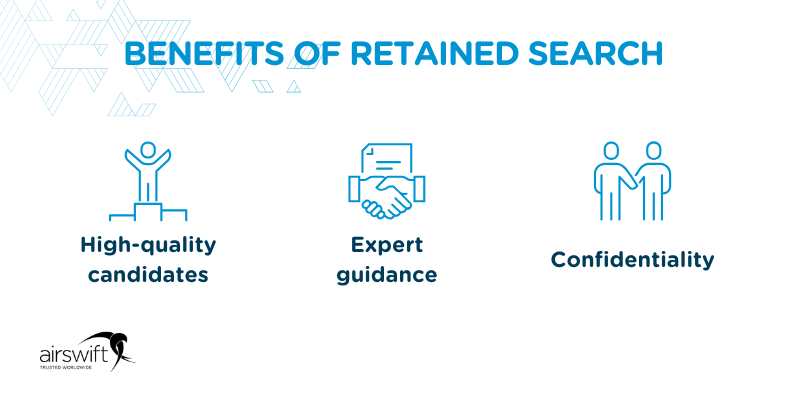
Opting for this method offers several key benefits for companies:
Access to high-quality candidates
Retained search firms specialise in sourcing top-tier candidates. These firms go beyond active job seekers and also target passive candidates who are not actively looking for a new job but are highly qualified and open to new opportunities.
Expert guidance and advice
Retained search firms provide valuable market insight, helping businesses refine their recruitment strategy and better understand talent availability. They also advise on salary expectations, candidate behaviour, and market trends.
Confidentiality
This process is particularly suited for confidential hiring. For instance, if a company is undergoing a leadership change or needs to replace a high-level executive without alerting competitors, the search firm can manage the process discreetly.
Potential challenges of retained search
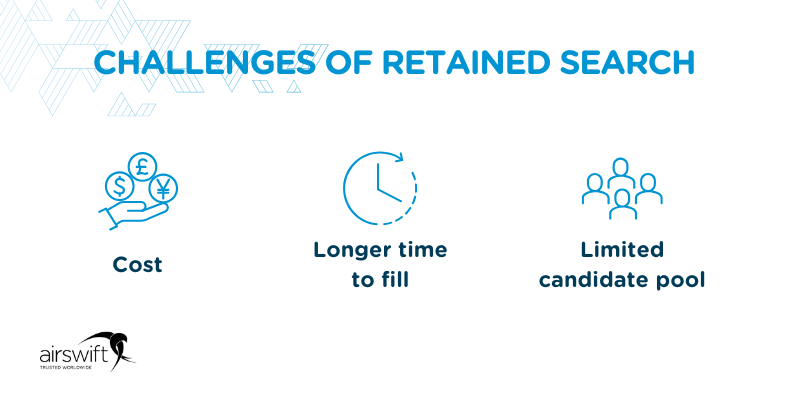
While the process is highly effective, there are a few challenges to consider:
Cost
Search firms charge an upfront retainer fee, which can be a barrier for some companies, particularly for lower-level or non-specialised roles.
Longer time to fill
Due to the thorough nature of the process, retained searches can take longer to complete compared to contingency recruitment methods. Companies looking for a quick hire may not find this the ideal solution.
Limited candidate pool
Since the process is tailored for high-level positions, the candidate pool is often smaller than in other recruitment methods. However, this is balanced by the quality and suitability of the candidates.
Retained search vs. contingency recruitment
While both methods aim to find top talent, contingency recruitment and retained search differ in several ways:
- Payment structure: In retained search, the client pays a retainer fee upfront, while in contingency search, the firm only gets paid once the client hires a candidate.
- Candidate pool: Retained search focuses on both active and passive candidates, meaning companies can tap into a larger pool of talent, including those who are not actively looking for a new job.
- Commitment and resources: Executive search firms dedicate more time and resources to filling a role, offering a high level of engagement and insight throughout the process. Contingency search firms focus more on speed and quantity, often with less in-depth analysis.
- Role type: Retained search is typically used for senior, specialised, or highly critical roles, while contingency search is generally employed for mid-level positions with a broader candidate pool.
When should your business use retained search?
Using a search firm is ideal when hiring senior executives, specialists, or highly confidential roles. Here are some scenarios when this method is especially beneficial:
- Senior leadership hires: When hiring key executives such as a CEO, CFO, or department head.
- Specialised talent: When you need someone with rare skills or experience that are difficult to find through traditional channels.
- Confidential hiring: If the hiring process needs to remain confidential, such as during a leadership transition or restructuring.
If your business is looking for high-calibre talent for a leadership role or specialised function, a search firm could be the right solution.
Final thoughts
Retained search is an excellent solution for businesses that need to fill senior or highly specialised roles. It offers access to a dedicated, high-level recruitment service that includes thorough candidate screening, confidentiality, and industry expertise.
For companies hiring at the executive level or looking for hard-to-find talent, working with a retained search firm provides the expertise and resources needed to make the right hire quickly and efficiently. Consider using retained search when your business requires a personalised, high-quality recruitment process.
Ready to use this service? Airswift offers retained search and other professional services which you can find here.