
By
Alicia Edwards
September 7, 2026
Updated
September 7, 2026

Understanding employee leave policies can be confusing, especially when terms such as vacation time, PTO, annual leave, and paid time off are often used interchangeably. While they're closely related, they don't always mean the same thing.
Whether you're reviewing a job offer, comparing employee benefits, or planning a vacation from work, understanding how vacation time and PTO work can help you make informed decisions about your leave entitlement.
What are vacation time and PTO?
Vacation time is approved time away from work that employees can use for holidays, travel, relaxation, or personal activities.
PTO, which stands for Paid Time Off, is a broader term commonly used in the United States. It refers to paid leave that employees can take while continuing to receive their normal pay.
Depending on an employer's policy, PTO may include:
-
Vacation days
-
Sick leave
-
Personal days
-
Medical appointments
-
Family responsibilities
PTO may combine multiple types of leave into a single allowance, while other employers manage vacation time and sick leave separately.
For example, one employer may provide 15 days of PTO that employees can use however they choose. Another may offer 10 vacation days and 5 sick days as separate benefits.
|
PTO |
Vacation time |
|
Broad category of paid leave |
Specific type of leave |
|
May include sick leave and personal days |
Primarily used for holidays and personal time |
|
Often managed as one leave bank |
May be managed separately |
|
Common in US workplaces |
Used globally under different names |
How do vacation time and PTO work?
Employers typically provide leave in one of two ways.
Some organisations grant a fixed number of days at the beginning of the year or on an employee's work anniversary. Others use an accrual model, where leave is earned gradually over time.
If you've wondered what accrued vacation time means or how PTO accrues, it simply means employees build up leave throughout the year based on factors such as:
-
Hours worked
-
Pay periods completed
-
Length of service
-
Employment status
For example, an employee entitled to 15 days of annual leave may earn that allowance gradually rather than receiving all 15 days at once.
Most employers also require workers to request vacation time in advance and obtain manager approval before booking extended periods away from work.
Can PTO be used for sick leave?
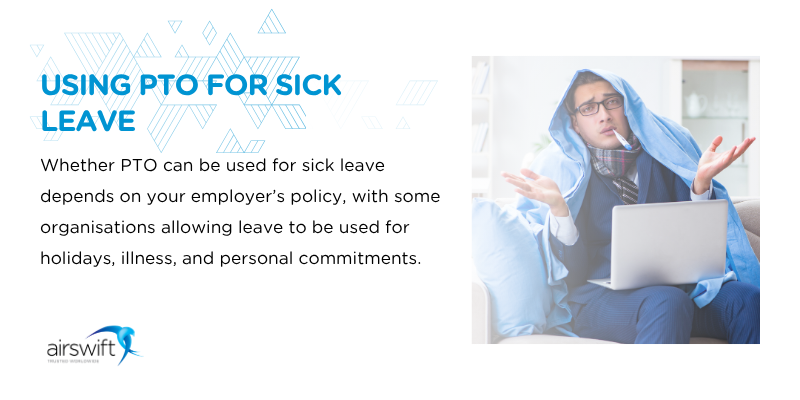
This depends entirely on how an employer structures its leave policy.
In organisations that use a combined PTO system, employees may be able to use their available leave for holidays, illness, medical appointments, personal commitments, and family responsibilities.
Where vacation leave and sick leave are managed separately, employees will usually be expected to use the appropriate leave type for each situation.
Because policies vary, it's important to understand how leave is managed within your organisation before assuming what PTO can be used for.
How much vacation time do employees get and is it paid?
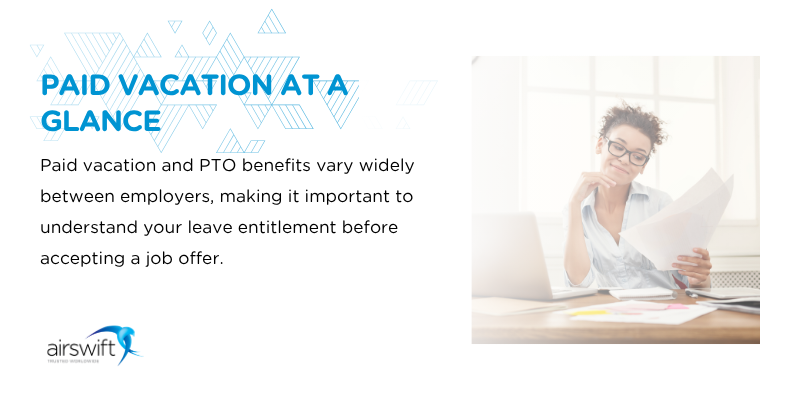
The amount of vacation time employees receive varies significantly between employers, industries, and countries.
Factors that may influence leave entitlement include:
-
Length of service
-
Seniority
-
Industry sector
-
Employment contract
-
Company benefits package
In the United States, employees commonly receive between 10 and 14 days of paid vacation after one year of service, with many receiving 15 to 19 days after 10 years of employment.
Many employers provide paid vacation or PTO as part of their wider benefits package, allowing employees to take approved leave while continuing to receive their regular pay. However, policies vary between organisations, so employees should review their employment contract or company handbook to understand exactly what benefits are available to them.
When comparing job opportunities, vacation time and PTO should be considered alongside salary, healthcare benefits, retirement contributions, and other employee benefits, and other elements of a compensation package.
What happens to unused vacation time or PTO?
Unused leave is handled differently by different employers.
Common approaches include:
-
Allowing leave to roll over into the next year
-
Limiting how much leave can be carried forward
-
Requiring employees to use leave before a deadline
-
Paying out unused leave in certain circumstances
Understanding these rules can help employees avoid losing valuable leave benefits and make better use of their entitlement throughout the year.
Can employers refuse vacation requests?
In many workplaces, vacation requests require manager approval.
Employers may need to consider:
-
Staffing levels
-
Project deadlines
-
Seasonal demand
-
Business continuity requirements
For this reason, it is generally advisable to submit requests as early as possible, particularly during busy periods or around public holidays when demand for leave is often highest.
Six ways to make the most of your vacation time

Taking leave is important, but making the most of that time can help you gain greater benefit from your break.
1. Know when it's time to take a break
High stress levels, anxiety, mental fatigue, burnout symptoms, and repeatedly missing important family events can all indicate that it's time to schedule some leave.
Recognising these signs early can help prevent work from negatively affecting your wellbeing, so knowing when to take a break is key,
2. Aim for the right length of holiday
The ideal holiday length varies from person to person. Research suggests that around eight days may provide the greatest psychological refresh, although many people find that a five-day break plus travel time is enough to relax and recharge.
The most important factor is creating meaningful time away from your usual routine.
3. Use public holidays strategically
Planning around public holidays can help you maximise your time off while using fewer vacation days or PTO hours.
For example, extending a long weekend around a national holiday can create a longer break while preserving more of your remaining leave allowance.
4. Check your leave balance regularly
Many employees don't fully use the leave entitlement available to them.
Reviewing your available leave throughout the year can help ensure you're making full use of a valuable employee benefit and avoiding last-minute scheduling issues.
5. Prioritise flexibility and control
Vacations often feel more rewarding when there is room for rest and spontaneity.
Rather than planning every hour, consider leaving space for activities you genuinely enjoy and opportunities to unwind.
6. Don't overpack your itinerary
If your goal is recovery and relaxation, avoid turning your holiday into another demanding schedule.
Many people find that lower-stress breaks provide a better opportunity to recharge than trips packed with activities from morning to night.
Frequently Asked Questions about vacation time
What does PTO stand for?
PTO stands for Paid Time Off.
What is accrued vacation time?
Accrued vacation time is leave that employees earn gradually over time rather than receiving all of it at once.
Do part-time employees get PTO?
Some employers provide PTO or vacation benefits to part-time employees, while others reserve these benefits for full-time staff. Eligibility depends on company policy.
Is PTO required by law?
PTO requirements vary by employer and location. Employees should review local employment regulations and company policies to understand their entitlement.
Do companies have to pay out unused PTO?
Whether unused PTO is paid out depends on company policy and applicable employment laws.
Find a role that supports your work-life balance
Understanding vacation time and PTO is only part of the equation. Finding an employer that values time away from work, employee wellbeing, and a healthy work-life balance can make a real difference to your long-term job satisfaction. If you're ready to explore new opportunities, visit our jobs page to discover roles with leading employers across the STEM industry.