
By
Alicia Edwards
August 8, 2025
Updated
August 8, 2025
What is a VMS?
A vendor management system (VMS) is a software platform that businesses use to manage their relationships with external suppliers, contractors, and vendors. It centralises vendor information, streamlines procurement processes, and ensures compliance with relevant regulations. A VMS is particularly useful for managing contingent workers, service providers, and other external workforce members, allowing organisations to efficiently track performance, manage contracts, and optimise their vendor relationships.
Benefits of a vendor management system
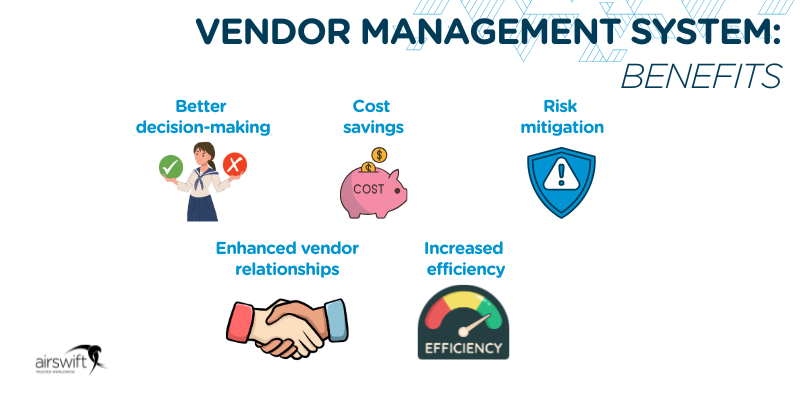
A VMS offers several benefits that can improve procurement processes, reduce costs, and enhance vendor relationships. Some of the key benefits include:
Improved efficiency
By automating procurement tasks such as vendor selection, contract management, and payment processing, a VMS significantly improves operational efficiency. Procurement teams can spend less time on administrative tasks and more time on strategic decision-making.
Cost savings
A VMS helps businesses negotiate better pricing with vendors by providing insights into spending patterns. By tracking vendor rates and purchasing history, companies can identify opportunities to reduce costs and optimise supplier contracts.
Risk mitigation
A VMS helps mitigate third-party risks by ensuring that all vendors meet compliance standards and contractual obligations. It also enables businesses to track vendor performance and ensure that suppliers are delivering on time and meeting quality standards.
Enhanced vendor relationships
With a VMS, companies can easily track vendor performance, identify top suppliers, and build stronger relationships with high-performing vendors. By providing a clear, centralised system for communication, businesses can improve collaboration with vendors and address issues proactively.
Better decision-making
A VMS provides detailed data and insights that help businesses make more informed decisions regarding their procurement strategy. By tracking metrics such as supplier performance and cost savings, companies can optimise their vendor relationships and procurement processes.
Key features of a vendor management system
When selecting a VMS, organisations should look for certain features that will help them manage their vendor relationships effectively. Some essential features of a VMS include:
Vendor database management
A VMS allows businesses to store and manage comprehensive profiles for each vendor, including contact information, contract terms, compliance records, and performance data. This centralised database makes it easy to access and update vendor information.
Automated procurement processes
A VMS automates many aspects of the procurement process, such as generating purchase orders, approving requisitions, and tracking deliveries. This automation reduces the likelihood of human error and ensures that the procurement process runs smoothly.
Customisable reporting and analytics
The VMS provides powerful reporting and analytics tools that allow businesses to track key performance metrics and generate reports on vendor performance. This helps procurement teams make informed decisions based on real-time data.
Invoice and payment management
A VMS automates the invoicing process, ensuring that invoices are processed accurately and on time. It also tracks payment histories and alerts businesses about any discrepancies between purchase orders and invoices, reducing the risk of overpayments or errors.
Document management
A VMS allows businesses to store and manage important vendor documents, such as contracts, compliance certificates, and performance reports. This digital document storage ensures that all necessary paperwork is accessible and organised, reducing the risk of lost or misfiled documents.
How does a vendor management system help with contingent workforce management?
A VMS is particularly useful for managing a contingent workforce, which refers to employees who are hired on a temporary, contract, or freelance basis. The system allows businesses to manage and track the performance of contingent workers just as they would with permanent employees. A VMS helps organisations ensure that contingent workers are compliant with labour laws, properly onboarded, and paid accurately and on time.
By providing a centralised platform for managing all vendor relationships, a VMS ensures that businesses can effectively manage their contingent workforce, improve collaboration, and optimise their use of temporary and contract labour. It also ensures that offboarding processes are managed efficiently, reducing the risk of compliance issues or administrative errors.
Conclusion
When someone asks, “What is a vendor management system?”, you can tell them that it is a tool that helps organisations streamline the process of working with vendors and suppliers by centralising critical information and automating key procurement activities.
If your organisation is looking to enhance its vendor management strategy, Airswift offers comprehensive workforce solutions, including vendor management and contingent workforce services. Visit our services page to learn how we can help your business optimise procurement and improve vendor collaboration.