
By
Diyaa Mani
May 28, 2026
Updated
May 28, 2026
Reaching passive STEM talent globally demands a blend of data, technology, and high-touch relationship building, especially in the technical and engineering sectors.
Below are ten practical techniques, shaped by best practices used by specialist STEM recruiters operating across multiple countries and disciplines.

1. Build discipline-specific talent communities
Instead of treating “STEM talent” as one pool, group them based on their field, skills, or the type of work they do. Organisations that assign recruiters to verticals (for example, one for Cost Engineers and another for Construction Managers) consistently see higher relevance and stronger engagement from passive candidates.
To do this effectively:
- Identify the key skill areas you want to focus on (e.g., process engineering, data science, offshore wind).
- Assign ownership of each cluster to a recruiter or talent partner who knows the terminology, typical career paths, and deal-breakers.
- Build ongoing “micro communities” on platforms like LinkedIn, Meetup, or niche forums around these clusters rather than generic company channels.
Passive STEM candidates are far more likely to respond to someone who clearly understands their domain, project environments, and certification landscape.
2. Leverage AI-powered sourcing for passive profiles
AI recruiting platforms can discover candidates who are not actively applying but fit complex requirements across multiple markets. Tools that analyse profiles, skills, and employment histories at scale can identify patterns that human sources might miss, particularly for emerging technologies or hybrid roles.
Practical use cases:
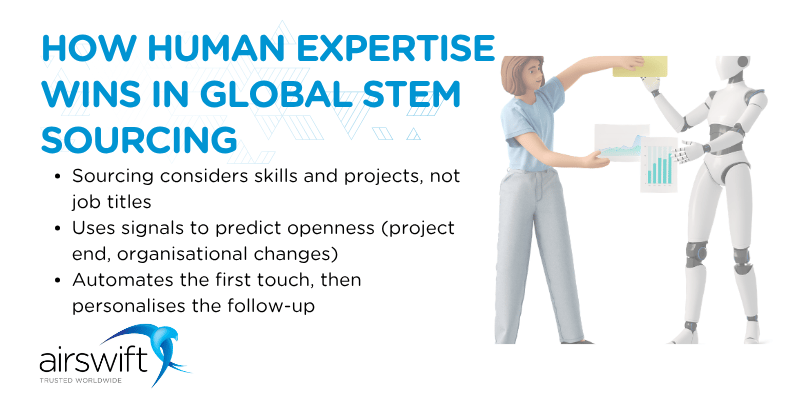
- Use AI tools (such as LinkedIn Recruiter or custom platforms) to build longlists from global databases based on skills, projects, and certifications rather than job titles alone.
- Layer predictive analytics on top of this data to identify candidates most likely to be open to new opportunities, such as those whose projects are nearing completion or whose employers are restructuring.
- Automate your first outreach messages, and then hand over interested candidates to specialist recruiters for personalised follow-up.
This combination of AI and targeted human engagement is especially powerful in competitive STEM markets where speed and relevance matter.
3. Move beyond job boards with programmatic outreach
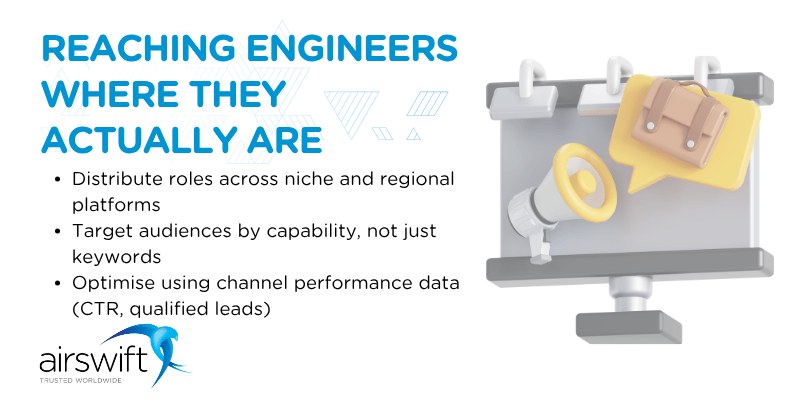
Many companies still rely heavily on job boards and generic posts, which primarily reach active job seekers. Programmatic advertising lets you distribute opportunities across niche STEM platforms, communities, and regions, ensuring your roles appear where specialised professionals spend their time online, even if they are not searching for jobs.
To reach passive STEM candidates globally:
- Use programmatic tools integrated into your ATS to automatically place targeted ads across specialist sites and regional platforms.
- Optimise audiences based on skills, industry, and geography, not just keywords, to reach adjacent talent pools with transferable skills.
- Continuously refine campaigns using performance data (click-through rates, qualified leads) from each market and channel.
This approach helps avoid over-reliance on saturated platforms and opens under-tapped talent pockets in both mature and emerging STEM hubs.
4. Engage STEM communities on social and professional networks
Social and professional platforms host highly active STEM communities where experts share research, projects, and technical insights. Instead of treating these as job boards, treat them as places to build relationships, demonstrate domain credibility, and identify potential future hires.
What to do:
- Follow and contribute to relevant hashtags (for example, #STEM, #DataScience, #RenewableEnergy, #ProcessSafety).
- Participate in virtual events, AMAs, and technical discussion threads, highlighting engineering and project challenges your teams are solving.
- Use platforms like Meetup to join or sponsor STEM-focused groups and events in key regions, then follow up one-to-one with high-potential attendees.

5. Design a global “follow-the-sun” sourcing model
If you are hiring across multiple time zones, responsiveness can make or break engagement with passive candidates who are not waiting by the phone. A global sourcing model that follows the sun, where your recruiting team works across regions so conversations keep moving 24/7.
How it works:
- Structure your sourcing team so that candidate queries and outreach are handled continuously across locations, rather than pausing overnight in one region.
- Use shared CRM or ATS systems to log interactions, ensuring candidates experience a seamless journey even when speaking with different recruiters in different countries.
- Align this model with global talent pipelines so that promising passive candidates are nurtured over time, not lost when projects end.
6. Build long-term talent pipelines around projects and markets
In many STEM-heavy industries, hiring demand increases around big projects, new regulations, or market expansions. Organisations that wait until a project is approved to start sourcing passive talent often find themselves behind more proactive competitors.
A more effective technique is to:
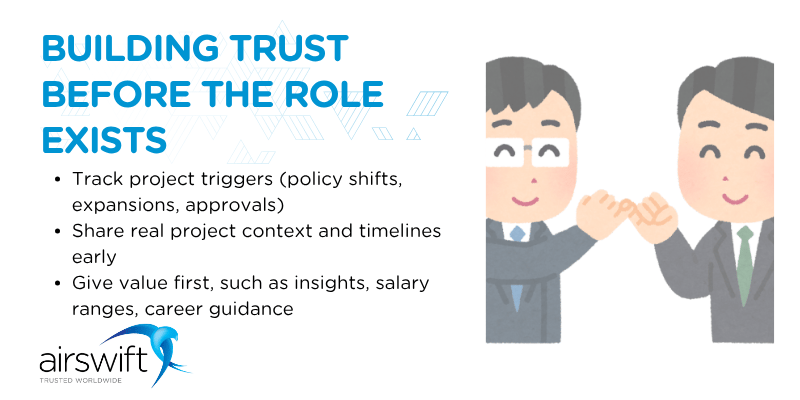
- Track upcoming projects, policy shifts, and market trends in key sectors such as energy, infrastructure, and technology across target countries.
- Build project-specific talent pipelines months in advance by mapping critical roles, identifying likely candidate sources, and pre-qualifying passive profiles.
- Stay in touch with these candidates with periodic updates about project timelines, technological innovations, and potential career paths.
This strategic, research-driven approach is particularly suited to specialised technical roles that require deep industry knowledge and thorough vetting.
7. Use assessment and simulation tools to make opportunities tangible
Passive STEM professionals often hesitate to move without clear evidence that a role will challenge their skills and align with their expertise. Assessment tools and work simulations can transform abstract job descriptions into concrete challenges, which is compelling for technically motivated candidates.
Ways to use assessments in sourcing:
- Offer optional, role-specific challenges (coding tasks, engineering simulations, or data projects) as part of early engagement rather than only as gatekeeping tools.
- Share anonymised, real-world scenarios or “day in the life” simulations so candidates can see the level of complexity and innovation involved.
- Use the outcomes to have richer, more tailored conversations about where their strengths fit into current and future projects.
This shifts the conversation from “Are you open to a move?” to “Here is the type of problem you could be solving,” which resonates strongly with high-caliber STEM talent.
8. Expand into non-traditional and adjacent talent pools
Many organisations limit themselves to familiar sources: similar companies, local markets, or specific universities. That approach can shrink the talent pipeline, reinforce shortages, and overlook high-potential passive candidates from adjacent sectors or non-linear career paths.
To widen your reach:
- Consider candidates from adjacent industries with transferable technical foundations; for example, moving talent between energy, advanced manufacturing, and clean tech.
- Engage career switchers, return-to-work professionals, and those with non-traditional backgrounds who have acquired relevant skills via bootcamps or hands-on projects.
- Partner with institutions, training providers, and regional hubs that specialise in emerging technologies to identify early-career passive talent.
By focusing on capability and potential, you not only fill hard-to-find roles but also strengthen diversity and innovation.
9. Localise your approach while maintaining global compliance
Global STEM sourcing is never just about finding the right skills; it is also about compliance, relocation, and local market norms. Without local expertise, even strong global sourcing efforts can falter during offer, onboarding, or mobilisation stages.
High-impact practices include:
- Working with partners or in-country experts who understand labor laws, taxation, and immigration requirements in each jurisdiction.
- Tailoring outreach and value propositions to local expectations, such as work-life balance, project types, or benefits, rather than using a one-size-fits-all message.
- Providing clear, credible information about relocation, payroll, and employment structures, which builds confidence among passive candidates considering cross-border moves.
A compliant, well-communicated process reduces friction, protects your organisation from legal risks, and makes international opportunities more attractive to sought-after STEM professionals.
10. Embed a candidate-first, relationship-led mindset
Passive STEM talent are particularly sensitive to how they are approached and treated. A candidate-first ethos; one that prioritises transparency, respect for their time, and personalised communication turns one-off outreach into enduring relationships that pay off across multiple hiring cycles.
To embed this mindset:
- Communicate clearly about role expectations, project realities, and timelines, even when there is uncertainty.
- Offer market insight, compensation data, and career advice, not just a pitch for a single vacancy, to position your team as trusted advisors rather than transactional recruiters.
- Maintain a structured feedback loop and stay in touch with strong candidates even if they are not placed immediately, using your CRM to track interactions and future-fit roles.
Over time, this relationship-led approach becomes a differentiator in markets where STEM professionals frequently hear from generic recruiters but rarely from specialists who understand their work and career goals.
Partner with Airswift to unlock global STEM talent
To consistently attract and secure passive STEM talent across global markets, organisations need more than traditional hiring strategies.
By combining deep technical expertise, advanced sourcing technology, project-aligned talent pipelines, and a globally compliant, candidate-first approach, you can engage the right talent at the right time.
At Airswift, we help businesses stay ahead of demand, connecting you with highly specialised professionals and building long-term talent pipelines that support your most complex projects.
Get in touch with our STEM recruitment specialists to strengthen your hiring strategy today.