By
Alicia Edwards
November 10, 2025
Updated
August 3, 2026
If you've ever started a new job and felt overwhelmed by the sheer amount of information, forms, and introductions, you're not alone. That initial experience is part of a process known as onboarding. But what is onboarding, really? And why does it matter so much to both employers and employees?
In this article, we’ll break down what the meaning of onboarding is, why it’s important, and how businesses can do it better. Whether you're an HR Manager, a Team Leader, or someone about to start a new role, understanding onboarding can make a big difference.
What is the onboarding process?
Onboarding is the structured process of integrating a new employee into an organisation. It goes beyond signing contracts and handing out laptops. It’s about helping someone feel welcome, informed, and ready to contribute.
The onboarding process typically includes:
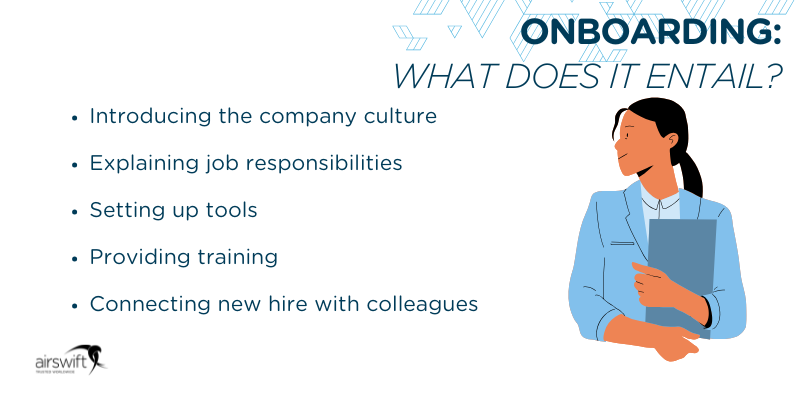
- Introducing the company culture, values, and mission
- Explaining job responsibilities and expectations
- Setting up tools, systems, and access
- Providing training and support
- Connecting the new hire with colleagues and teams
It’s not a one-day event. Good onboarding can last weeks or even months, depending on the role and the organisation.
Why is onboarding important?
A strong onboarding experience can have a lasting impact. It sets the tone for how an employee feels about their new workplace and can influence their performance, engagement, and retention.
Here’s why onboarding is worth investing in:
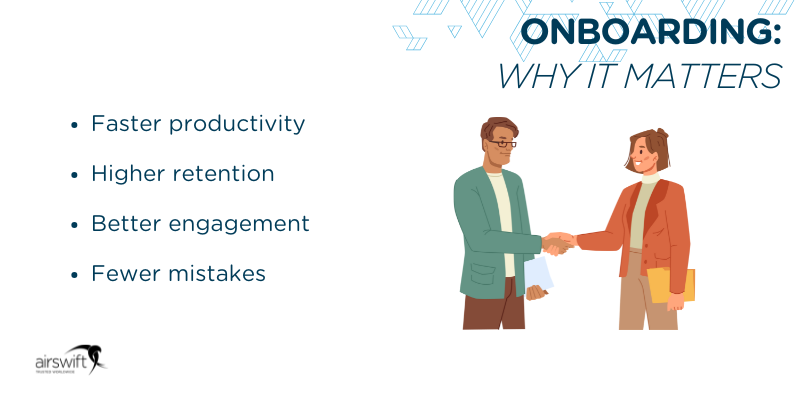
- Faster productivity: Employees who understand their role and tools get up to speed quicker
- Higher retention: People who feel supported are more likely to stay long-term
- Better engagement: Onboarding helps employees feel connected and valued
- Fewer mistakes: Clear guidance reduces confusion and errors
In contrast, poor onboarding can lead to frustration, disengagement, and even early resignations.
What are the different types of onboarding?
There are different approaches to onboarding, depending on the company and the role. Some common types include:
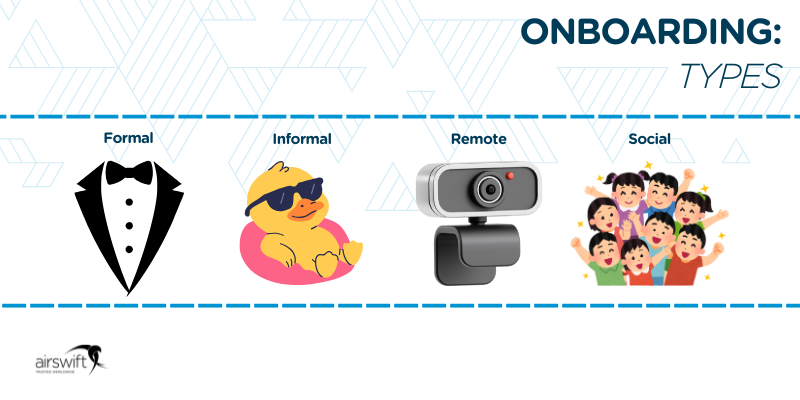
- Formal onboarding: Structured programmes with schedules, training modules, and checklists
- Informal onboarding: More casual, relying on team interactions and organic learning
- Remote onboarding/digital onboarding: Tailored for employees working from home, often using video calls and digital platforms
- Social onboarding: Focused on building relationships and integrating into the team culture
Many organisations use a mix of these, adapting to the needs of each new hire.
How long does onboarding take?
There’s no one-size-fits-all answer. Some companies wrap up onboarding in a week, while others extend it over several months. A good rule of thumb is to continue onboarding until the employee feels confident and independent in their role.
For example:
- Week 1: Introductions, basic training, and setup
- Weeks 2–4: Deeper role-specific training and feedback
- Months 2–3: Performance reviews, goal setting, and continued support
Regular check-ins and feedback are key throughout the process.
Tips for effective onboarding
If you’re responsible for onboarding new employees, here is an onboarding checklist to make the process smoother and avoid making mistakes:
- Prepare in advance: Have equipment, accounts, and schedules ready before Day One
- Personalise the experience: Tailor onboarding to the individual’s role and background
- Communicate clearly: Explain expectations, timelines, and who to contact for help
- Encourage questions: Create a safe space for new hires to ask and learn
- Follow up: Check in regularly to see how things are going and offer support
Final thoughts
So, what is onboarding? It’s the bridge between hiring and thriving. Done well, it helps new employees feel confident, connected, and ready to succeed. For businesses, it’s an investment in people and one that pays off in performance, loyalty, and culture.
Effective onboarding is critical to productivity, compliance, and long‑term retention — especially in complex or global hiring environments. At Airswift, we support organisations with structured onboarding solutions that help new hires transition smoothly into their roles while reducing administrative burden and risk.
Contact us to learn how we can support your onboarding process and wider workforce requirements.