By
Diyaa Mani
March 10, 2026
Updated
March 13, 2026
The energy industry in 2026 is moving faster than ever. Clean‑energy investment is rising, digital tools are advancing, and companies face pressure to deliver major projects quickly and safely. To thrive, professionals need the right mix of technical skills, digital abilities, and strong people skills.
The global energy transition is speeding up, and as countries invest more in clean energy and new infrastructure, the way we work is changing. To meet net‑zero goals, organisations need more than new technology; they need people with the right skills, support, and opportunities to grow. The future of work is clearly green, but keeping up requires a long‑term, people‑focused approach to workforce development.
The future of work is clearly green. But to keep up with new expectations, rapid advances in AI, and a growing number of energy projects, companies must take a long‑term, people‑focused approach to developing their workforce.
Key Findings: What the GETI 2026 report reveals
Here’s a simple breakdown of what energy professionals and hiring managers told us this year:
A clear career path matters more than ever
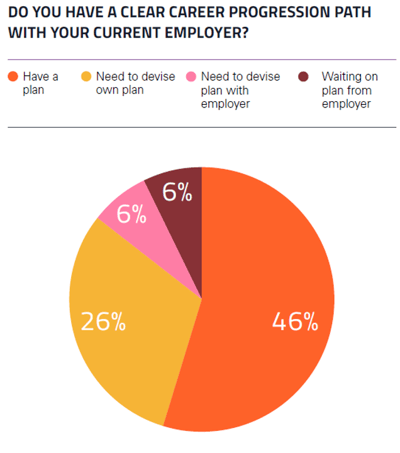
Only 46% of energy professionals have a career development plan, and 26% say they must create one themselves. Without a clear path, people feel stuck and are more likely to leave, meaning employers who offer structured growth plans can significantly boost retention and performance.
AI is now a core career accelerator
 GETI 2026 shows that 45% of traditional energy workers, 54% of transitional workers, and 60% of renewables workers now use AI, an increase of up to 187% since 2024. Workers use AI to perform higher‑level tasks, fill skill gaps, improve technical skills, and get personalised career support. AI is helping people grow, not replacing them.
Engineering and technical roles remain the hardest to fill
Half of hiring managers in traditional energy and over half in transitional energy say engineering and technical roles are the most difficult to hire for, which is a trend also seen in renewables. This highlights the need for better early‑career support, stronger training, and more effective knowledge‑transfer systems.
A rapidly ageing workforce raises the stakes
48% of traditional energy workers, 36% in transitional energy, and 34% in renewables are over 45. With fewer people willing to relocate (only 69–75%), companies must find ways to keep experienced talent longer and help younger workers grow faster before knowledge is lost.
AI will reshape roles, but expertise is still essential
Only 6–7% of workers believe no jobs are at risk. AI will mostly impact digital, data, and administrative tasks. However, engineering, HSE, and leadership roles remain among the least threatened because human judgment is essential in high‑risk technical industries.
Learn more about these insights by downloading the GETI report
Modern green engineering skills
Engineering roles remain the backbone of the energy transition, but the skills in demand are evolving fast. Employers now look for engineers who can move seamlessly between oil and gas, offshore wind, hydrogen, and grid-scale storage projects. Demand for engineers is higher than the supply, making these roles especially crucial as clean‑energy projects expand worldwide.
Key capabilities include:
- Designing and optimising renewable assets such as offshore wind farms, solar-plus-storage plants, and green hydrogen facilities.
- Translating conventional offshore and subsea engineering techniques from oil and gas into renewables applications, especially in floating wind and hydrogen.
- Working within tighter project timelines and cost constraints as governments push for rapid deployment of low-carbon infrastructure.
Digital skills and AI competency
The modern energy industry’s systems are increasingly software-led, making digital skills critical across disciplines, not just in IT teams. Energy companies want professionals who can understand, interpret, and act on data from complex assets and networks.
According to GETI 2026, workers are increasingly combining engineering know‑how with digital and AI skills. AI helps them solve problems faster, learn new skills, and improve accuracy, making them far more competitive.
Core digital skills shaping 2026 include:
- Using SCADA, digital twins, and AI-driven tools for predictive maintenance, grid optimisation, and production forecasting.
- Analysing operational and market data to improve asset performance, reduce downtime, and inform trading and dispatch decisions.
- Supporting cybersecurity for critical energy infrastructure as more devices and systems connect to the grid and the cloud.
Project controls and cost management
Large-scale energy projects from offshore wind to LNG to transmission upgrades live or die on schedule, budget, and risk control. This is driving strong demand for project controls professionals who combine commercial awareness with technical understanding.
In-demand abilities:
- Building realistic budgets and forecasts, then tracking costs, commitments, and variances across multi-year, multi-contract programs.
- Integrating scheduling, risk management, and change control so stakeholders have a single, data-driven view of project health.
- Managing contracts and claims effectively in an inflationary environment where supply chain disruptions and local content rules add complexity.
Grid integration and systems thinking
As more intermittent renewables connect to grids, system-level thinking has become a critical skill set in 2026. Employers increasingly seek engineers and analysts who understand how individual projects affect wider networks and markets.
High-value capabilities include:
- Designing grid connections, modelling stability impacts, and ensuring compliance with evolving grid codes for new projects.
- Optimising power flow and congestion management to maintain reliability while maximising low-carbon generation.
- Collaborating with regulators, TSOs, DSOs, and developers to align technical solutions with policy, market rules, and consumer needs.
Environmental permitting and ESG strategy
Regulation is tightening and stakeholder expectations around sustainability are rising, putting environmental and ESG skills at the center of hiring decisions. Every major energy project now needs experts who can navigate permitting, social license, and long-term impact.
Key skill areas:
- Managing environmental and social impact assessments, permitting timelines, and stakeholder consultations across multiple jurisdictions.
- Translating ESG commitments into practical frameworks for emissions reduction, biodiversity, and community engagement.
- Supporting transparent ESG reporting that meets investor, lender, and regulatory expectations, particularly for transitional and renewable projects.
Health, safety, and regulatory compliance
Despite rapid innovation, safety and compliance remain nonnegotiable foundations of the energy workforce. As technologies and operating models change, professionals who can update and apply HSE and regulatory standards are in high demand.
Priority skills in 2026:
- Adapting safety practices to new environments such as offshore wind farms, large-scale battery installations, and hydrogen facilities.
- Interpreting evolving regulations, including local content requirements, emissions standards, and supply chain rules.
- Building safety cultures where contractors and permanent staff collaborate effectively across multi-employer worksites.
Cross-sector and transitional talent
Airswift’s talent insights highlight a surge in “transitional” professionals who move between traditional and renewable energy. These workers bring deep technical knowledge from oil and gas into emerging sectors, helping projects ramp up faster and more safely.
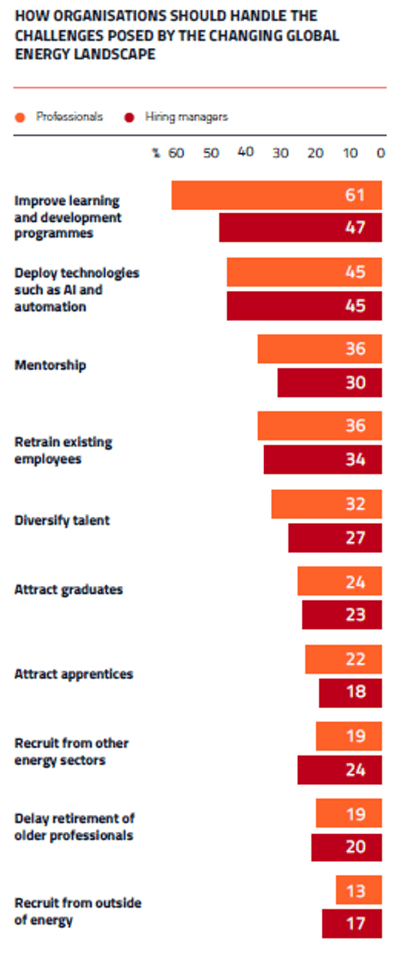
According to GETI 2026, talent mentorship is especially important as the workforce ages, as 47% of traditional energy companies, 46% in transitional energy, and 48% in renewables are investing in learning and development to keep knowledge flowing.
Valuable aspects of cross-sector experience:
- Reapplying offshore, marine, and subsea expertise to offshore wind, carbon capture and storage (CCS), and hydrogen.
- Demonstrating adaptability by shifting between project types, locations, and energy segments without losing performance.
- Mentoring newer talent in high-hazard environments and complex project delivery, improving resilience across teams.
Behavioral skills and leadership
Technical excellence alone is no longer enough; hiring managers emphasize behavioral skills that enable collaboration, innovation, and resilience. In many cases, these power skills are what differentiate top performers in senior or client-facing roles.
GETI 2026 states that soft skills like communication, creativity, and self‑leadership help teams stay resilient and perform better in a fast‑changing industry.
Most sought-after behavioral skills:
- Leading cross-functional and multicultural teams, often spread across multiple countries and time zones.
- Communicating clearly with non-technical stakeholders, from investors and regulators to local communities.
- Managing change, ambiguity, and constant technological evolution while maintaining engagement and safety.
Talent development, training culture, and skills-first thinking
Energy employers are increasingly adopting a skills-first mindset in 2026, focusing less on rigid job titles and more on what professionals can actually deliver. This shift is reshaping how organisations approach workforce planning, upskilling, and internal mobility.
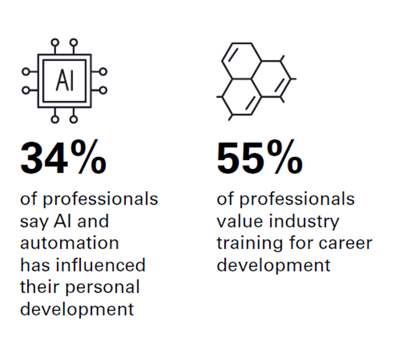
GETI 2026 brings up a critical point; training is the top development priority: 57% of traditional workers, 55% of transitional workers, and 55% in renewables say industry‑aligned training is what they value most. Yet, up to 52% of professionals say they don’t have a career plan or are waiting for one, showing the need for clearer pathways.
Critical abilities within this theme:
- Building and participating in structured learning and development programs that keep pace with new technologies.
- Using micro-credentials, certifications, and project portfolios to demonstrate current, practical capability.
- Designing talent strategies and training methods that balance permanent staff, contractors, and global mobility to cover skills gaps.
Workforce mobility, flexibility, and retention skills
While international mobility remains important, more professionals are prioritizing local or regional roles, work-life balance, and long-term development. According to GETI 2026, 40% professionals do not consider relocating due to proximity to family. This is pushing companies to rethink how they attract and retain scarce skills in hot spots for renewable and transitional projects.
Relevant skills and strategies include:
- Structuring flexible work arrangements and rotation patterns that still support operational continuity.
- Crafting compelling employee value propositions focused on purpose, progression, and wellbeing, not just pay.
- Using specialist recruitment partners and data from large-scale workforce surveys such as the Global Energy Talent Index to benchmark offerings.
Supply chain, localisation, and logistics
Rapid deployment of renewables and transitional projects is straining global supply chains, creating strong demand for specialists who can keep materials and equipment flowing. Local content rules and reshoring trends add further complexity, especially in manufacturing and construction.
High-impact skills in this area:
- Planning and managing multi-country supply chains for components like turbines, cables, batteries, and substations.
- Navigating trade rules, local content regulations, and emerging policies that affect sourcing and timelines.
- Coordinating logistics for remote or offshore sites where weather, port constraints, and vessel availability are critical factors.
Career strategy for energy professionals in 2026
For professionals, the most future-proof approach is to combine strong technical competence with a clear link to energy transition and digital transformation. Employers in 2026 are actively scanning CVs for skills that align with net zero ambitions, system flexibility, and safe, efficient project delivery. AI will reshape responsibilities, but engineering, HSE, and leadership roles require human expertise and remain among the least likely to be replaced.
Practical steps to stay competitive:
- Identify how existing experience maps to growth areas such as offshore wind, storage, hydrogen, or grid modernization, then target upskilling accordingly.
- Build a visible portfolio, including projects, certifications, achievements, that shows real-world impact rather than just tenure.
- Partner with energy-focused recruitment specialists who understand regional markets, salary trends, and the most in-demand roles.
As the energy sector evolves through 2026, the most valuable professionals will be those who continually refresh their skills, embrace cross-sector opportunities, and align their careers with the wider transition to a low-carbon, digitally enabled energy system.
Airswift’s role in supporting the energy transition
At Airswift, we’re committed to helping organisations build the skilled, future‑ready teams needed to drive the global shift toward clean energy. With 60+ offices, 1,000 employees, and over 9,000 contractors worldwide, we connect exceptional professionals to the world’s most ambitious energy projects.
We recruit across the full project lifecycle, including:
- Civil, electrical, and mechanical engineering
- Grid connection and HV specialists
- Subsea and offshore engineering
- HSE and QA/QC
- Construction and commissioning
- Supply chain, logistics, and project controls
- Wind turbine and renewable technicians
Our workforce solutions help clients build safe, efficient, and high‑performing teams ready to deliver on the challenges of the energy transition.
To explore the latest employment trends and learn how your organisation can adapt to the changing energy landscape, download the GETI 2026 report today