
By
Alicia Edwards
December 10, 2025
Updated
December 10, 2025

If you’ve ever wondered what is yield ratio?, it’s a recruitment metric that measures the percentage of candidates who move from one stage of the hiring process to the next. In simple terms, it shows how effective your sourcing and screening efforts are. For example, if 100 candidates apply and 20 are shortlisted, the yield ratio is 20%.
Why is yield ratio important?
Yield ratio matters because it helps recruiters and HR teams understand the efficiency of their hiring funnel. A low ratio might indicate issues with job descriptions, sourcing channels, or screening criteria. A high ratio suggests that your recruitment strategy is attracting the right candidates.
How to calculate yield ratio
The formula is straightforward:
Yield ratio = (number of candidates who advance ÷ number of candidates at
previous stage) × 100
For example:
- 200 applicants
- 50 shortlisted for interviews
Yield ratio = (50 ÷ 200) × 100 = 25%
This means 25% of applicants progressed to the next stage.
The types of yield ratios in recruitment
Yield ratios aren’t limited to one point in recruitment - they can be calculated at every stage to give a clear picture of efficiency. Here’s how they work:
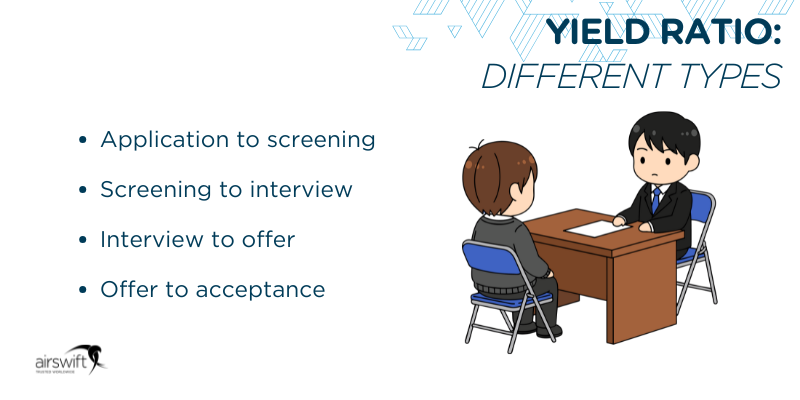
Application to screening
This ratio shows how many applicants meet the basic requirements for the role. For example, if 500 people apply and 150 pass the initial CV check, the yield ratio is 30%. A low ratio here may indicate unclear job descriptions or ineffective sourcing channels.
Screening to interview
This measures how many candidates are suitable for interviews after screening. If 150 screened candidates lead to 50 interviews, the ratio is 33%. A low figure could mean your screening criteria are too broad or your sourcing isn’t attracting the right talent.
Interview to offer
This ratio reveals how many interviewed candidates receive job offers. For instance, if 50 interviews result in 10 offers, the ratio is 20%. A low ratio might suggest issues with candidate quality or unrealistic expectations during interviews.
Offer to acceptance
Finally, this ratio tracks how many offers are accepted. If 10 offers lead to 8 acceptances, the ratio is 80%. A low acceptance rate could point to problems with salary, benefits, or candidate experience.
Monitoring these ratios helps identify bottlenecks and improve decision-making. For example, if most candidates drop off between interview and offer, you may need to review your selection process or adjust expectations. If the biggest gap is at the application stage, refining job adverts or sourcing strategies could make a big difference.
What are the benefits of monitoring yield ratio?
Monitoring yield ratios provides several advantages:
Better resource allocation
Recruitment budgets and time are limited. By monitoring yield ratios, you can identify which sourcing channels deliver the highest-quality candidates. For example, if job boards have a low yield ratio but employee referrals perform better, you can shift resources to maximise results.
Improved job descriptions
A low yield ratio between application and screening stages often signals unclear or unrealistic job descriptions. Analysing this data helps refine requirements so they attract candidates who genuinely fit the role, reducing wasted effort and improving candidate experience.
Data-driven decisions
Yield ratios provide hard evidence of what’s working and what isn’t. Instead of relying on gut feeling, recruiters can adjust strategies based on actual performance. For instance, if the interview-to-offer ratio is low, it may indicate issues with screening criteria or interview processes.
Top five common mistakes when using yield ratio
Yield ratio is a valuable metric, but it can easily be misinterpreted or misused if not applied correctly. Here are the most frequent mistakes recruiters make:
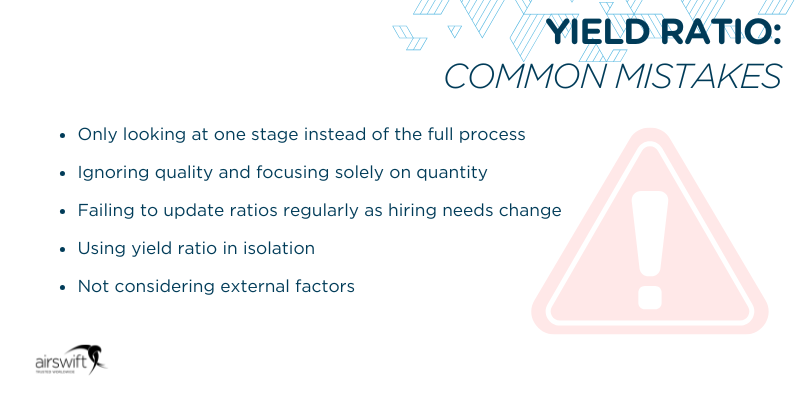
1. Only looking at one stage instead of the full process
Focusing on a single ratio, such as application-to-screening, gives an incomplete picture. A high ratio at the start might look positive, but if interview-to-offer ratios are poor, the overall process is inefficient. Always analyse yield ratios across all stages to identify where candidates drop off.
2. Ignoring quality and focusing solely on quantity
A high yield ratio doesn’t always mean success. For example, if many candidates progress to interviews but few receive offers, quality is lacking. Combine yield ratio with qualitative measures like candidate fit and hiring manager feedback to ensure you’re attracting the right talent.
3. Failing to update ratios regularly as hiring needs change
Recruitment strategies evolve, and so should your metrics. If you’re hiring for different roles or markets, old ratios may no longer apply. Regular reviews help keep your data relevant and actionable.
4. Using yield ratio in isolation
Yield ratio should never be the only metric you track. Pair it with time-to-hire, cost-per-hire, and source effectiveness for a complete view of recruitment performance. This holistic approach prevents decisions based on incomplete data.
5. Not considering external factors
Market conditions, employer branding, and salary competitiveness can all impact yield ratios. Ignoring these factors can lead to unrealistic expectations and flawed conclusions.
By avoiding these mistakes, you’ll use yield ratio as a powerful tool for improving recruitment efficiency rather than a misleading statistic.
How to improve yield ratio (in six steps)
If your yield ratio is low, it means too many candidates are dropping out at different stages of the hiring process. Improving this metric requires a mix of strategic adjustments and practical steps:
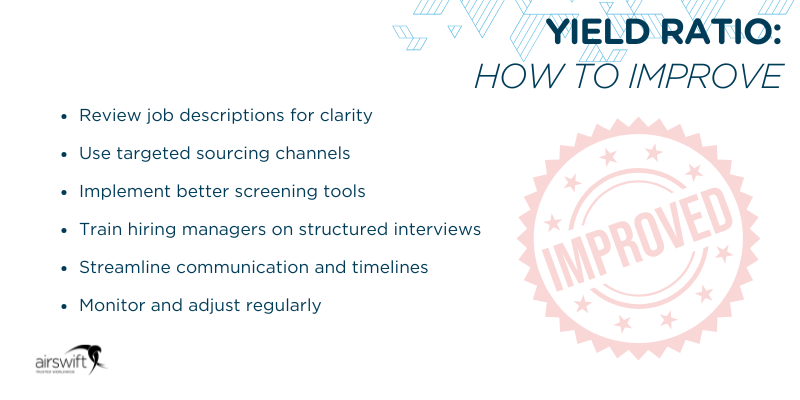
1. Review job descriptions for clarity
Unclear or overly complex job descriptions can attract unsuitable candidates. Make sure the role requirements are specific, realistic, and written in plain language. Include essential skills and responsibilities without overwhelming applicants with unnecessary details. A clear description sets expectations and improves the quality of applications.
2. Use targeted sourcing channels
Not all platforms deliver the same results. Analyse which channels produce candidates who progress further in the process. For example, if referrals have a higher yield ratio than generic job boards, invest more in referral programmes or niche platforms relevant to your industry.
3. Implement better screening tools
Manual CV checks can be inconsistent and time-consuming. Use structured screening methods such as pre-assessment questionnaires, skills tests, or automated filters to ensure only qualified candidates move forward. This reduces wasted effort and improves the ratio between applications and interviews.
4. Train hiring managers on structured interviews
Interview quality directly impacts yield ratio. Provide training on structured interviews, competency-based questions, and bias reduction techniques. This ensures interviews are fair, consistent, and focused on the skills that matter most.
5. Streamline communication and timelines
Delays in scheduling interviews or providing feedback can cause candidates to drop out. Speed up decision-making and keep candidates engaged throughout the process. A smooth experience improves acceptance rates and overall yield ratios.
6. Monitor and adjust regularly
Recruitment is dynamic. Track yield ratios at each stage and review them monthly or quarterly. If you notice a bottleneck such as a low interview-to-offer ratio - investigate and adjust your approach quickly.
Why yield ratio matters for strategic hiring
Yield ratio isn’t just a number - it is a reflection of how well your recruitment strategy aligns with organisational goals. By tracking and improving this metric, you can reduce wasted effort, speed up hiring, and secure top talent faster.
Ready to optimise your recruitment pipeline?
At Airswift, we help businesses in STEM improve hiring efficiency with data-driven strategies. From sourcing top talent to streamlining processes, our global recruitment expertise ensures your yield ratios translate into successful hires.
Talk to our experts today and discover how Airswift can help you build your workforce.