
By
Diyaa Mani
February 13, 2026
Updated
February 13, 2026
Transitional energy insights from the 2026 GETI report
The 2026 GETI Report highlights one of the most transformative years yet for transitional energy players.
With unprecedented investment in nuclear, gas‑fired power, grid modernisation and storage, combined with rapid shifts in workforce capability and AI adoption, employers are navigating a highly competitive and fast‑changing environment.
This year, nuclear and power are consolidated into the Transitional Energy chapter to better reflect industry developments.

Strong project pipeline and market momentum
Global activity in transitional energy is expanding rapidly, supported by new approvals in nuclear and gas‑fired power and record investment in grid and storage projects.
This growth is fuelling heightened competition for experienced professionals, particularly in engineering and project delivery roles.
Salary growth and compensation pressure intensify
Compensation continues to rise across the power and nuclear sectors as employers compete for technical talent.
Key 2026 salary insights include:
- 63% of hiring managers report salary increases
- 53% of professionals received a pay rise, with 24% seeing increases above 5%
- Looking ahead, 73% of professionals expect a raise next year, and 35% expect it to exceed 5%
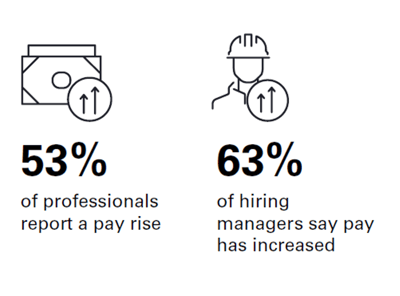
For employers, this reinforces the need for long‑term talent retention strategies as wage inflation becomes a defining characteristic of the 2026 market.
Learn more about these insights by downloading the 2026 GETI report
Global mobility: High demand, lower willingness to relocate
The demand for globally mobile talent is rising, yet professionals are increasingly reluctant to relocate.
2026 mobility highlights:
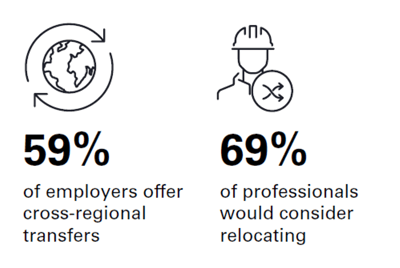
- 69% are open to relocation, down from 74% in 2025
- 59% of employers now offer cross‑regional transfers
- Europe (32%)
- Middle East (17%)
- North America (14%)
- Australasia (13%)
- Asia (12%)
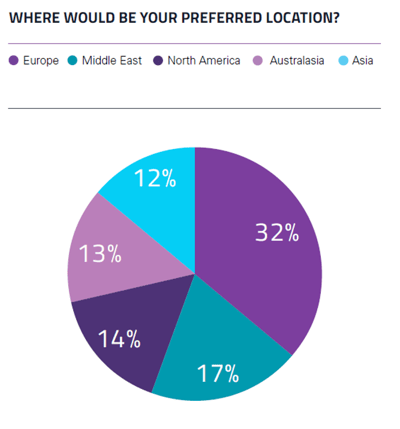
The biggest deterrent to relocation among professionals is proximity to family (42%).
This widening mobility gap is placing additional pressure on major nuclear, grid and storage projects dependent on international expertise.
Learn more about these insights by downloading the 2026 GETI report
Skills shortages deepen across the sector
Talent shortages remain one of the sector’s most pressing challenges. Employers report increasingly severe skills gaps across technical and leadership roles.
In 2026:
- 51% say candidates lack technical skills
- 41% lack experience
- 39% lack communication/interpersonal skills
The hardest roles to fill include:
- Engineering and technical operations (53%)
- Maintenance and inspection (31%)
- Project management (25%)
To combat shortages, companies are investing in:
- School and college outreach (34%)
- Graduate recruitment (32%)
- Revised recruitment processes (27%)
The message is clear: building future talent pipelines must start earlier and be more intentional than ever. This also highlights widening career opportunities in this sector.
Learn more about these insights by downloading the 2026 GETI report
AI adoption reshapes the workforce
AI stands out as one of the most significant accelerators of change in 2026. Adoption has grown dramatically, with professionals increasingly relying on AI tools to enhance capabilities, close skills gaps, and advance their careers.
Key AI findings:
- 54% of professionals use AI today, a 180% increase since 2024
- Only 20% do not use AI for career development
How professionals use AI:
- 37% to complete senior‑level tasks
- 37% to bridge skills gaps
- 28% to develop industry knowledge
- 27% for personalised career advice
- 26% for job hunting and applications
Risk perceptions are also rising:
- Only 6% believe no roles are at risk
- IT/software, data analytics and AI/digital roles are viewed as most vulnerable (each 47%)
- 37% believe AI is reducing entry‑level roles
This underscores the growing need for organisations to redesign roles, rethink pathways for junior talent, and strategically integrate AI into workflows.
Learn more about these insights by downloading the 2026 GETI report
An ageing workforce and demographic pressures
The sector continues to face demographic challenges, with an increasingly older workforce and too few young professionals entering technical fields.
2026 demographic insights:
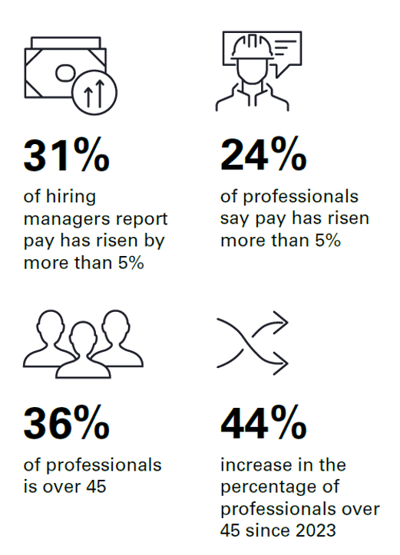
- Only 34% of the workforce is under 35, down from 37% last year
- 48% are aged 45+
This is particularly concerning in specialised fields such as nuclear engineering and grid operations, where knowledge transfer and succession planning are critical.
Learn more about these insights by downloading the 2026 GETI report
Career mobility and retention pressures
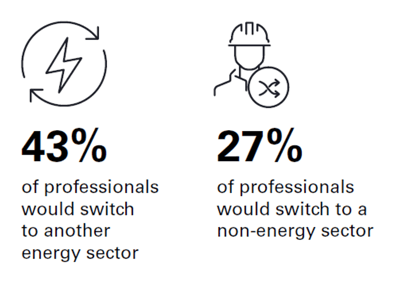
While fewer professionals are willing to relocate globally, career mobility within and outside the energy sector remains strong.
In 2026:
- 43% would consider moving to another energy sector
- 27% would move to a non‑energy sector
- Renewables remain the top destination within energy
- Technology continues to lead among non‑energy sectors
This means employers must actively strengthen talent retention strategies as competition for mid‑career technical talent intensifies.
Learn more about these insights by downloading the 2026 GETI report
What the clean energy transition means for transitional energy firms
The global energy transition remains a major driver of change. In 2026, 37% of professionals cite the transition as a top opportunity, highlighting strong optimism around technological innovation, advanced engineering and the future of clean power.
To capitalise, transitional energy firms must:
- Strengthen workforce pipelines
- Integrate AI and digital technologies into operations
- Reposition themselves as employers of choice for early‑career talent
- Evolve strategies to support upskilling, leadership development and innovation
Learn more about these insights by downloading the 2026 GETI report
How firms can adapt in 2026
The 2026 GETI data points to several priority areas for action:
- Embrace digitalisation and AI to improve efficiency, performance and safety
- Diversify the energy mix, including low‑carbon fuels, advanced nuclear and expanded storage
- Prioritise employee retention with clear development pathways
- Strengthen leadership and communication skills across teams
- Invest heavily in R&D for next‑generation reactors, storage solutions and grid technologies
Agile firms will be best positioned to navigate complexity and capture new market opportunities.
Learn more about these insights by downloading the 2026 GETI report
Opportunities emerging from the energy transition
The energy transition continues to unlock significant opportunities, including:
- Life‑extension and optimisation of existing nuclear assets
- Deployment of Small Modular Reactors (SMRs)
- Modernisation of transmission and distribution networks
- Large‑scale investment in energy storage
- Exploration of next‑generation nuclear and fusion technologies
With global momentum accelerating, transitional energy firms are uniquely positioned to drive impact, provided they can attract and retain the talent needed to deliver.
Learn more about these insights by downloading the 2026 GETI report
Download the full 2026 GETI report
Would you like to learn more about employment trends expected to shape the sector in 2026? Get all the latest insights and information on trends across the rest of the energy industry in the 2026 GETI report. Download it today.